Symbols of Turkey – A Living Tapestry of Anatolian Heritage

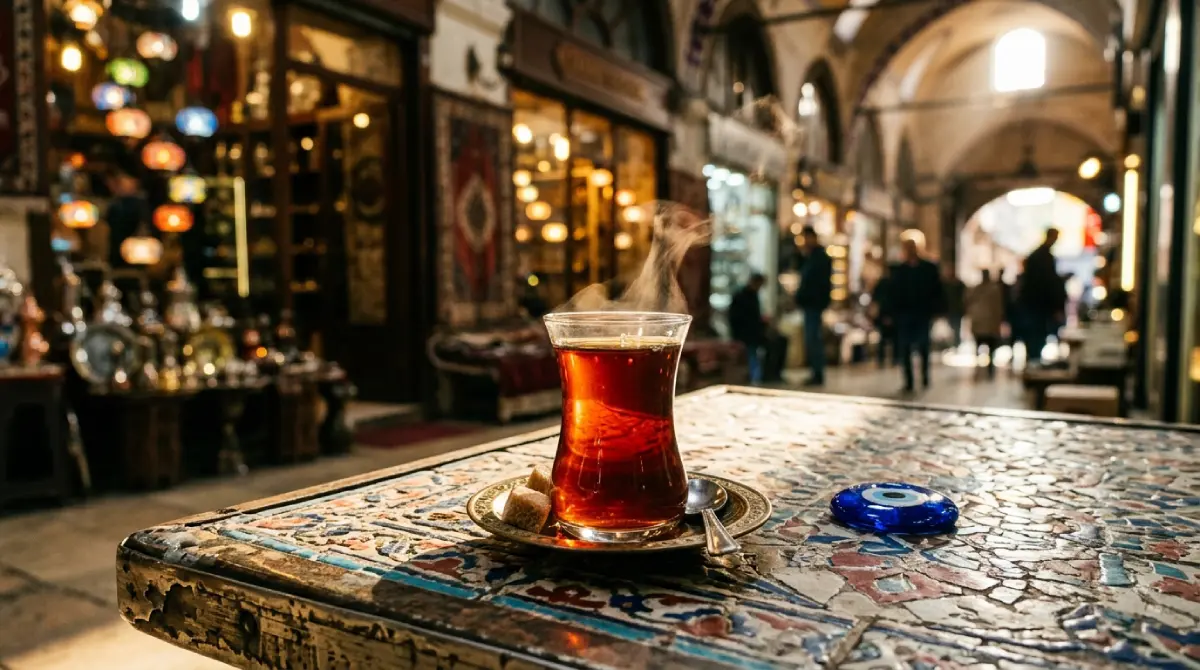
Queen of Hospitality (Çay):
Turkey is the world's highest consumer of tea per capita – average consumption reaches nearly 4 kilograms of dry leaves per person every year.
The Cobalt Shield (Nazar):
The blue glass Evil Eye talisman guards against envious glares; you will spot it in doorways, buses, baby strollers, and shop windows.
The Theatre of Trade (Bazaars):
Historic markets are an explosion of aromas and colours, where bargaining remains an art form and a cordial conversation.
Spiritual Devotion (Sema):
The spinning dance of the Mevlevi Whirling Dervishes is a UNESCO-inscribed Sufi meditation seeking divine love and universal harmony.
Traditional Turkish tea in a tulip glass, a small bowl of pistachio baklava, and a glass Nazar evil eye on an Anatolian table REPORTAGE & IDENTITY
10 min read • Updated for Season 2026

Magic of the Orient in Ten Dimensions: What Defines the True Soul of Turkey?

You cannot understand Turkey solely through the prism of enclosed resort compounds. Its real identity pulses through the spice-scented labyrinths of vaulted bazaars, the delicate crunch of forty buttery layers of baklava, the cobalt glint of protective glass charms, and the billowing white robes of Sufi mystics. Step into an authentic journey through the living symbols that have woven Anatolia’s unique cultural fabric for centuries.

Explore Turkish Icons →
REKLAMA
Guide Table of Contents (Click to expand)
  1. 1. Turkish Bazaars – Theatre of Trade, Senses, and Exotic Spices
  2. 2. Baklava and Lokum – Imperial Confections of the Ottoman Court
  3. 3. Çay in Tulip Glasses – The Daily Fuel of the Nation
  4. 4. Turkish Coffee – Velvety Foam, Cezve Pots, and Fortunetelling
  5. 5. The Evil Eye (Nazar Boncuğu) – Ancient Cobalt Shield Against Envy
  6. 6. Whirling Dervishes – Mystical Devotion of the Mevlevi Order
  7. 7. The Turkish Hammam – Steam, Suds, and Rejuvenating Rituals
  8. 8. Authentic Kebab – Anatolia’s Culinary Heritage Over Wood Charcoal
  9. 9. The Dolmuş – Social Phenomenon of Shared Minibuses
  10. 10. The Fez – National Hat Outlawed by Republican Reforms
  11. Frequently Asked Questions (FAQ)
Anatolian Mosaic

10 Icons That Define the True Soul of Turkey

Some nations are defined by borders, others by stone architecture. Turkey, however, is best understood through its sensory rituals – small gestures, scents, and sounds that bridge East and West. It is an extraordinary land where pre-Islamic Anatolian beliefs seamlessly merge with the legacy of the Ottoman Empire and the restless energy of modern cities.

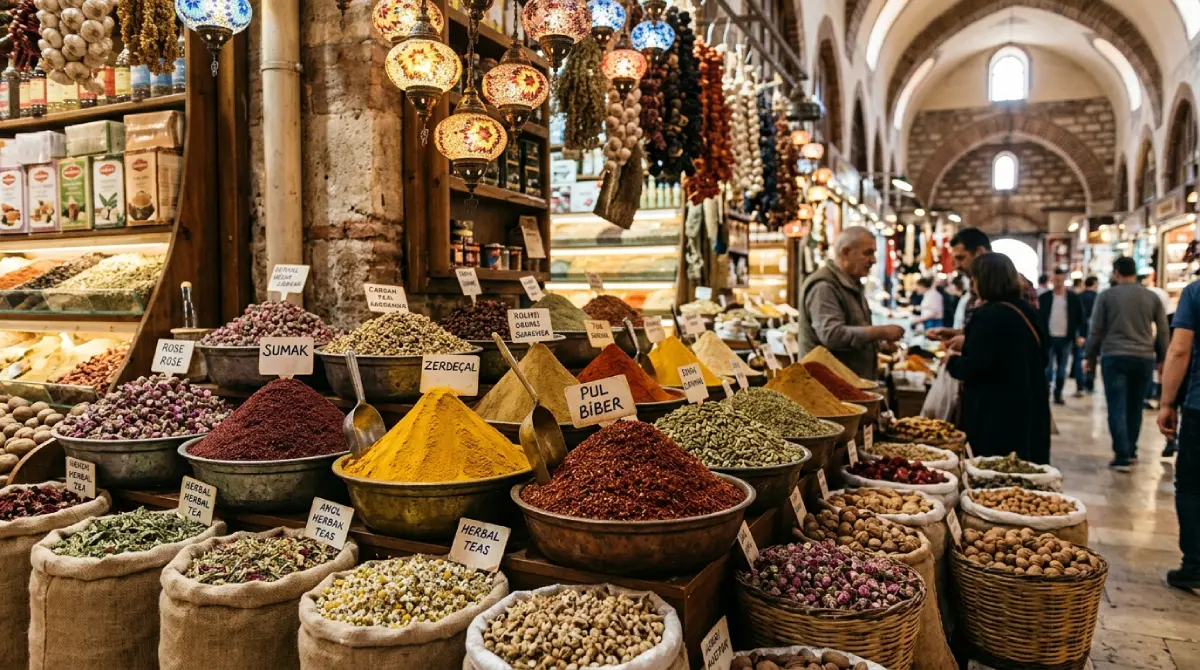
Colourful mounds of spices, dried herbal teas, and traditional hanging lanterns at an authentic Turkish bazaar in Istanbul
Heart of Commerce & Community

1. Turkish Bazaars – Theatre of Trade, Senses, and Exotic Spices

Stepping into a traditional Turkish bazaar (çarşı) is an all-encompassing sensory experience. From Istanbul’s vaulted Grand Bazaar (Kapalıçarşı) to bustling open-air market days along Mediterranean resort strips, the air is thick with aromas of cumin, sumac, wild mint, roasted nuts, and hand-tanned leather.

A bazaar is far more than a commercial market; it is a social performance honed along centuries of Silk Road exchanges. Shopkeepers will greet you with a hot tulip glass of tea, ask where your travels began, and transform pricing into a courteous, humorous dialogue. For practical shopping strategies, explore our comprehensive guide on what to buy in Turkish bazaars, covering respectful haggling, handcrafted ceramics, spices, and kilim textiles.

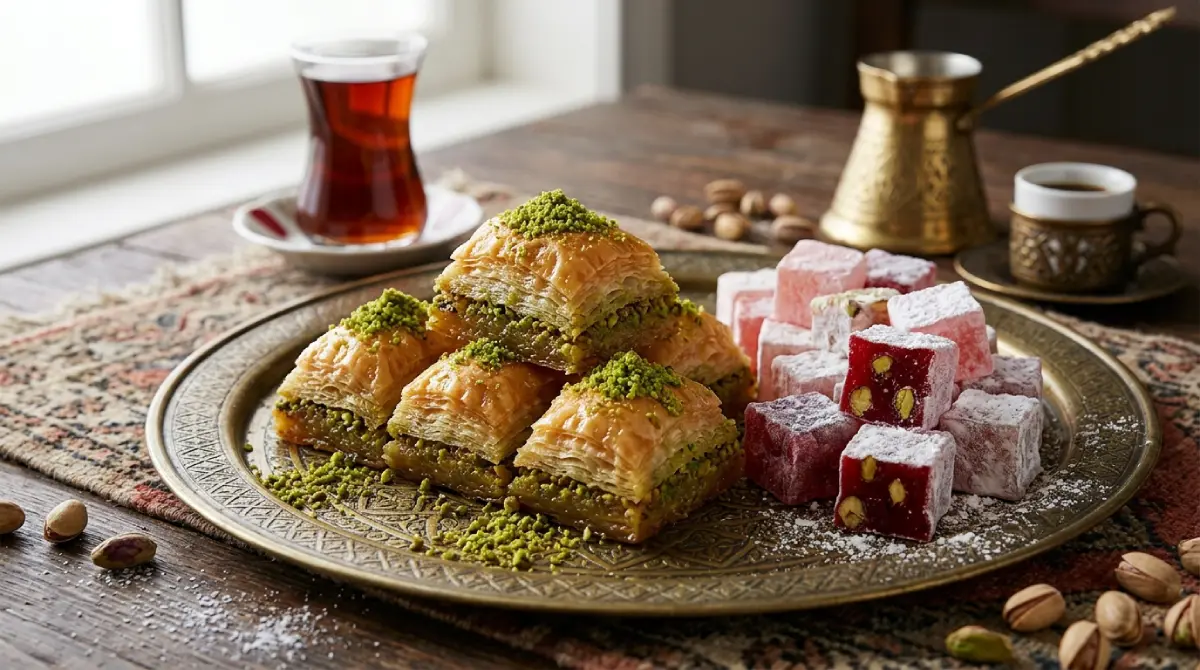
Golden layered pistachio baklava from Gaziantep alongside dusted cubes of authentic Turkish delight lokum
Imperial Confections

2. Baklava and Lokum – Sweet Calling Cards of the Ottoman Court

An old Turkish proverb advises: "Tatlı yiyelim, tatlı konuşalım" – "Let us eat sweetly and speak sweetly". Confectionery in Turkey is an elevated art form perfected within the imperial kitchens of Topkapı Palace. The undisputed crown jewel is baklava, with its historical epicentre in southeastern Gaziantep. Master pastry chefs roll out up to forty layers of filo dough so impossibly thin you can read a broadsheet through them, layering each sheet with clarified butter and emerald Antep pistachios.

Alongside baklava stands Lokum (globally renowned as Turkish Delight) – soft, chewy squares of starch and sugar gently infused with rosewater, pomegranate juice, mastic, or toasted nuts. Dive deeper into traditional sweets and feast culture with our dedicated handbook on authentic Turkish cuisine and regional flavours.

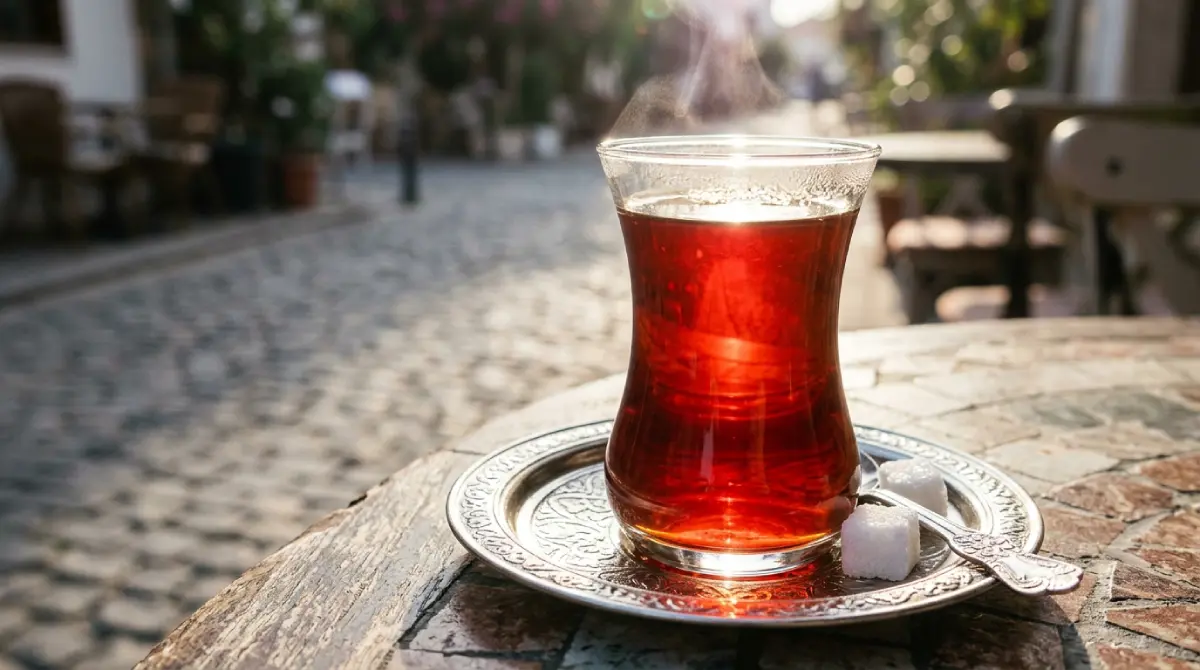
Glowing ruby-red Turkish tea in a delicate tulip-shaped glass on an ornate brass saucer with sugar cubes
Ritual of Welcome

3. Çay in Tulip Glasses – The Daily Fuel of the Nation

Contrary to common belief, it is not coffee, but strong black tea (çay) harvested on the steep misty terraces of Rize along the Black Sea coast that keeps Turkey moving. It is brewed using a two-tiered stacked kettle called a çaydanlık – water boils vigorously in the bottom vessel while strong, concentrated tea gently steeps in the smaller pot perched above.

The tea is served exclusively in clear, waist-pinched glasses known as ince belli ("slim waist"), resembling an opening tulip blossom. The design is practical genius: the narrow middle locks boiling warmth into the bottom reservoir, while the flared upper rim cools just enough for an immediate sip. Clear glass also allows drinkers to admire the glowing amber hue, poeticized as tavşan kanı ("rabbit’s blood"). Turning down a freshly poured glass is seen as declining an open hand of friendship.

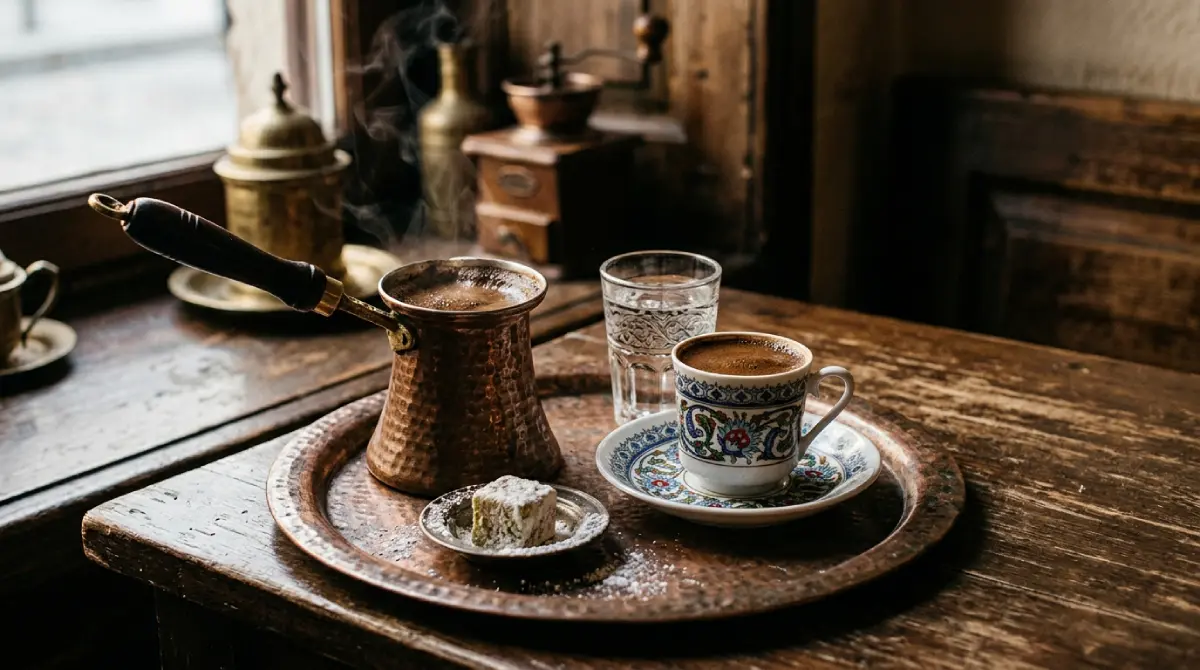
Rich Turkish coffee prepared in a hammered copper cezve pot, poured into a porcelain cup with frothy foam and sweet lokum
UNESCO Intangible Heritage

4. Turkish Coffee – Velvety Foam, Cezve Pots, and Fortunetelling

"Coffee should be black as night, hot as hell, and sweet as love," asserts a cherished Ottoman adage. Turkish coffee (Türk kahvesi) is not a specific bean variety, but an ancient preparation technique inscribed on the UNESCO Intangible Cultural Heritage list. Extra-fine, pulverised coffee grounds are simmered slowly with cold water and optional sugar inside a small, long-handled copper pot known as a cezve.

The brew is never filtered; thick grounds settle naturally at the base of the delicate demitasse cup (fincan). The hallmark of culinary skill is a dense, velvety layer of crema (köpük) across the surface. It is customarily accompanied by a small glass of water to cleanse the palate and a cube of sweet lokum. Once finished, drinkers invert the cup onto the saucer to read their fortunes (fal) from the patterns left by drying grounds.

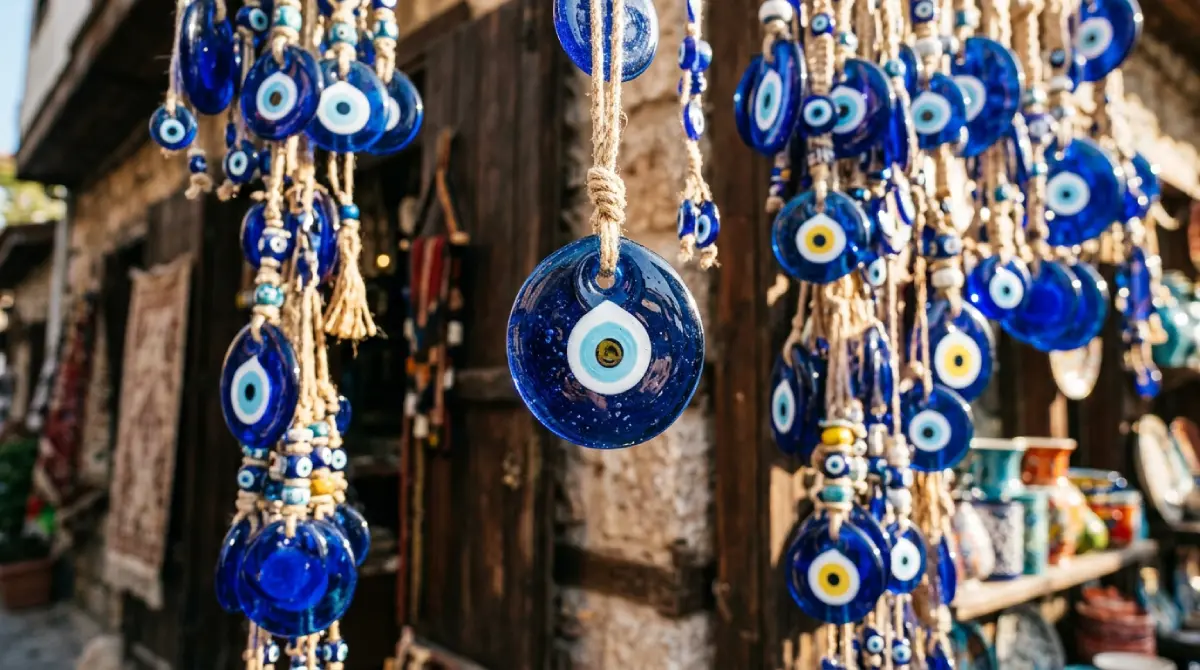
Concentric blue, white, and yellow handmade glass Evil Eye Nazar Boncugu charms hanging in a Turkish artisanal shop
Ancient Talisman

5. The Evil Eye (Nazar Boncuğu) – Ancient Cobalt Shield Against Envy

Everywhere you gaze in Turkey, hypnotic glass circles of cobalt blue, white, light blue, and black stare back. This is the Nazar Boncuğu, often called the Evil Eye talisman. Rooted in pre-Islamic shamanic traditions and Mediterranean folklore, the charm is believed to deflect the "evil eye" – negative energy born of subconscious jealousy or malevolent envy.

Locals hang Nazar amulets above front doorways, hang them from rearview mirrors in taxis, pin tiny versions to infants' clothing, and embed them into the foundations of modern skyscrapers. When a Nazar amulet suddenly cracks, fractures, or shatters, nobody worries: it means the glass has absorbed a blast of destructive intent, sparing its owner from harm.

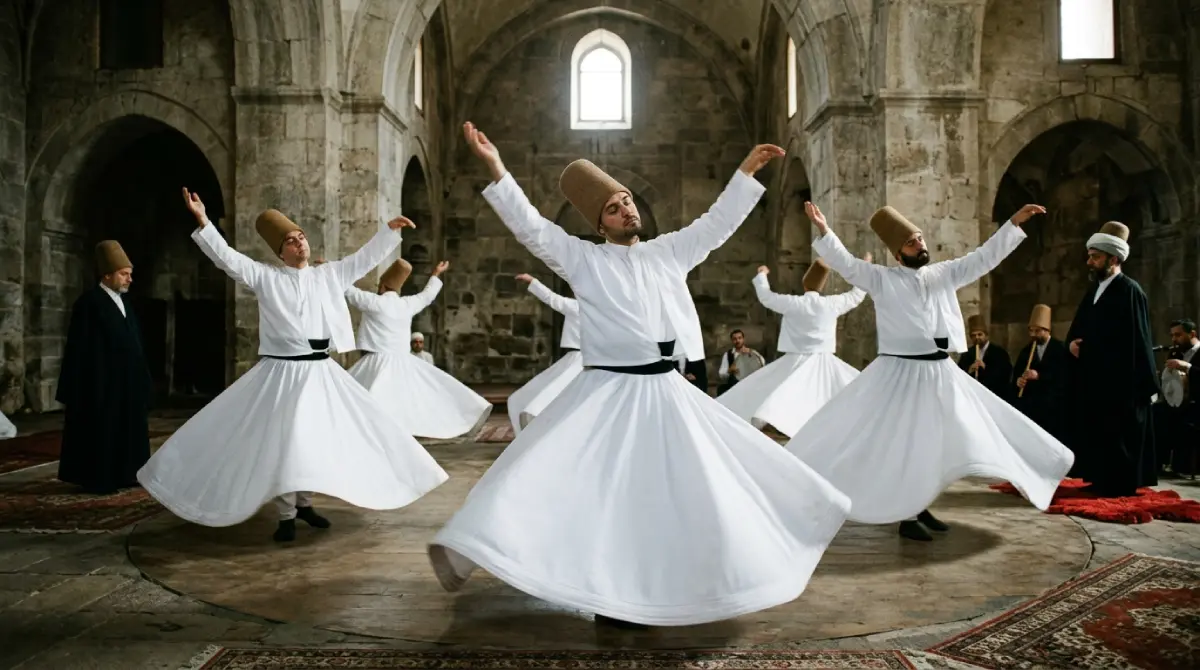
Whirling Dervishes performing the sacred Sema ceremony in billowy white robes and tall camel-felt sikke hats
Mystical Sufism

6. Whirling Dervishes – Mystical Devotion of the Mevlevi Order

Few spiritual rituals on earth are as mesmerising as the Sema ceremony. Born in 13th-century Konya through the teachings of Sufi poet and mystic Jalaluddin Rumi (Mevlana), the ceremony represents a journey of spiritual ascent. Dressed in flowing white garments, Dervishes enter a trance-like state, turning counter-clockwise around their own axis for prolonged periods without dizziness, guided by the melancholic melodies of the reed flute (ney) and drums.

Every garment carries profound metaphysical meaning: the tall camel-hair felt hat (sikke) represents the tombstone of human ego, while the wide white spinning robe (tennure) represents its shroud. As they spin, the dervish’s right palm faces upward to receive divine grace, while the left palm turns toward the earth to disperse that unconditional love to all humankind.

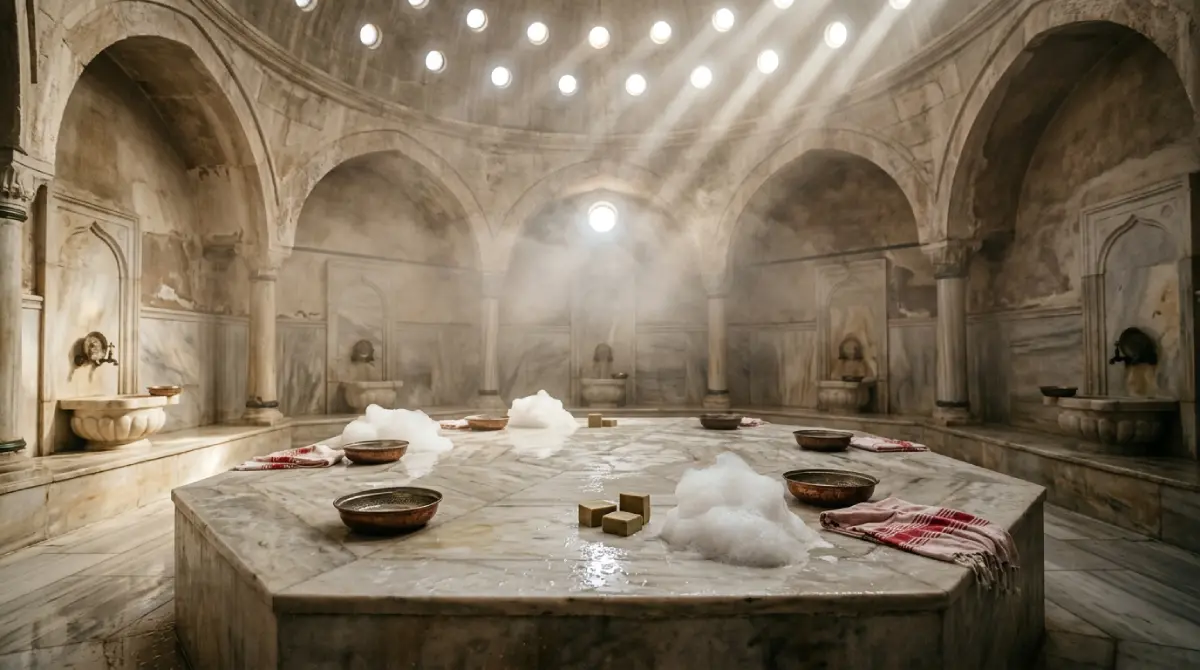
Historic marble interior of an Ottoman Turkish bath hammam with steam rising toward the central domed skylights
Sanctuary of Wellness

7. The Turkish Hammam – Steam, Suds, and Rejuvenating Rituals

A traditional Turkish bath (hammam) is much more than a place of cleanliness. For centuries, it stood at the very core of Ottoman civic life – an egalitarian social sanctuary where business deals were made, brides were prepared, and community news was shared. The concept marries Roman thermal bathing traditions with Islamic ritual purification before prayer.

The experience centres on a heated hexagonal marble slab (göbek taşı) set under a soaring dome with star-shaped skylights. After your body softens in warmth and moisture, an attendant (tellak) administers an invigorating scrub using a coarse silk or goat-hair mitt (kese). This is followed by a towering cloud of olive-oil soap foam squeezed from a linen suds-sack. Emerging from the bath leaves skin glowing and muscles thoroughly rejuvenated.

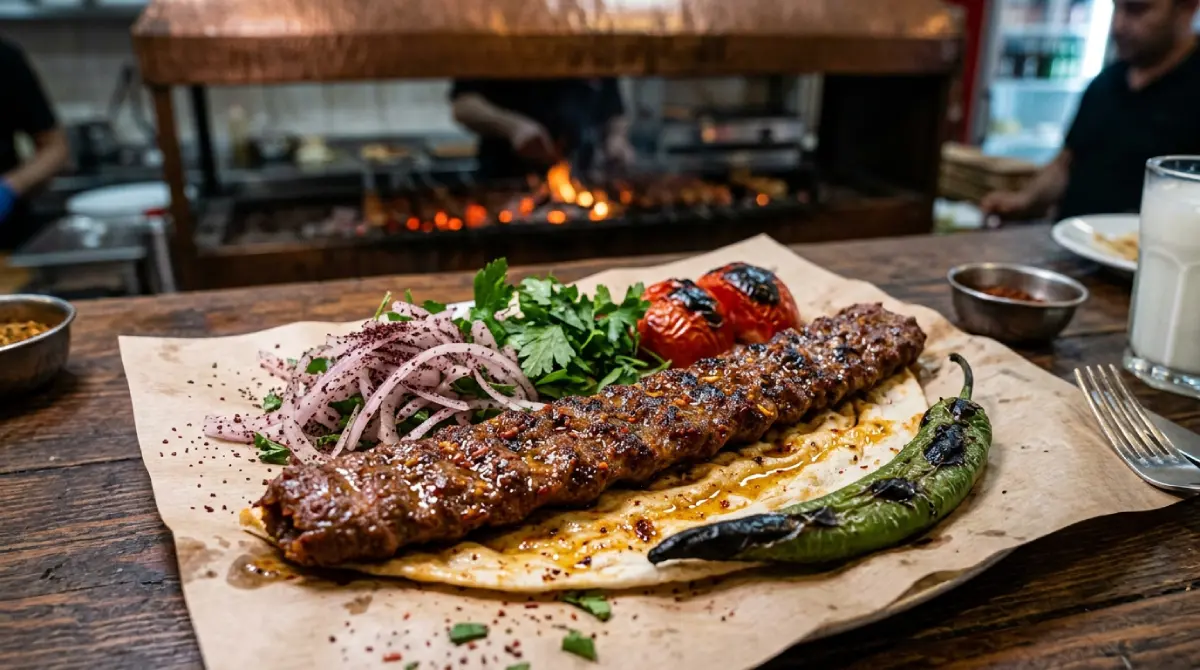
Authentic Adana kebab skewer cooked over hardwood charcoal served on fresh lavash bread with grilled peppers and sumac onions
Heritage of the Hearth

8. Authentic Kebab – Anatolia’s Culinary Heritage Over Wood Charcoal

While western fast-food culture frequently reduces kebab to late-night rotisserie shavings in pita bread, in Turkey it is an exquisite culinary heritage with dozens of regional variations. The term "kebab" simply describes meat cooked over open hardwood charcoal embers – overwhelmingly tender, meticulously seasoned lamb or prime beef.

Iconic creations include the fiery Adana Kebab, handcrafted by chopping lamb and red peppers by hand with a two-handled cleaver (zırh) onto flat skewers, and Bursa’s legendary İskender Kebab, where shaved meat rests on toasted pide bread cubes drenched in hot tomato sauce, sizzling clarified sheep butter, and cold sheep-milk yoghurt. You will never find mayonnaise or garlic sauces smothering authentic kebabs; pure smoke, spices, and fire reign supreme.

Classic yellow Turkish dolmus minibus picking up travellers along a sunny seaside promenade in an Antalya resort
Transit & Trust

9. The Dolmuş – Social Phenomenon of Shared Minibuses

The word dolmuş translates literally as "stuffed" or "filled". Historically, these shared minibuses only departed once every single seat was taken. Today, they form an affordable, ubiquitous, and punctual circulatory system connecting city centres, seaside villages, and holiday hotel strips.

Riding a dolmuş offers a delightful lesson in civic trust. There are no card scanners or ticket machines; if seated toward the back, you simply hand your exact cash to the passenger ahead of you while announcing your destination (e.g., "Bir kişi Side" – one person to Side). Coins pass from hand to hand forward to the driver, and change travels seamlessly back along the same path. It is an unspoken national code that works with flawless honesty.

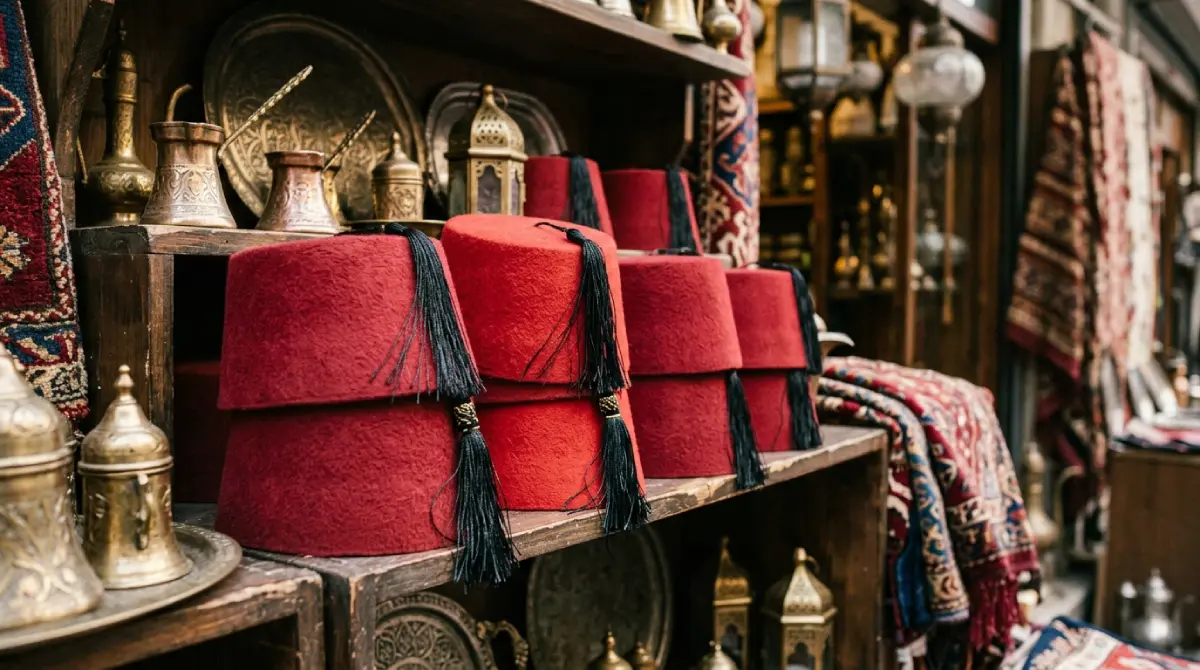
Traditional red wool felt Turkish fez hats with black silky tassels arranged on wooden shelves in a heritage shop
History & Modernisation

10. The Fez – National Hat Outlawed by Republican Reforms

The cylindrical brimless red felt cap with its dangling black tassel remains the most persistent visual shorthand for Turkish identity in the Western imagination. In 1826, Sultan Mahmud II introduced the fez as modern, egalitarian headwear to replace cumbersome religious turbans and standardise Ottoman civil service attire regardless of faith. Its brimless design conveniently allowed Muslim worshippers to touch their foreheads to mosque prayer carpets.

A century later, however, Mustafa Kemal Atatürk, founder of the modern Republic of Turkey, viewed the fez as an outdated symbol of imperial stagnation. In 1925, he passed the sweeping Hat Law (Şapka Kanunu), prohibiting the fez in favour of Western-style hats under penalty of law. Today, no Turkish citizen wears a fez in daily life; you will see it only atop entertaining dondurma ice cream vendors, theatrical performers, and bazaar souvenir stalls.

REKLAMA
Good to Know

Traditions & Symbols of Turkey – Frequently Asked Questions

Why is haggling so important in a Turkish bazaar?

Bargaining across Turkey is viewed as a social ritual rather than a dispute over currency. Merchants quote higher initial asking prices specifically to open a friendly negotiation over tea. Approaching the process with warmth, smiles, and humor often yields savings of 20% to 40% while showing appreciation for the vendor's wares.

What makes authentic Turkish baklava different from other varieties?

Traditional Anatolian baklava features up to 40 micro-thin layers of filo dough rolled using starch, loaded with emerald-green early-harvest pistachios from Gaziantep and clarified sheep butter. Unlike Greek or Balkan recipes, authentic Turkish baklava relies on a light, clear sugar syrup rather than heavy honey or cinnamon.

What does the Evil Eye (Nazar Boncuğu) protect against?

The talisman wards off the evil eye (nazar) – subconscious jealousy, envy, or ill intent thought to cause misfortune or sickness. When a glass eye cracks or falls away, tradition dictates that it has absorbed the harmful energy on your behalf and should be replaced with a fresh charm.

Why is Turkish tea served in tulip-shaped glasses?

The iconic ince belli ("slim waist") glass preserves the temperature of hot tea at the bottom while allowing the flared upper edge to cool quickly for immediate sipping. The transparent glass also lets you verify the admired deep ruby shade (tavşan kanı).

Can tourists legally buy and wear a Turkish fez?

Yes. Although the historic Hat Law of 1925 prohibited fezzes for citizens during national modernisation reforms, today the rule is purely of historical significance. Tourists can buy them freely in gift markets, though for locals the fez remains exclusively a folkloric museum curiosity.

Turkish Cuisine

Explore culinary delights: cold mezes, charcoal kebabs, baklava, and vibrant dining traditions.

Discover Food Guide →

Bazaar Souvenirs

What to bring home: aromatic spices, ceramics, evil eye charms, and polite bargaining etiquette.

View Souvenirs List →

Excursions & Day Tours

Plan top holiday adventures: scenic coastal boat cruises, hammam packages, and canyon rafting.

Explore Excursions →

Travel Essentials

Important advice: entry requirements, Turkish Lira payments, eSIM data, and safety tips.

Read Practical Advice →