Turkish markets are an intoxicating sensory riot: mountains of roasted pistachios, the rich
aroma of freshly ground coffee, and shimmering hand-painted ceramics. From authentic Iznik
tiles to pistachio-stuffed halva, here is our vetted guide on what is genuinely worth
packing in your suitcase, how to tell handmade craft from cheap imports, and how to master
the gentle art of bargaining.
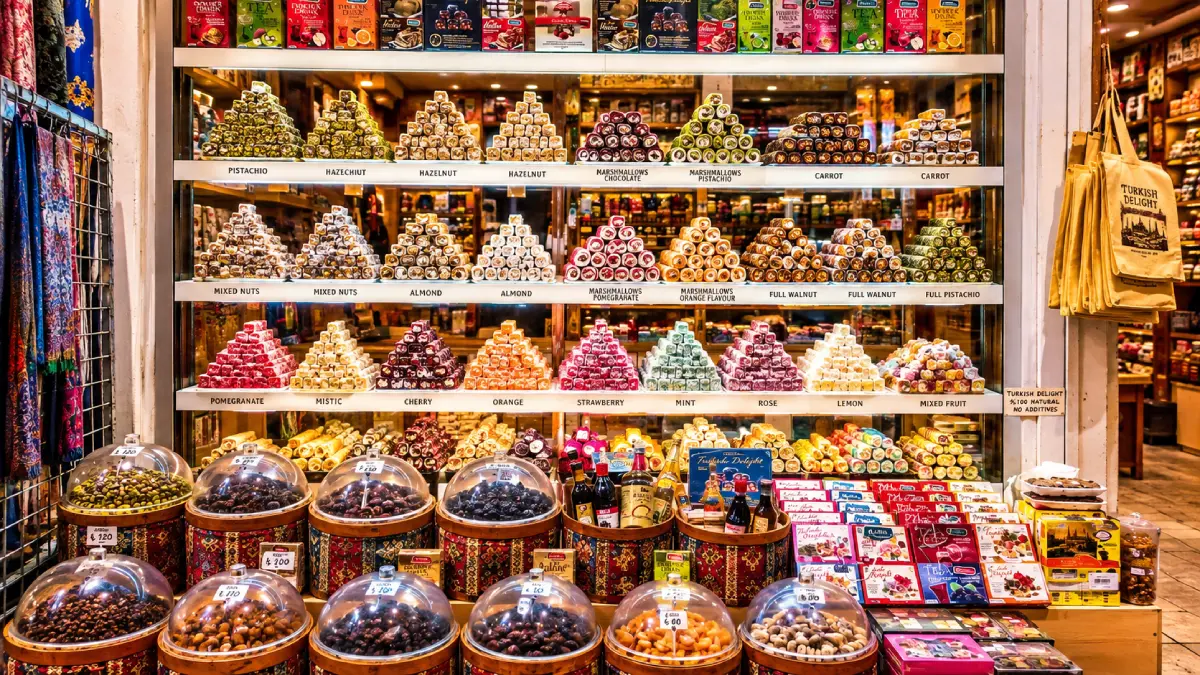
Genuine lokum (Turkish Delight) is wonderfully soft and chewy, fragrant with
rosewater, tart pomegranate, and roasted Gaziantep pistachios. Pair it with rich
sesame tahini halva and spun pişmaniye floss. Steer clear of
cheap tourist boxed gift packs—always buy cut-to-order slices after tasting!
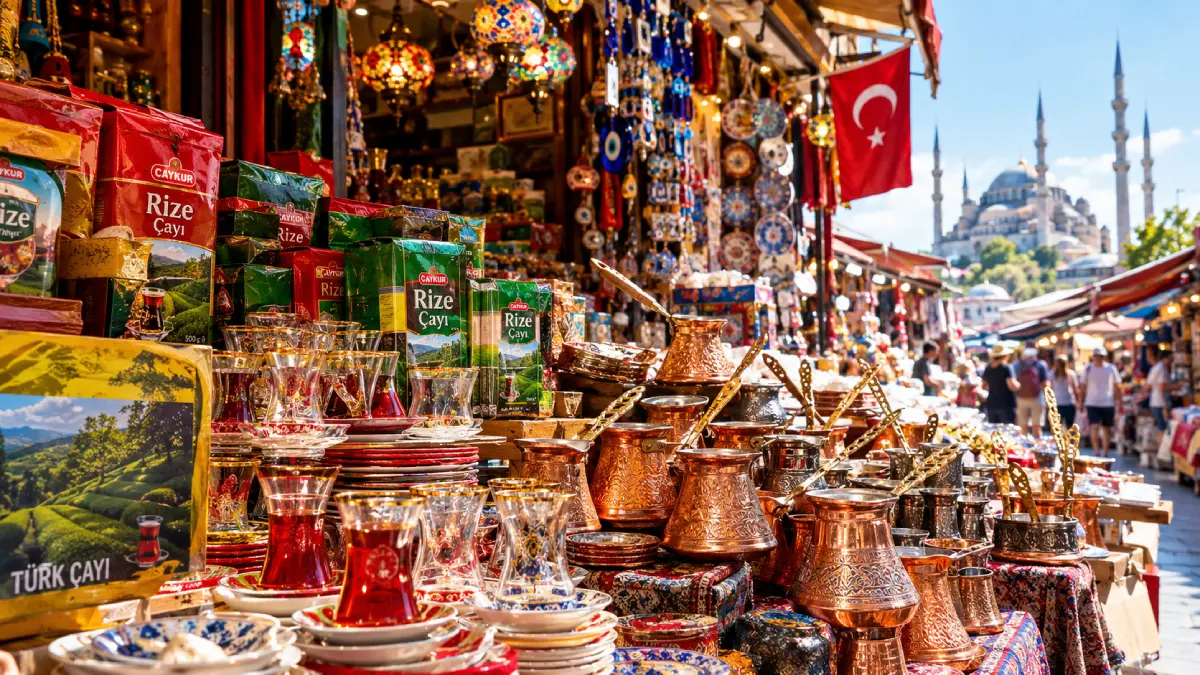
Sipping ruby-red çay from delicate tulip-shaped glasses is Turkey's national
gesture of hospitality. Recreate it back home with a double-tier kettle
(çaydanlık), or opt for a hand-hammered copper cezve pot paired with
powdery Mehmet Efendi coffee.
The culinary soul of Anatolia. Sun-dried pul biber pepper flakes with a fruity
kick, citrusy crimson sumac for salads, herbaceous za'atar, and earthy
cumin will instantly bring holiday flavours back to your own kitchen.
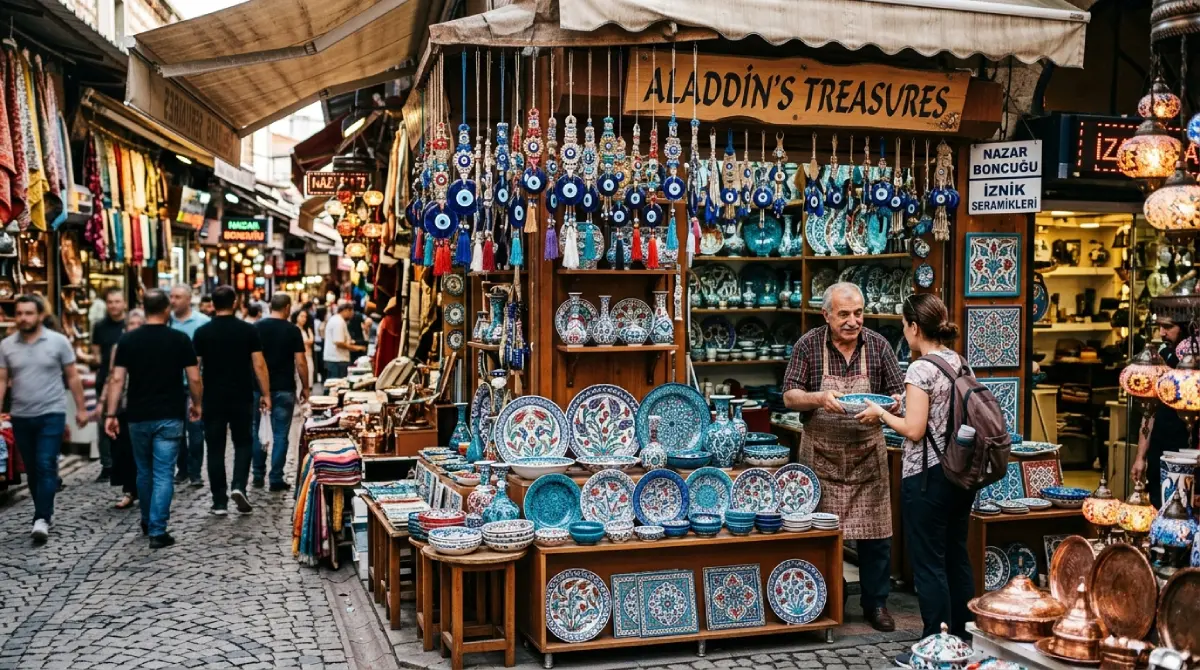
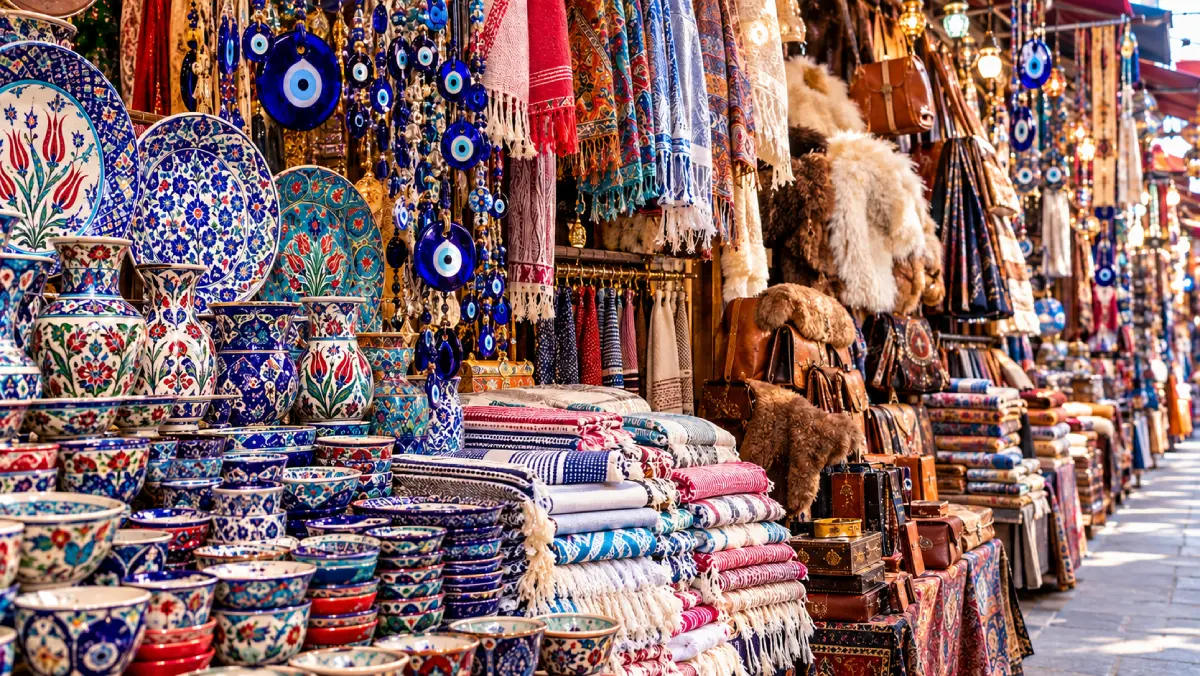
Hand-glazed bowls and decorative tiles adorned with cobalt tulips and saz leaves bring
vibrant Mediterranean colour to your home. Don't leave without a glass Nazar
Boncuğu charm to ward off envy and bad vibes.
Turkey produces some of the world's finest Aegean cotton and supple leather. Flat-woven,
fast-drying peshtemal towels are ultra-lightweight and perfect for the beach,
while leather wallets and jackets offer timeless durability.
Turkish Bazaars Decoded: How to Shop Smart & What to Bring Home
Turkish bazaars and historic market halls are an exhilarating spectacle. Stalls brim with
everything from fragrant herbs and handmade gold jewellery to endless rows of questionable
designer knock-offs. Rather than cramming your luggage with synthetic logo tees, invest in
what Turkey has perfected over centuries: remarkable folk craftsmanship, premium Aegean
cotton, and authentic culinary heritage.
A memorable souvenir should spark holiday memories long after your tan has faded. Here is
our curated breakdown of the finest Turkish products truly worth your suitcase space.
1. Turkish Tea (Çay) & Coffee with a Cezve Pot
Drinking tea in Turkey is never just about quenching thirst—it is a warm social ritual and
the heartbeat of daily hospitality. Grown on the lush, misty mountain slopes of Rize
along the Black Sea, Turkish black tea boasts a robust, clear flavour and a
deep ruby tint. Locals always sip it piping hot from waist-curved tulip glasses (ince
belli), designed to rest snugly between your fingers while keeping the tea hot.
To recreate this teatime magic back home, pick up:
Loose-leaf Rize tea: Look for the classic state-run brand
Çaykur (yellow 'Rize Turist' or red 'Tiryaki' packs).
A double teapot (çaydanlık): Water boils in the bottom kettle, while a
concentrated tea brew gently steeps in the top pot over rising steam.
A set of tulip glasses and saucers: Opt for heat-resistant glass
decorated with subtle gilt rims or Ottoman motifs.
Coffee aficionados should seek out genuine Turkish coffee (Türk kahvesi).
Ground far finer than Italian espresso, the beans are practically a velvety powder. It is
brewed slowly over low heat with cold water and sugar in a small, flared copper pot called a
cezve (or ibrik), producing a rich crema-like foam. A set featuring a heavy
hand-hammered copper cezve, a tin of fresh Mehmet Efendi coffee, and two porcelain
espresso-style cups makes one of the most stylish gifts you can bring back.
If you have a sweet tooth, Turkey's confectioneries are sheer heaven. The golden rule for
sweet souvenirs: always buy sweets cut fresh by weight at open bazaar counters or
traditional pastry shops (pastahane). Shun the cheap, vacuum-sealed boxes
stacked in tourist supermarkets—they are mostly mass-manufactured starch gel packed with
sugar rather than nuts.
What belongs in your box?
Lokum (Turkish Delight): Authentic artisan lokum is made from cooked
starch and sugar, studded with whole green pistachios, hazelnuts, or walnuts, and rolled
in dried rose petals or desiccated coconut. Any good shopkeeper will slice off a warm
sample for you to taste before buying!
Tahini Halva (helva): Crafted from pure ground sesame paste. It comes
in creamy vanilla, rich cocoa swirl, and royal varieties densely packed with whole
pistachios. Halva travels remarkably well in checked luggage and keeps fresh for months.
Baklava: Whispering-thin layers of phyllo pastry buttered and layered
with crushed pistachios, soaked in fragrant sugar syrup. While best savoured fresh,
renowned pastry shops can seal your baklava in leak-proof travel tins designed for
flights.
Pişmaniye: A cloud-like confectionery resembling skeins of spun silk
floss. It melts effortlessly on the tongue with a sweet, toasted-flour and butter
flavour. Featherlight, budget-friendly, and a huge hit with kids.
Traditional Turkish delight (lokum) sold fresh by the kilo in dozens of fragrant
fruit and nut flavours (photo: tucoo.pl)
3. Spices from the Grand Bazaar
Stepping into a historic spice market—such as Istanbul's 17th-century Mısır Çarşısı or
weekly coastal town markets—is an aromatic revelry. Turkish home cooking relies on vibrant,
sun-cured herbs and mild peppers rather than scorching heat.
Stock your home pantry with:
Pul Biber (Aleppo Pepper): Coarsely crushed, semi-dried red pepper
flakes lightly rubbed with olive oil and salt. Fruity, warm, and moderately spicy, this
is the universal condiment on every dining table in Turkey.
Sumac (Sumak): A tangy, deep-crimson powder ground from dried wild
sumac berries. It offers a sharp, lemony zing—essential for seasoning sliced red onions,
fresh salads, and grilled kebabs.
Anatolian Cumin (Kimyon): Far more pungent and earthy than standard
grocery-store cumin. The backbone of köfte meatballs, grilled skewers, and slow-simmered
lentil soups.
Za'atar (Zatar): A fragrant Mediterranean blend of wild mountain thyme,
toasted sesame seeds, and sumac. Swirl it into rich extra-virgin olive oil for dipping
warm crusty bread.
4. Artisan Crafts: Iznik Ceramics, Rugs & The Evil Eye
Turkey's artistic traditions date back to the height of the Ottoman court. The pinnacle of
practical home art is hand-painted ceramics, crafted around the historic
kiln towns of İznik and Kütahya. Bowls, olive dishes, and wall tiles
feature dazzling cobalt blues, turquoise, and rich coral-reds, adorned with classical
Ottoman botanical motifs—wild tulips, carnations, and cypress trees. A lovely, hand-painted
ceramic bowl costs very little and makes a gorgeous daily catch-all for keys or jewellery.
The Evil Eye (Nazar Boncuğu)
A vibrant blue handmade glass talisman with concentric rings of white, light blue,
and yellow. Local folklore holds that it absorbs and deflects envious gazes and
negative energy. Sold as keychains, delicate silver bracelets, or large braided wall
hangings, it is an inexpensive and deeply symbolic token to bring home.
Turkish Kilims & Carpets
Flat-woven wool or silk kilims are living heirlooms featuring ancient geometric
tribal symbols. Buying an antique carpet takes a trained eye and serious budget, but
a small, vibrant runner or cushion cover fits easily into regular luggage.
5. Supple Leather Goods & Aegean Textiles
Turkey is one of the premier producers of premium long-staple cotton and fine tanning
leather.
Rather than haggling over counterfeit branded clothing, look out for two standout textile
investments:
Hammam Towels (Peshtemal): Traditional flat-woven cotton towels
finished with knotted fringe, used for centuries in Roman-style baths. They are
exceptionally absorbent, dry in a fraction of the time of terrycloth, and fold down
paper-thin. Invaluable for beach trips, yoga, or as an airy summer wrap.
Lambskin Leather Goods: Turkish lambskin leather is renowned for being
buttery-soft, lightweight, and durable. At reputable leather boutiques in Istanbul,
Antalya, and Alanya, you can find finely stitched belts, travel wallets, handbags, and
tailored jackets. Always inspect the lining, hardware, and stitching before negotiating.
REKLAMA
Smart Shopping Strategy
Where to Buy & How to Negotiate Like a Pro
What to Buy at the Bazaar
Fresh Turkish delight sliced off the block (always taste first!), Iznik-style ceramics,
traditional tulip tea glasses, handmade souvenirs, leather bags, loose spices, and peshtemal
towels. Haggling here is expected!
What to Buy at Local Supermarkets
Factory-sealed Çaykur black tea, Mehmet Efendi ground coffee, cold-pressed olive oil,
authentic pomegranate molasses (nar ekşisi), tahini paste, and boxed halva. In
chain grocers like Migros, Şok, BİM, or Carrefour, prices are fixed and
dirt-cheap.
The Art of Haggling in Turkey: 5 Golden Rules
Bargaining at a Turkish market is never an aggressive dispute—it is a traditional social
exchange, a dance of mutual respect, and a light-hearted game that both sides enjoy. Follow this
playbook for the best deals without awkwardness:
1
Lead with a Smile & Genuine Respect
Warm manners, eye contact, and accepting an offered cup of hot apple tea will unlock far
steeper discounts than acting dismissive, pushy, or arrogant.
2
Counter with 30–40% Less as Your Opening Bid
Initial prices quoted at market souvenir stalls are purposely marked up. Politely offer
roughly 60% of the vendor's starting quote, and smoothly meet somewhere in the middle.
3
Bundle Purchases for Volume Discounts
You have far more bargaining leverage if you buy three ceramic dishes, two pestemal
wraps, or a kilo of sweets from the same merchant rather than quibbling over a single
tiny trinket.
4
The Classic Walk-Away Maneuver
If negotiations stall above your target budget, thank the vendor cordially and take two
slow steps toward the next stall. More often than not, you'll be invited back with a
significantly better counter-offer!
5
Only Haggle if You Truly Intend to Purchase
Naming a price that the merchant accepts is viewed as an unwritten agreement to buy.
Never haggle just for fun if you have no real intention of opening your wallet.
Before zipping your suitcase and heading off to the airport, make sure your newfound
treasures won't run into trouble at the border. Combining holiday shopping excitement with a
quick review of customs regulations is essential—Turkey enforces some of the world's
strictest cultural heritage laws, and an innocent souvenir mistake can create serious legal
headaches.
Below is our vital security warning regarding airport baggage scans in Antalya, Bodrum, or
Dalaman, followed by a handy at-a-glance cheat sheet for your shopping excursions.
Customs Alert: What You Must NEVER Take Out of
Turkey!
Turkish legislation protecting historical treasures is uncompromising. It is
strictly illegal to export any antiquity, coin, or relic older than 100
years, as well as fossilized remains, archaeological pottery shards, or
even ordinary-looking stones and marble chunks picked up from beaches or ancient ruins.
Airport scanners thoroughly inspect checked luggage. Packing an ancient-looking stone
deemed an artifact by an expert can lead to immediate detention and prosecution. When
purchasing authentic antique carpets or licensed craft pieces, always demand an official
museum export certificate and invoice!
Turkish Souvenirs at a Glance – Quick Summary
Handy shopping cheat sheet: what to buy, where to find top quality, and practical tips.
Souvenir
Where to Buy?
Highlights & Shelf Life
Practical Pro-Tip
Lokum & Halva by Weight
Local bazaars, artisan pastry shops
Long shelf life, packed with nuts
Always ask to taste before buying
Rize Tea (Çay)
Supermarkets (Migros, BİM, Şok)
Authentic, very affordable, lasting
Look for Çaykur Rize Turist packages
Cezve Pot & Coffee
Coppersmith bazaars, specialty shops
Timeless gift, authentic ritual
Choose heavy hand-hammered copper
Handmade Ceramics
Artisan pottery ateliers, souks
Exquisite colours, Iznik motifs
Have it wrapped tightly in bubble wrap
Peshtemal Towel
Textile markets, bath boutiques
Lightweight, absorbent, quick-drying
Verify 100% natural Aegean cotton
Evil Eye (Nazar)
Everywhere: stalls, shops, bazaars
Cheap, featherlight talisman
Choose genuine blown glass over plastic
REKLAMA
Common Questions
Shopping & Souvenirs in Turkey – FAQs
What are the best food souvenirs to bring home from Turkey?
The most delicious and reliable food souvenirs are fresh, hand-cut pistachio
lokum (Turkish delight), dense sesame tahini halva,
loose-leaf Rize black tea, finely powdered Mehmet Efendi coffee, and
aromatic spices such as pul biber pepper flakes and tangy sumac. All of these handle
flight transport effortlessly and have a long shelf life.
How much can you haggle on prices at Turkish bazaars?
For souvenirs, leather items, and apparel at outdoor bazaars, it is standard practice to
counter the merchant's first quote with an offer roughly 30% to 40%
lower. A final settlement usually lands around a 20% to 30% discount. Treat
bargaining as a warm social game—patience, smiling, and polite banter are your greatest
assets.
Is it better to pay for souvenirs in Turkish Lira or Euros?
Paying in Turkish Lira (TRY) is almost always the most cost-effective
option. While resort shopkeepers will happily accept Euros and British
Pounds, their mental exchange conversions tend to be rounded up in their own favour.
Changing a modest amount of cash at a competitive exchange bureau (Döviz) or using a
low-fee multi-currency card is smartest.
What items are strictly illegal to take out of Turkey?
Turkish heritage statutes strictly prohibit exporting antiquities (objects older
than 100 years), historic coins, fossils, and any stones, shells, or architectural
fragments picked up from archaeological ruins or beaches. Airport baggage
scanners are very thorough, and unauthorized attempts to carry such items out carry
severe penalties, including steep fines and criminal detention.
Where can you buy tea, coffee, and spices for the lowest price?
While ceramics and leather are best found at independent bazaar stalls, everyday packaged
pantry goods like Çaykur tea, Mehmet Efendi coffee, cold-pressed olive oil, and
pomegranate molasses are far cheaper at ordinary Turkish neighbourhood
supermarkets (Migros, Şok, BİM, Carrefour, A101). Prices there are
official, fixed, and up to three times cheaper than resort-front tourist kiosks.
I am an avid enthusiast of travel, tourism, and web development. I craft every guide with dedication and attention to detail based on personal travel experiences, enhancing selected visual materials and editorial content with modern digital tools and AI graphics. I make every effort to ensure all information, prices, and tips remain accurate and up to date. If you notice an error, inaccuracy, or recent changes on the ground – I would be grateful for your feedback:

 SHOPPING GUIDE