Picture an early morning stroll down a sunlit cobble street, where aromatic Turkish coffee
mingles with the sight of marble Roman columns right outside cafe terraces. In Side,
antiquity is not tucked behind museum ropes – it is a thriving seaside resort standing
directly on the foundations of Pamphylia's greatest maritime trading hub.
Built in the 2nd century AD right at the entrance to the harbour basin. The
reconstructed corner with its five Corinthian columns is the defining postcard image of
the Turkish Riviera, particularly at sunset. Right next to it stood the larger temple
dedicated to Athena. The open-air site is free to enter around the clock.
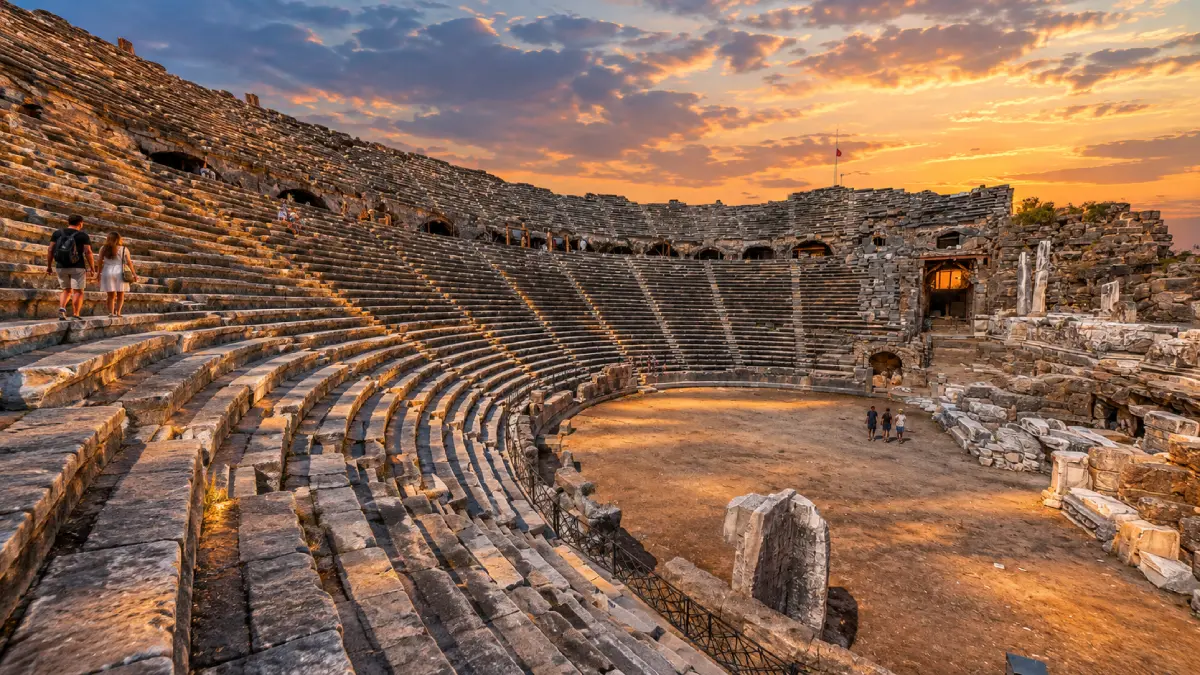
Unlike classic Greek theatres cut directly into mountain slopes, Side's theatre rests on
monumental, freestanding Roman vaults and arches. During late imperial times, high
barrier walls were added to stage gladiator and beast games. The top tiers offer
expansive views over the entire peninsula.
The civic and marketplace centre of the city, once infamous for its massive slave
auctions. Directly adjacent, inside a remarkably preserved 5th-century Roman bathhouse,
the Side Archaeological Museum houses fine Roman statuary, sarcophagi, and friezes.
This triumphal archway and monumental portal formed the main landward entrance into the
fortified city. From here, a colonnaded Roman avenue leads through the ruins straight
into the harbour, separating the historic peninsula from modern Manavgat.
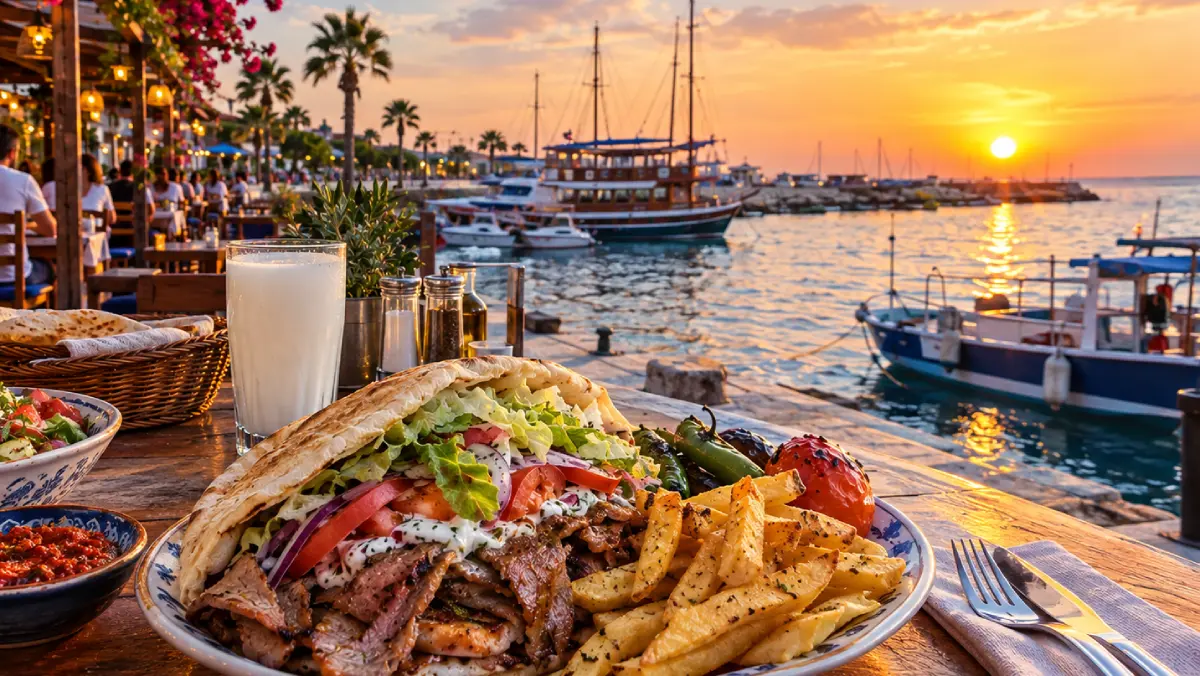
A charming fishing port lined with seafood taverns, sunset cafe terraces, and wooden
gulet excursion boats offering coastal cruises along the Riviera's sandy shores.
Discover Side: Ancient Peninsula, Golden Beaches & Strolls Through
Antiquity
Side is one of the rare places across the Mediterranean where an ancient metropolis isn't an
isolated archaeological park miles away from town. The entire historical core occupies a
narrow peninsula projecting just under one kilometre out into the sea. Step out for morning
coffee, and you'll find yourself strolling along Roman colonnades, walking beneath the grand
Vespasian Gate, and passing the towering walls of a theatre that held 15,000 spectators
nearly two millennia ago.
In ancient Anatolian dialects, the word Side meant
pomegranate. The fruit remains the town's civic symbol to this day: you
will spot it on local emblems, ancient coins in the museum, and at street stalls pressing
fresh juice directly into glasses. Unlike some larger resort towns, the peninsula itself is
free from tall concrete hotels – instead, stone cottages with wooden balconies,
bougainvillea-framed alleys, and a peaceful car-free pedestrian zone dominate the landscape.
How to Spend 1 Perfect Day in Side
Morning (8:30–10:30): Roman Theatre (note ongoing conservation work) & Agora before
tour buses arrive. Midday: Bath Museum or a swim. Late afternoon: Harbour stroll to
the Temple of Apollo for sunset.
Just a 5-minute walk across the peninsula separates shallow, family-friendly West
Beach from the wide, tranquil East Beach backed by Sorgun pine woods.
Thanks to its commanding position on a natural promontory, Side was coveted by countless
powers – from Greek colonisers and Mediterranean pirates to Roman emperors and Ottoman
fishermen. Here is the concise story of its rise, fall, and revival:
7th century BC
Greek Colonisation & Maritime Birth
Settlers from Kyme establish a trading post on the narrow peninsula. Adopting the
indigenous name for "pomegranate", the city minted its own currency and grew into
the foremost naval base of Pamphylia.
1st century BC
Naval Base of Cilician Pirates
Mediterranean pirates turn the sheltered harbour into their primary stronghold,
creating the largest slave-trading hub on the eastern Mediterranean. Roman general
Pompey finally crushes their pirate rule in 67 BC.
2nd – 3rd century AD
The Roman Golden Age
Side's era of peak wealth and architectural splendour. The 15,000-seat amphitheatre,
great public baths, agoras, and harbour-front temples of Apollo and Athena are built
during this boom.
7th – 10th century AD
Arab Raids & Destructive Earthquakes
Successive naval raids from the sea alongside severe earthquakes gradually lay the
classical buildings to ruin. Citizens abandon the promontory, and shifting coastal
dunes bury the marble colonnades for centuries.
Late 19th century (1895)
Revival: The Fishing Village of Selimiye
Turkish refugees from Crete resettle among the ruins, constructing stone cottages
with materials reclaimed from the ancient city. During the late 20th century, this
humble hamlet blooms into one of Turkey's top holiday destinations.
Photo Guide: How to Capture Side Without Crowds
Temple of Apollo at Golden Hour: The warmest light hits the ruins
during the final 45 minutes before sunset, when white marble columns take on a rich
golden-honey glow against the sea. If you want photographs with empty foregrounds,
arrive early between 7:30 and 8:30 AM – morning light is soft, and tour groups do not
arrive until mid-morning.
Interactive Map
Map of Side Ruins, Streets, Beaches & Harbour
All of Side's key landmarks are located within a compact 1 km peninsula. Click any marker to view
its details or open direct directions in Google Maps.
Loading map of Side...
Click or tap to enable map panning
REKLAMA
Beach Guide
Beaches in Side: West Beach or East Beach?
West Beach (Kumköy / Çolaklı)
Families & Water Sports
A broad strip of fine golden sand with gentle, shallow waters extending far out. Lined with a
paved pedestrian promenade full of shops, cafes, and beach clubs.
Sand Quality: Fine, soft sand without pebbles or rocks
Sea Entry: Very gradual and safe for small children
Atmosphere: Lively, close to resort amenities and beach bars
East Beach (Sorgun / Titreyengöl)
Space & Seclusion
Extends east towards the mouth of the Manavgat River. Backed by sand dunes and the lush
Sorgun pine forest, offering open horizons far from dense crowds.
Sand Quality: Coarse sand mixed with fine pebbles along the surf
Sea Entry: Drops off more quickly into deeper water
Where to Eat in Side: Waterfront Taverns, Seafood & Authentic Kebabs
Waterfront tavern in Side serving fresh grilled fish, traditional kebabs, and cold
meze platters (photo: tucoo.pl)
After a day walking the ruins and swimming, nothing beats dinner along the harbour. Side's
culinary scene centres around the marina quayside and pedestrian Liman Caddesi. Here, tables
sit right beside the water, offering open views of the floodlit Temple of Apollo as twilight
falls.
Seafood menus showcase Mediterranean catches: sea bream (çipura) and sea bass
(levrek), simply grilled over charcoal with olive oil and lemon. Meat lovers should
order genuine skewered Adana Kebab (spiced minced lamb) or milder Urfa
Kebab, served over warm lavash bread with charred peppers and tomatoes.
Meze Culture
Begin your meal with traditional cold appetisers: creamy mint yogurt
haydari, spicy tomato-chilli dip ezme, and smoked aubergines.
To explore authentic regional specialties, meat cuts, bazaar sweets, and the ritual of
Turkish coffee, read our full guide to Turkish cuisine.
Travel Logistics
Getting to Side: Airport Transfers, Dolmuş Routes & Parking Rules
Historic shopping lane in Side leading through the old town down to the harbour and
ruins (photo: tucoo.pl)
Directly connected to the major D400 coastal highway, Side is easily reachable whether
arriving from Antalya Airport or taking a day trip from Alanya.
From Antalya Airport (AYT): The airport is about 65 km away. Pre-booked
private transfers or taxis take 50 to 60 minutes door-to-door. Tour operator shuttle
coaches and airport car rentals are also straightforward.
By Local Bus (Dolmuş): Affordable and reliable. From Antalya's main bus
terminal (Otogar), take a regional coach to Manavgat. At the Manavgat station, hop on a
minibus marked Side Antik, which runs every 10 minutes and stops directly
outside the ancient city gate.
From Alanya: Around 60 km away. Regular intercity buses heading toward
Antalya drop passengers at the Side Kavşağı junction, where local dolmuş
connections shuttle you into town in five minutes.
Crucial Parking Note: Vehicle Ban on the Old
Peninsula
The historic peninsula and pedestrian old town are closed to non-resident vehicles. If
driving a rental car, leave it at the large municipal car park (Side Otopark) just
outside the Vespasian Gate. From there, it is an easy 10-minute walk down to the
harbour, or you can hop on an electric shuttle bus for a small fee.
The ultimate sunset and landscape photography spot on the coast
Roman Theatre
Built in the 2nd century AD on arches; held 15,000 spectators
One of Turkey's grandest surviving Roman theatrical structures
Bath Museum
Restored 5th-century Roman bathhouse housing ancient statuary
Paints a rich picture of Side's pirate wealth and imperial history
West Beach
Fine sand, shallow shoreline, long seaside pedestrian boulevard
Best choice for families with young kids and water sports lovers
East Beach
Wide, quiet, natural dunes bordered by Sorgun pine woods
Ideal for travellers seeking space, quiet, and unspoilt nature
KAS Day Trip
Combined day tour: Kurşunlu – Aspendos – Side in 1 day
A balanced way to see ancient archaeology and nature in one outing
Common Questions
Holidaying in Side – FAQs
Where exactly is Side and which sea does it face?
Side is located along the southern coast of Turkey in Antalya Province, on the
Mediterranean Sea. It sits on a rocky peninsula almost midway between Antalya city
(approx. 70 km) and Alanya (approx. 65 km).
What should I see first in Side?
Prioritise the massive Roman Theatre, the ancient commercial Agora, the Temple of Apollo
and Athena down by the harbour, and the Side Archaeological Museum housed within ancient
baths.
What does the name "Side" mean in history?
In ancient Anatolian Luwian dialects, Side meant pomegranate. The fruit
was stamped onto ancient coins minted here and remains the official emblem of the town
today.
Is Side safe from earthquakes?
Antalya Province sits in a region with significantly lower seismic activity than eastern
or northern fault lines in Turkey. Modern hotels and holiday apartments in Side are
built strictly to modern Turkish seismic safety codes.
When is the best time of year to visit Side?
The seaside season runs from May through late October. For combining sea swimming with
comfortable sightseeing without 35°C+ summer heat, the best months are June,
September, and October.
REKLAMA
Passion & Experience
About the Guide Author
I am an avid enthusiast of travel, tourism, and web development. I craft every guide with dedication and attention to detail based on personal travel experiences, enhancing selected visual materials and editorial content with modern digital tools and AI graphics. I make every effort to ensure all information, prices, and tips remain accurate and up to date. If you notice an error, inaccuracy, or recent changes on the ground – I would be grateful for your feedback:

 RESORT GUIDE