Holidaying in Turkey is an effortless delight, provided you understand the practicalities of travelling outside the European Union. From entry regulations and avoiding expensive data roaming charges to smart currency exchange, riding shared dolmuş minibuses, and respectful mosque etiquette – here is your comprehensive pre-flight checklist.
Organising Your Trip to Turkey: Step-by-Step Advice
Turkey delivers world-renowned sunshine, genuine hospitality, and luxurious beach resorts. However, because it sits outside the European Union's administrative borders, a few key preparations make all the difference. To ensure your break in Antalya, Alanya, Side, Bodrum, or Istanbul is completely stress-free, follow our pre-departure schedule.
Pre-Flight Checklist – Your Preparation Timeline
30 Days Before Departure
Check Identification Validity
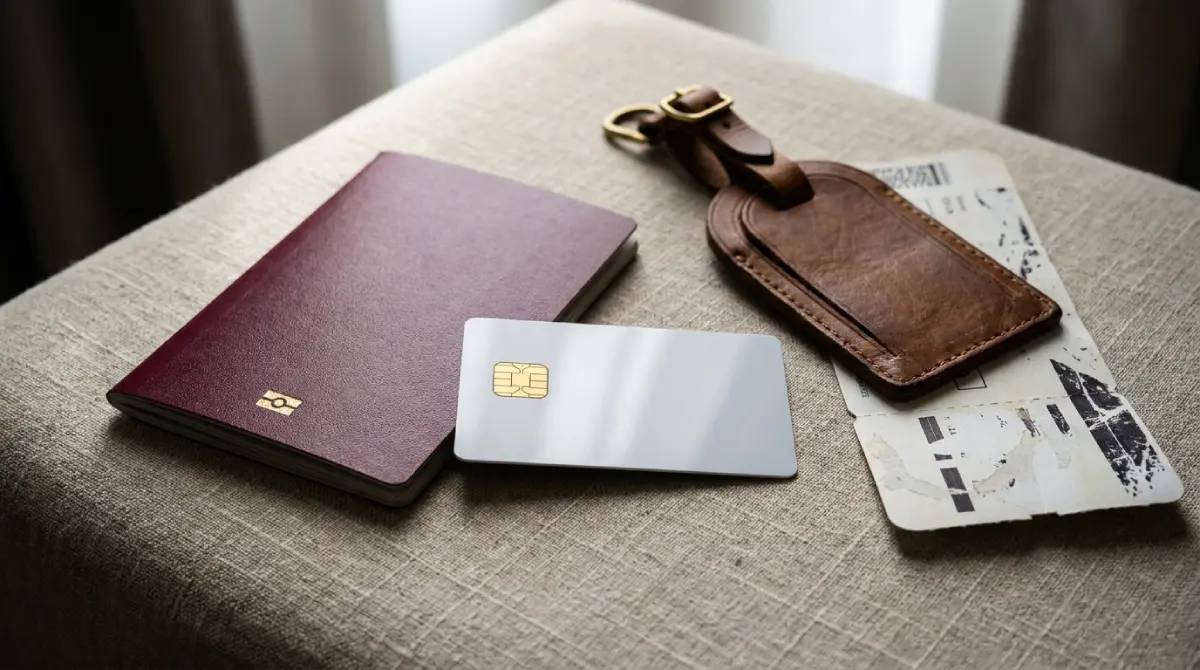
If travelling on a national ID card (eligible for several EU countries), verify that the card is undamaged and valid for your entire stay. If travelling on a passport (mandatory for UK, US, Canadian, and Australian travellers), ensure it has at least 150 days of remaining validity from your scheduled arrival date.
14 Days Before Departure
Arrange Comprehensive Travel Insurance
Because EHIC and GHIC medical reciprocal agreements do not apply in Turkey, purchase a private policy with at least €50,000 / £40,000 emergency medical cover, including medical evacuation, cancellation, and coverage for water sports.
7 Days Before Departure
Finances & Multi-Currency Cards
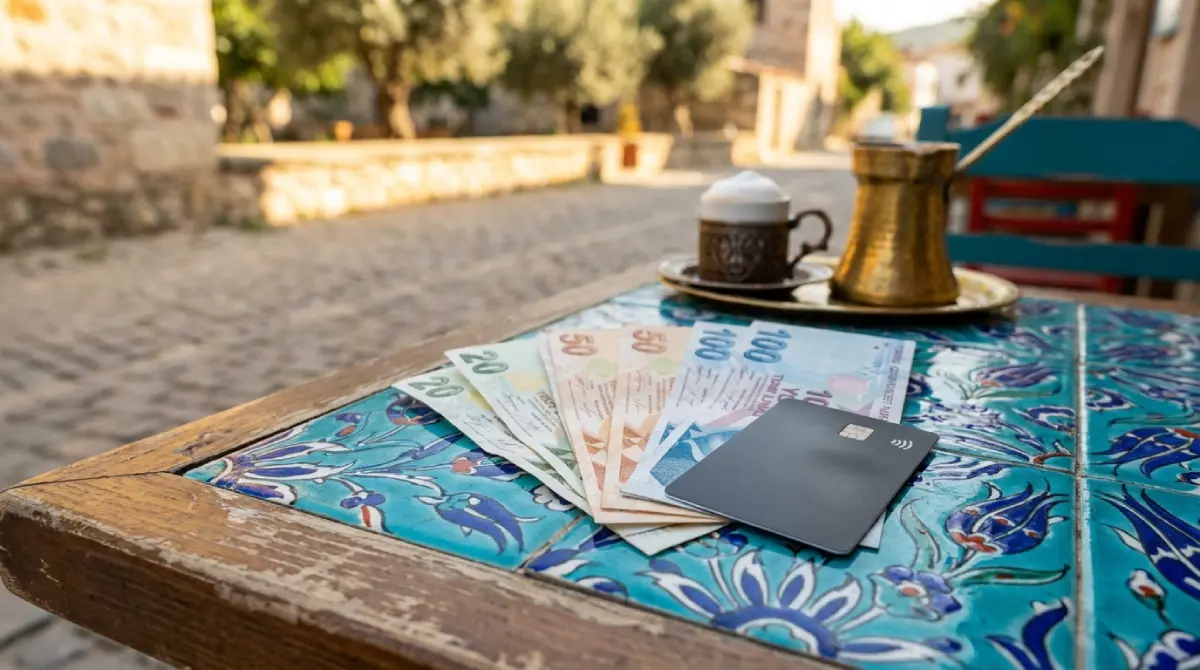
Top up your multi-currency travel debit card (e.g. Revolut or Wise). Also prepare a modest reserve of crisp cash banknotes (€20, €50 or $20 bills without tears or ink stamps) to exchange for liras locally as needed.
24 Hours Before Departure
Mobile Data: Turn Off Roaming & Load an eSIM
Install a digital eSIM data profile on your phone. Crucial tip: before boarding your flight, switch off data roaming on your primary domestic SIM to prevent carrier background charges the second your phone touches Turkish cellular masts.
Upon Landing in Turkey
Airport Transfers & Minor Outlays
Airport exchange booths carry notably high commission spreads. Withdraw a small sum of Turkish Liras from a reputable bank ATM or exchange just €20–€30 at the terminal for immediate taxi fares and snacks, saving the bulk of your exchange for city-centre bureaux (*Döviz*).
Entry Requirements: Passports, ID Cards and Visa-Free Rules
Travellers from the UK, European Union, United States, and Canada can visit Turkey for leisure visa-free for stays of up to 90 days within any rolling 180-day period.
Citizens of several European countries (including Germany, France, Italy, Belgium, the Netherlands, Switzerland, and Poland) may enter using their national identity card instead of a passport. The ID must be valid for the duration of the stay. British, American, and other non-EU passport holders must present a passport valid for at least 150 days from their date of arrival. Children of all ages, including infants, must carry their own individual passport or identity card.
Money & Currency: How Best to Pay in Turkey?
The legal tender of Turkey is the Turkish Lira (TRY / TL). Due to historic inflation, local prices in liras change periodically. The most cost-efficient approach is combining a multi-currency debit card (like Revolut) with a backup of foreign cash (EUR or USD).
In resort towns and tourist bazaars, shopkeepers eagerly accept Euros, British Pounds, and US Dollars, but they apply rounded, unfavourable in-house exchange rates. You will always secure better value paying in Turkish Lira. Exchange cash at licensed high-street exchange booths (Döviz Bürosu), which charge zero commission. When tapping your card on point-of-sale terminals, always choose to be billed in local currency (TRY) to avoid punitive DCC currency conversions.
Mobile Internet & Roaming: Dodging Steep Carrier Fees
Because Turkey is not a member of the European Economic Area, the standard EU "Roam Like at Home" policy does not apply. Standard roaming rates charged by British and European operators can be exorbitant, easily reaching several pounds or euros per megabyte.
The most seamless solution is activating a digital eSIM profile (via Airalo or Maya Mobile) before you depart. Once you land, your phone connects to local 4G/5G towers immediately. If your phone lacks eSIM capability, purchase a physical prepaid tourist SIM from major domestic operators: Turkcell, Vodafone, or Türk Telekom. Airport kiosks charge higher rates, so buying at an official branch in town saves money.
Health, Tap Water and Travel Insurance
Neither the European Health Insurance Card (EHIC) nor the UK Global Health Insurance Card (GHIC) is valid in Turkey. Medical clinics in holiday destinations are privately run; basic consultations typically cost €100–€200, while hospital admissions quickly tally thousands. Dedicated travel insurance is non-negotiable.
Tap Water: Hotel tap water is safe for washing but heavily chlorinated and populated by local mineral microbes your digestive system is not accustomed to. To prevent stomach upsets, stick exclusively to sealed bottled water for drinking, making tea, and brushing your teeth. Pack standard travel pharmaceuticals including rehydration salts, probiotics, and antidiarrheals.
How Best to Pay in Turkey? Payment Methods Compared
A practical breakdown of convenience, cost efficiency, and potential pitfalls for holiday spenders:
Payment Method
Where to Use
Advantages
What to Watch For
Turkish Lira (Cash)
Bazaars, dolmuş buses, small mosques, tipping
Exact local pricing, no currency markups
Exchange in moderate tranches as needed
Multi-Currency Card (Revolut / Wise)
Supermarkets, hotels, pharmacies, restaurants
Near-interbank exchange rates, secure tracking
Always select "Pay in TRY" at card terminals
Euros / US Dollars (Cash)
Day trip bookings, currency exchange bureaux (*Döviz*)
Universally accepted, easy to convert
Notes must be clean with no tears or stamps
Standard Home Bank Debit Card
Emergencies only
Direct access to home bank account
High foreign transaction fees and poor bank rates
Critical Warning: Strict Ban on Exporting Antiques, Stones and Fossils!
Turkish heritage protection laws are exceptionally strict. It is illegal to acquire, possess, or attempt to export any antiquities, cultural property, or archaeological objects. This regulation extends beyond ancient coins or old ceramics bought from street vendors to encompass ordinary-looking stones, pebbles, fossils, or fragments picked up from beaches or around ancient ruins. Airport luggage scanners flag mineral materials; taking items of archaeological or geological heritage is classified as national smuggling, carrying severe detention and multi-year prison sentences!
Getting Around Turkey: How to Ride Dolmuş Minibuses & Taxis
Public transit across Turkey is affordable, modern, and reliable. While long-distance intercity coaches offer airline-style hospitality, local transport within and between coastal towns centres around the legendary dolmuş (shared minibus):
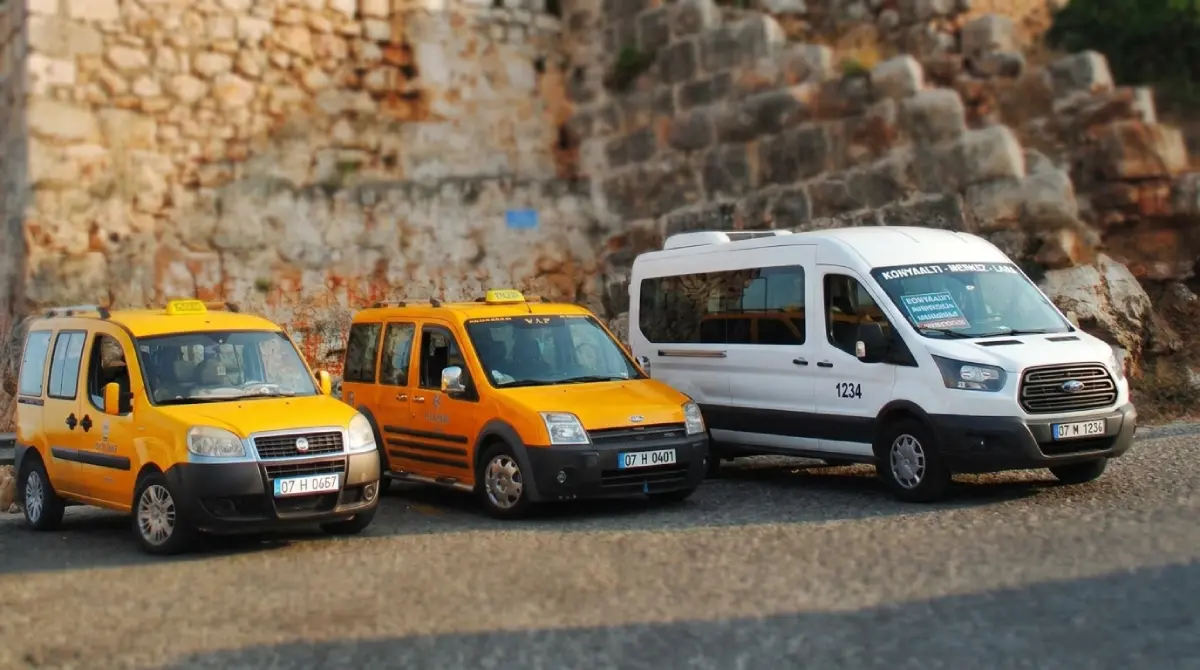
Primary transport in Turkish holiday resorts: metered yellow city taxis and the shared dolmuş minibus network (Photo: tucoo.pl)
1
Flag the Minibus with a Hand Gesture
Dolmuşes are compact white or blue passenger minibuses that follow fixed routes connecting hotels, beaches, and town centres. They pick up passengers at designated bus stops and anywhere safe along their route with a wave of your hand. Key destinations are listed on placards in the front windscreen.
2
Pass the Cash Fare Forward Through Passengers
Fares are paid in cash to the driver. If seated towards the back, hand your coins or notes to the passenger in front of you and state your destination (e.g., "One Alanya" or "Bir Alanya"). Passengers pass the money forward hand-to-hand to the driver, and your exact change is passed back the same way.
3
Request Your Stop
As you approach your resort or destination, announce your stop clearly by saying "İnecek var!" (someone getting off) or simply "Stop please". The driver will pull over safely at the nearest opportunity.
City Taxis: Yellow street cabs are ubiquitous. Always ensure the driver activates the dashboard taximeter (taksimetre) before pulling away. In major metropolises like Istanbul, Izmir, and Ankara, hail licensed vehicles through the BiTaksi app to view routes and pay electronically.
Culture, Mosque Etiquette and Holidays in Turkey
Turkish people are exceptionally welcoming and protective of visitors. Observing a few basic cultural courtesies fosters immediate goodwill:
Visiting Mosques: Always remove your shoes before stepping onto carpeted prayer areas (shelves and bags are provided). Women must cover their hair with a scarf and wear clothing that covers shoulders, chest, and knees. Men should wear trousers or shorts that reach below the knee. Tourist visits are paused during congregational Friday noon prayers.
Photography: Do not photograph military installations, security checkpoints, police stations, or airport border facilities. Always ask permission before photographing local residents, particularly older people or women in traditional attire.
Tea Hospitality: An invitation to sit and sip a tulip glass of hot black tea (çay) in a shop or bazaar stall is a gesture of warm hospitality, not a contractual commitment to make a purchase.
Ramadan & Bayram: In coastal holiday resorts, dining, nightlife, and water sports run completely normally throughout the holy fasting month of Ramadan. At sunset, you may witness the community joy of Iftar (breaking the daily fast) in public squares.
REKLAMA
Smartphone Essentials
Essential Smartphone Apps for Your Holiday in Turkey
Installing these practical tools before you fly helps you navigate public transit, hail licensed taxis safely, translate menus, and avoid expensive carrier roaming charges.
Transport & Cabs
BiTaksi
Turkey’s official taxi-hailing app, operating similarly to FreeNow or Uber. It summons licensed yellow cabs, displays route tracking, calculates estimated fares, and lets you pay securely via credit card.
Mobile Data & eSIM
Airalo & Maya Mobile
Digital eSIM providers offering affordable prepaid mobile data packages for Turkey. Install seamlessly via QR code before leaving home to stay connected the second you land without queued SIM registrations.
Transit & Ferries
Moovit & Istanbulkart
Moovit maps out urban bus, tram, metro, and scenic Bosphorus ferry routes in Istanbul, Izmir, and Antalya. Istanbulkart is the official app to top up your electronic city transit card on the go.
Language & Translation
Google Translate & DeepL
Invaluable when dining in local neighbourhood *lokantas* or shopping at inland markets. Use camera translation modes to instantly read restaurant menus, bus timetables, and grocery ingredients.
Travel Questions
Holidaying in Turkey – FAQs
Do I need a passport or national ID card to travel to Turkey?
Citizens of several European nations (including Germany, France, Italy, Belgium, Switzerland, and Poland) can enter Turkey for tourism using either their national ID card or passport. UK, US, Canadian, and Australian travellers require a passport valid for at least 150 days from arrival. Tourist visits up to 90 days within any 180-day window are visa-free for most European and Western travellers.
What is the best way to pay in Turkey: Euros, Dollars, or Turkish Lira?
The official currency is the Turkish Lira (TRY / TL). For everyday spending, markets, dolmuş buses, and restaurants, paying in Lira or using a multi-currency card (like Revolut) is always the most economical option. While Euros and Dollars are accepted in resorts, shopkeepers round prices in their favour. Exchange modest sums of cash at city bureaux (Döviz).
How can I get cheap mobile internet in Turkey and avoid expensive roaming?
Because Turkey is outside the EU/EEA, standard data roaming from European or British carriers is very costly. The easiest solution is downloading an eSIM profile (via Airalo or Maya Mobile) before you travel, or buying a local prepaid tourist SIM (Turkcell, Vodafone) after landing.
Does the European Health Insurance Card (EHIC / GHIC) work in Turkey?
No, neither EHIC nor UK GHIC cards apply in Turkey. Resort clinics are private and expensive. Comprehensive private travel insurance covering medical treatment of at least €50,000 / £40,000, emergency hospitalisation, and transport is essential.
Are electrical sockets in Turkey compatible with European plugs?
Yes. Turkey operates on 230V at 50Hz, using standard European Type C and Type F two-pin plugs. Travellers from continental Europe do not need adapters. British travellers will need a standard UK-to-European three-to-two-pin plug adapter.
I am an avid enthusiast of travel, tourism, and web development. I craft every guide with dedication and attention to detail based on personal travel experiences, enhancing selected visual materials and editorial content with modern digital tools and AI graphics. I make every effort to ensure all information, prices, and tips remain accurate and up to date. If you notice an error, inaccuracy, or recent changes on the ground – I would be grateful for your feedback:
 TRAVEL ADVISORY