Antalya Province, Serik district (Belkıs village). 45 km east of Antalya, 35 km from Side, and 80 km from Alanya along the D400 highway.
Architect & Theatre:
Designed in the 2nd century AD by Greek architect Zeno for 10,000–12,000 spectators. World-renowned for its intact stage building (scaenae frons).
Aqueduct & Hydraulic Engineering:
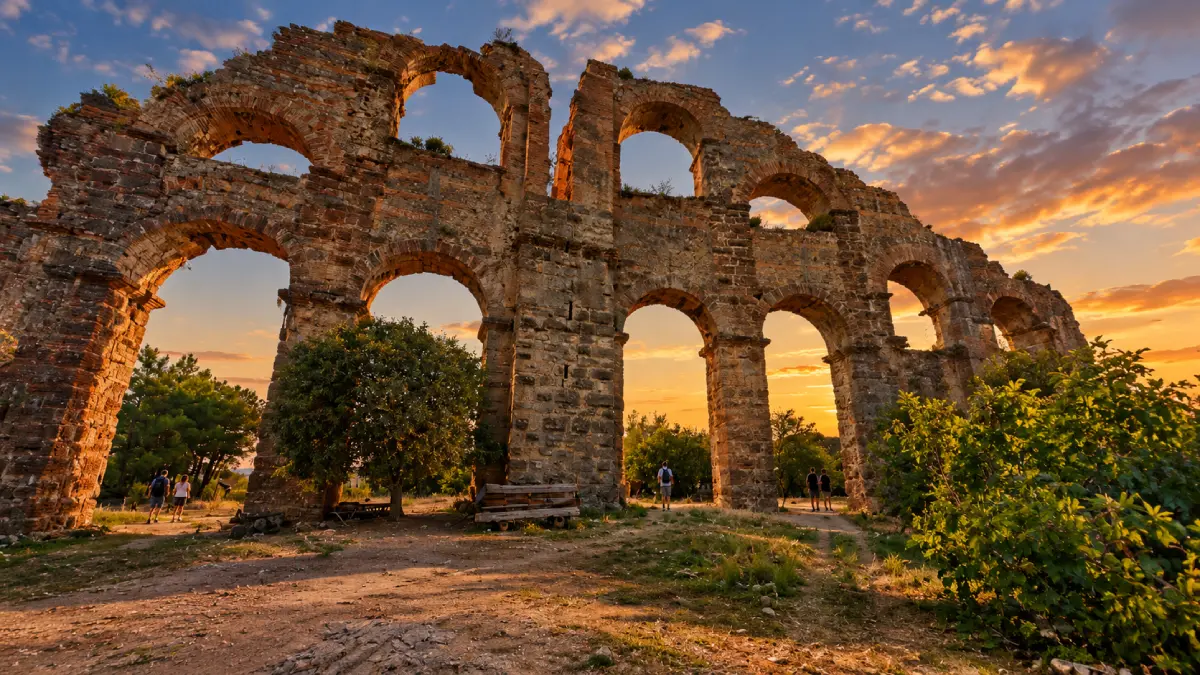
Roman aqueduct featuring exceptionally preserved inverted siphon towers; water was channelled from mountain springs located 15–19 km north.
Best Time to Visit:
Early morning or late afternoon, especially on warm summer days. Plan about 2–3 hours to explore the theatre, acropolis, and surrounding ruins comfortably.
Imagine a classical arena from over 1,800 years ago where the acoustics are so immaculate that an ordinary whisper or coin drop on stage carries distinctly across forty tiers of stone seating. The Roman theatre of Aspendos stands apart as the finest surviving example in Asia Minor, complete with its towering stage building and covered colonnade. Discover the city's rich Pamphylian history, Roman hydraulic engineering, and practical tips for an unforgettable visit.
Aspendos: Where Classical Architecture Stands Miraculously Preserved
Most classical theatres across the Mediterranean basin survive today merely as weathered shells – centuries of earthquakes, erosion, and quarrying for building stone stripped away their stage backdrops and arcades. Aspendos stands as an extraordinary exception. Entering through vaulted stone vomitoria, you confront a towering, two-storey marble facade, while above the cavea sits a continuous arcaded gallery that once sheltered spectators and perfected the acoustics.
The ancient metropolis arose along the banks of the Eurymedon River (modern Köprüçay), which was fully navigable from the Mediterranean coast during antiquity. This strategic waterway propelled Aspendos into a formidable commercial powerhouse – famous across the ancient world for exporting lake salt, virgin olive oil, prized Pamphylian warhorses, and luxury wool. It was among the first cities in Asia Minor to strike its own silver coinage, depicting wrestlers in tribute to its proud athletic tradition.
The Chronicles of Aspendos – 3,000 Years on a Timeline
c. 1000 BC
Greek Colonisation & City Foundation
According to ancient tradition, settlers from the Argolid led by the seer Mopsos established the colony after the Trojan War. The town bore the native Anatolian name Estwedys, as stamped on its earliest silver staters.
467 BC
The Battle of the Eurymedon River
At the gates of Aspendos, Athenian general Cimon achieved one of antiquity's decisive triumphs. In a single day, his forces routed the Persian naval fleet in the river mouth and crushed their land army on the shore, freeing Greek coastal cities from Persian dominion.
333 BC
Confrontation with Alexander the Great
The citizens offered Alexander a tribute of horses and gold to spare the city from an armed garrison, but attempted to renege on their pact. An infuriated Alexander marched in, seized the lower city, and levied double tribute alongside a permanent military garrison.
190 BC – 2nd Century AD
Roman Golden Age & Construction of the Theatre
Under Roman administration, commerce flourished. Around 160–180 AD during the reign of Emperor Marcus Aurelius, the monumental theatre designed by architect Zeno was dedicated to the city's gods and the imperial family, accompanied by an advanced siphon aqueduct.
13th Century AD
Seljuk Royal Palace & Rescue from Ruin
Seljuk Sultan Alaeddin Keykubad was so captivated by the theatre's grandeur that he comprehensively restored the structure, converting it into a royal palace and roadside caravanserai. This continuous medieval stewardship preserved the building for modern generations.
1930
Atatürk's Visit & Modern Rebirth
Mustafa Kemal Atatürk toured Aspendos on March 9, 1930. He famously urged that the monument not remain an unused relic, inspiring meticulous conservation work and initiating its reuse for international concerts and stage productions.
What to See in Aspendos? Masterpieces of Ancient Engineering
Many commercial bus tours pause only for 45 minutes inside the theatre before departing. That is a significant missed opportunity. Ancient Aspendos comprises two rich archaeological sectors: the lower monumental theatre and the expansive upper civic acropolis, framed by one of the finest Roman aqueducts in existence.
Architecture: Masterpiece by Architect Zeno
1. Roman Theatre of Aspendos – Antiquity's Greatest Arena
Constructed between 160 and 180 AD under Emperor Marcus Aurelius, Greek inscriptions attribute the design to architect Zeno, son of Theodorus, funded by two wealthy local brothers, Curtius Crispinus and Curtius Auspicatus. Modern archaeological surveys place seating capacity at 7,300 to 7,600 spectators, extending to around 8,500 when utilising stair aisles. A broad horizontal walkway (diazoma) divides the 41 tiers into upper and lower seating zones.
The crowning marvel is the stage building (scaenae frons), which survives to its complete original two-storey height. It was originally adorned with 40 marble columns, elaborate pediments, and statuary centred on Dionysus. Above the top tier, a continuous arcade of 59 arches provided welcome shade and formed an acoustic reflector that continues to astound acoustic engineers today.
Engineering: Inverted Hydraulic Siphons
2. Roman Aqueduct & Preserved Siphon Towers
Located roughly 1.5 km north of the theatre across the agricultural plain stand the arches of the Roman water system. UNESCO records note that water was channelled from springs situated 15 to 19 km north in the Taurus Mountains. Dating to the Imperial Roman period, it is internationally renowned for having the best-preserved inverted siphons anywhere in the Mediterranean.
To convey water across a 1.7-kilometre-wide valley depression without constructing unfeasibly high arched bridges, Roman hydraulic engineers used an inverted pressure siphon. Two massive stone hydraulic towers standing roughly 30 metres tall acted as pressure release chambers, allowing closed stone and lead piping to push water uphill directly into the acropolis reservoir.
Acropolis: The Forgotten Upper City
3. Civic Basilica & Agora on the Acropolis Hill
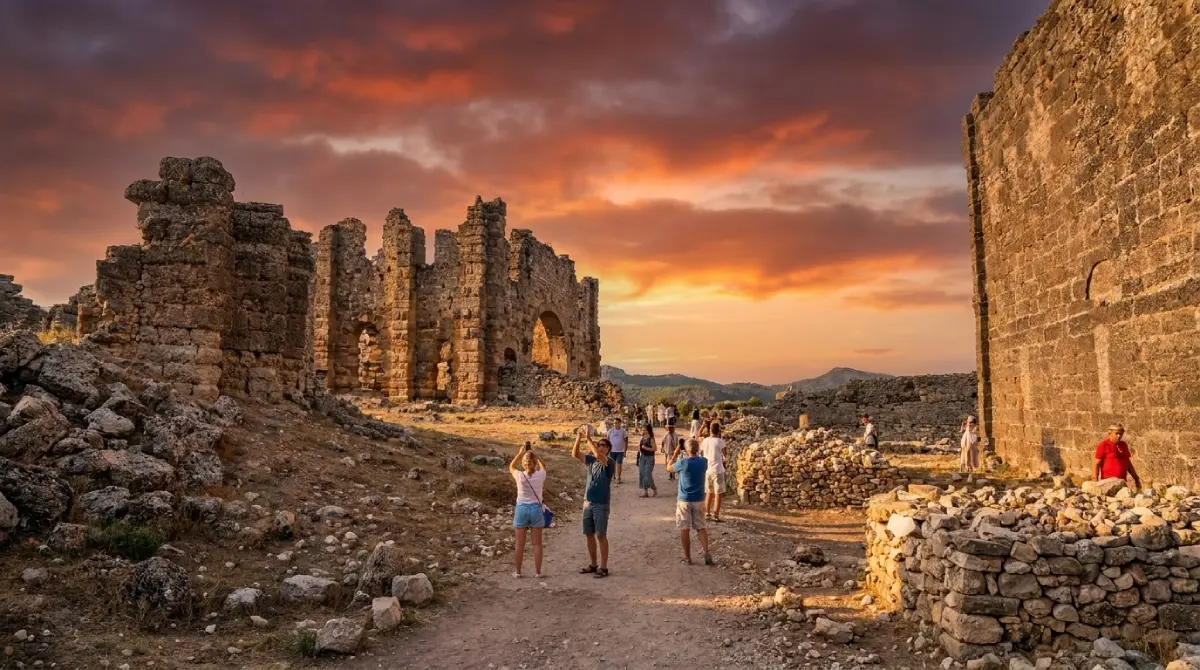
A scenic trail ascending from the theatre's southern flank leads to the acropolis plateau, where the bustling heart of civic life unfolded. The most prominent silhouette is the civic basilica, a massive hall measuring roughly 105 metres in length and 27 metres in width. It served as the municipal law court, administrative centre, and hall for commercial treaties.
Adjacent to the basilica lies the public agora, once flanked by shaded colonnaded porticoes (stoas) housing merchants and exchange stalls. Today, pine trees and wild thyme frame stone drainage gutters, carved architraves, and pedestal bases inscribed with honorary decrees in ancient Greek.
Civic Life: Fountains & Assembly Hall
4. Monumental Nymphaeum, Bouleuterion & Stadium
At the northern perimeter of the agora stands the Nymphaeum – a two-storey public fountain facade measuring 32 metres across, once fitted with marble niches, statuary, and water basins supplied directly by the aqueduct.
Beside it sits the Bouleuterion (council chamber and covered odeon) where elected citizens convened. Along the north-eastern hillside stretch the ruins of the ancient stadium, over 215 metres in length. In its heyday, thousands gathered on its tiers to cheer chariot races, athletics, and the wrestling competitions for which Pamphylia was famed.
Historic Crossing: Seljuk Arches on Roman Piers
5. The Eurymedon Bridge (Köprüpazar Köprüsü)
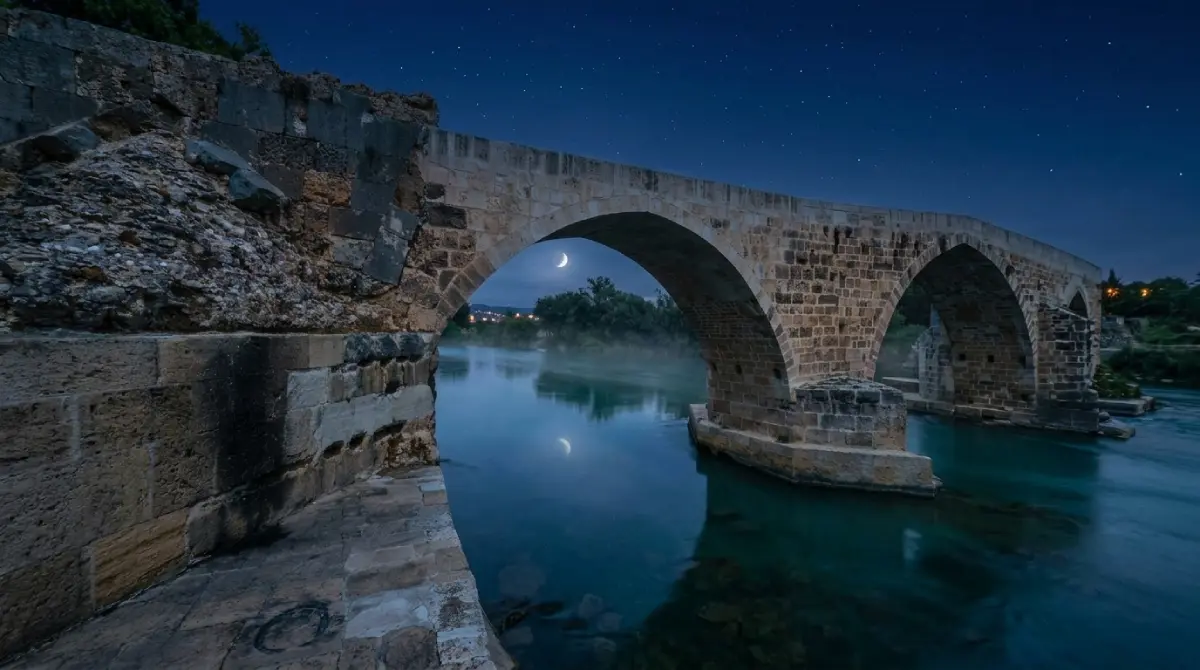
Roughly 1 km south of the theatre spans a remarkable historic stone bridge over the Köprüçay River. The existing 225-metre-long, nine-arched structure dates to a 13th-century Seljuk rebuild under Sultan Alaeddin Keykubad, constructed directly on top of submerged 4th-century Roman bridge foundations.
The bridge is closed to vehicular traffic, making it a peaceful walking spot. Because the Seljuk masons reused older Roman piers that were offset by river currents, the bridge features a unique angled zig-zag bend in its midpoint, offering vistas over citrus groves towards the Taurus peaks.
The Legend of the King's Daughter & the Whispering Architect
Local folklore tells of a king of Aspendos who offered his beautiful daughter Semiramis in marriage to whoever built the most beneficial and magnificent monument for the city. Two master craftsmen entered the competition. The first completed the monumental aqueduct that brought sweet mountain water to every home. The king was ready to award his daughter to the aqueduct engineer, but visited the newly finished theatre by young architect Zeno before deciding. Standing on the highest gallery tier, the king suddenly heard a clear whisper from the distant stage floor: "The king must give me his daughter, the king must give me his daughter..." Astonished by the supernatural acoustics, the ruler realised Zeno's acoustic genius and granted him the princess's hand.
REKLAMA
How to Visit Aspendos? Step-by-Step Practical Plan
To experience the full scale of Aspendos rather than simply peering into the theatre, follow this tested itinerary:
1
Test the Stage Acoustics Early in the Morning
Arrive around opening time before tour groups arrive. Stand on the marble circle at the centre of the orchestra and clap your hands or drop a coin – the sound reflects off the scaenae frons walls with crystalline clarity up to the highest colonnade.
2
Ascend to the Covered Arcaded Gallery
Climb the stone stairs to the top tier under the 59 arches. From here, you appreciate the geometry of the seating bowl and enjoy sweeping vistas across the river valley towards the mountains.
3
Hike Up to the Acropolis Plateau (Upper City)
Exit the theatre and follow the marked path leading uphill behind the southern rim. Within a few minutes, you reach the quiet ruins of the 105-metre basilica, nymphaeum fountain, and agora.
4
Drive Out to the Roman Aqueduct Siphons
Follow local signs north from the archaeological parking area across the plain. Viewing the two 30-metre pressure towers standing tall among agricultural fields gives an authentic appreciation of Roman hydraulic mastery.
Getting to Aspendos: Car, Public Transit & KAS Tours
Positioned near the multi-lane D400 coastal highway connecting Antalya and Alanya, reaching Aspendos is straightforward:
By Rental Car from Antalya: Approximately 45 km east. Drive along the D400 past Serik, then follow well-marked brown archaeological signs turning north towards Belkıs. Travel time: approx. 40–45 minutes.
By Rental Car from Side / Manavgat: Just 35 km west via the D400. The drive takes roughly 30 minutes.
By Rental Car from Alanya: Roughly 80 km west along the D400. Driving time is approximately 1 hour 15 minutes.
By Public Transport (Bus + Dolmuş): Take any intercity coach along the D400 to the central bus station in Serik (Serik Otogarı). From there, local minibuses or taxis cover the final 4 km to the ticket gates at Belkıs.
Top Regional Day Tour: The 3-in-1 KAS Package
The full-day excursion Kurşunlu – Aspendos – Side (KAS Tour) is one of the most popular regional itineraries on the Turkish Riviera. It seamlessly pairs a morning walk through the shaded pine oasis of Kurşunlu Waterfalls with exploring the grand theatre of Aspendos and catching sunset at the Temple of Apollo in historic coastal Side.
Insider Advisory: What to Pack for the Ruins
The theatre interior and the acropolis plateau are completely open to direct Mediterranean sunshine. Bring a wide-brimmed sunhat, high-SPF sunscreen, and at least 1 litre of drinking water per person. Wear supportive trainers or light hiking shoes – exploring the basilica and acropolis involves uneven gravel trails and weathered marble steps.
Opera Festivals & the Modern Aspendos Arena
For decades, the Roman theatre served as an active venue, hosting symphonies, ballets, and world-class tenors during the International Aspendos Opera and Ballet Festival. However, concerns regarding heavy stage equipment and deep acoustic bass frequencies causing micro-fractures in the 1,800-year-old mortar led to strict conservation limits on amplified rock and pop concerts.
In 2026, the 33rd edition of the International Opera and Ballet Festival officially returned to the authentic ancient theatre, staging classical masterpieces under starlit skies in September. For amplified theatrical extravaganzas and large-scale dance productions like Fire of Anatolia, events take place at the modern, purpose-built Aspendos Arena complex located a short drive away.
Aspendos – Practical Information Summary
Key visitor details before planning your archaeological trip:
Category
Details & Practical Tips
Opening Hours
Currently listed by the Turkish Ministry of Culture as 08:00–22:00 (ticket booth closes at 21:30). Hours can vary for night visits or special festival evenings; check the official Turkish Museum portal before travelling.
Admission Fees
Standard ticket for foreign visitors: €15. Turkish citizens use MüzeKart regulations. The ticket grants access to both the theatre and the upper acropolis.
Roman Aqueduct
The aqueduct ruins stand in open agricultural fields 1.5 km north of the main gate; viewing the exterior arches and siphon towers is free.
On-Site Parking
Organized vehicle parking is available directly outside the main ticket gates.
Visit Duration
Theatre only: approx. 45–60 minutes. Theatre, acropolis ruins, and aqueduct: approx. 2 to 3 hours.
Accessibility
The lower orchestra floor is accessible flat ground. Reaching the upper tiers, the covered arcade, and the acropolis hill requires navigating steep stone stairs and gravel trails.
Geography & Orientation
Aspendos on the Map – Locating the Theatre & Aqueduct
Use this map to plan your route from the D400 highway at Serik to the theatre at Belkıs and the Roman aqueduct siphons:
REKLAMA
Frequently Asked Questions
Visiting Aspendos – Q&A
Where is the ancient city of Aspendos located?
Aspendos is situated in southern Turkey in Antalya Province, near the town of Serik (Belkıs village). It is roughly 45–50 km east of Antalya, 35 km west of Side, and 80 km west of Alanya, easily reached in 30 to 75 minutes via the D400 highway.
What makes the theatre of Aspendos so uniquely well-preserved?
Aspendos preserves its two-storey stage building (scaenae frons) alongside the majority of its cavea seating tiers and upper arcaded gallery. Recent studies estimate capacity at 7,300–7,600 (up to 8,500 using stairs). Its 13th-century restoration and use as a royal residence by Seljuk Sultan Alaeddin Keykubad safeguarded the monument across the centuries.
Are concerts and festivals still performed in the theatre?
Yes. In 2026, the theatre hosted the 33rd International Aspendos Opera and Ballet Festival with six official performances in September. The modern Aspendos Arena serves as a separate venue for amplified modern shows and large dance troupes.
What else is there to see in Aspendos besides the theatre?
Beyond the theatre, do not miss the Roman inverted siphon aqueduct on the plain, as well as the upper Acropolis ruins: the 105-metre basilica, market agora, nymphaeum fountain, bouleuterion council hall, and ancient stadium.
What time of day is best to visit?
Early morning (08:30–10:30) or late afternoon (after 16:30) are ideal to avoid peak midday heat and large tour buses. Late afternoon light is particularly flattering for photographing the golden stone of the theatre and aqueduct.
I am an avid enthusiast of travel, tourism, and web development. I craft every guide with dedication and attention to detail based on personal travel experiences, enhancing selected visual materials and editorial content with modern digital tools and AI graphics. I make every effort to ensure all information, prices, and tips remain accurate and up to date. If you notice an error, inaccuracy, or recent changes on the ground – I would be grateful for your feedback:

 ANCIENT MASTERPIECE