Cappadocia at a Glance – Essential Travel Insights
Location & Access:
Central Anatolia, far inland from the Turkish Riviera. Major sights are located within Nevşehir Province, accessed via Nevşehir Kapadokya (NAV) or Kayseri (ASR) airports.
Geological Origin:
Volcanic tuff beds sculpted across millions of years by wind and water. In 1985, UNESCO inscribed Göreme National Park and the Rock Sites of Cappadocia on its World Heritage List.
Monuments & Subterranea:
Byzantine cave churches and frescoes in Göreme, the rock citadel of Uçhisar, and the deep underground labyrinths of Derinkuyu and Kaymaklı.
Suggested Stay:
Plan for 2 to 3 days to hike the valleys, explore the rock-hewn heritage, discover an underground city, and preserve a reserve morning for balloon flights.
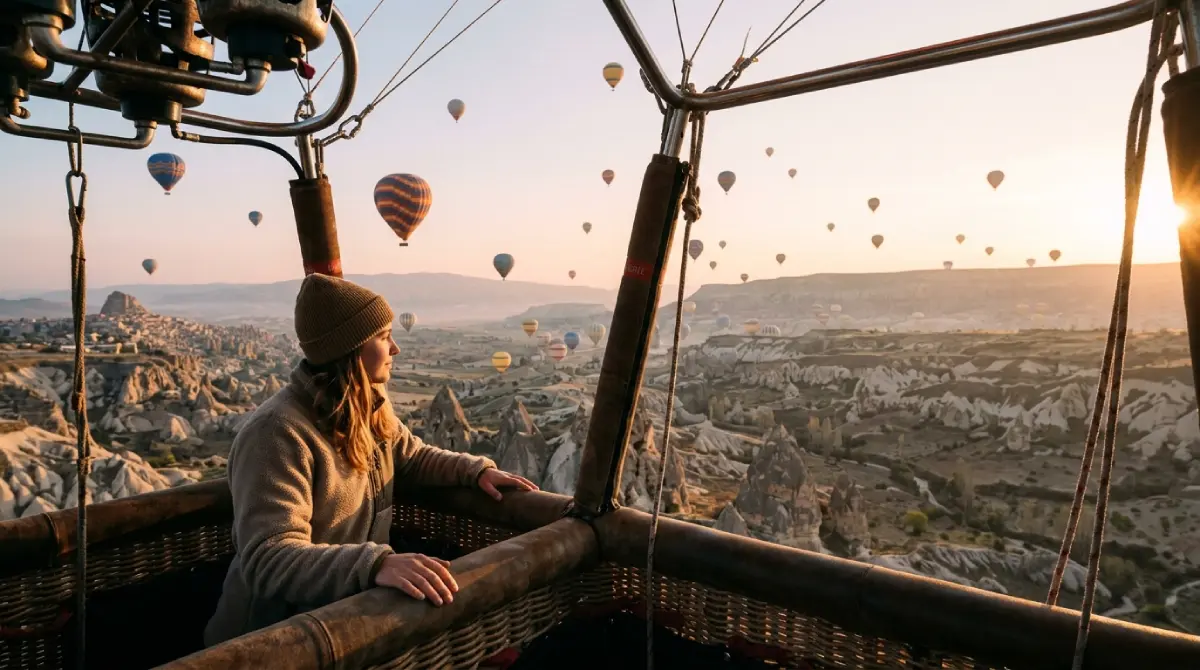
Picture a dawn when the sky above Göreme slowly turns from deep indigo to warm amber, and scores of hot air balloons begin their silent ascent over the ridges. As morning sunlight spills across the volcanic tuff pillars, you quickly understand why Cappadocia is celebrated among the world's most breathtaking geological landscapes. Yet the balloons are merely the opening chapter: hewn deep into these stone spires are monastic chapels, subterranean cities, and quiet hiking trails that reward a measured pace. Here is how to experience Cappadocia without turning your journey into a hurried checklist.
Cappadocia – From Volcanic Ashes to Rock-Hewn Cities
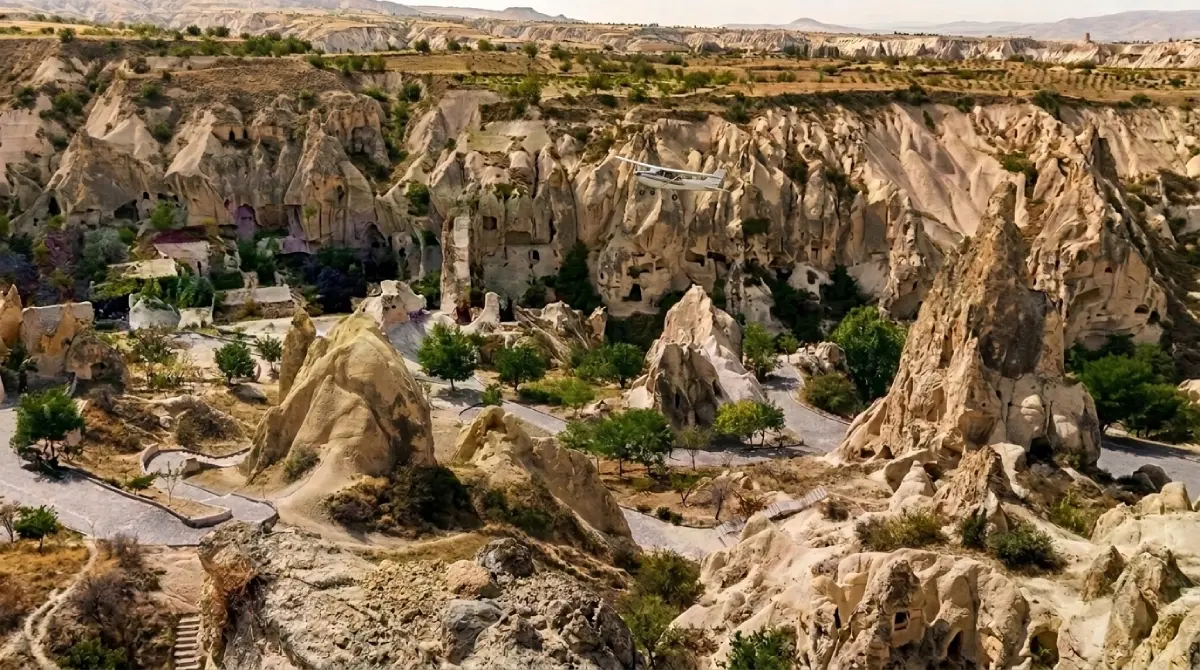
The best way to understand Cappadocia is to start with the stone beneath your feet. Today, the horizon bristles with stone pillars, mushroom caps, and slender minarets, but the story began millions of years ago in volcanic catastrophe. Ancient eruptions from surrounding peaks—chiefly Mount Erciyes and Mount Hasan—blanketed the central Anatolian plateau with thick deposits of ash and lava. Over epochs, this compressed into volcanic tuff: a rock soft enough to be chiselled with simple tools, yet durable enough to sustain upright pillars once exposed to the elements.
Through subsequent millennia, rainwater runoff, winter frost, and wind currents chiselled the plateau into convoluted canyons, cones, and spires. The locals call them peri bacaları—fairy chimneys. Human communities soon recognised that this stone offered shelter unlike any other: they carved living rooms, pigeon lofts, chapels, and wine presses straight into the cliffs. In Cappadocia, the geology has never been merely scenic scenery; it became the very fabric of daily survival.
Cappadocia Through the Centuries – From Ancient Settlements to UNESCO
2nd Millennium BC & Beyond
Ancient Anatolian Civilisations
Long before modern explorers arrived, the region lay within the trade networks of ancient Anatolia, including the sphere of the Hittite empire. While the soft rock invited early excavation, the underground cities cannot be attributed to a single date or single culture; they evolved through successive generations of inhabitants who expanded existing cavities.
6th–4th Century BC
Cappadocia Under Persian Administration
During the Achaemenid era, the territory formed a vital Persian satrapy. Popular accounts frequently link its name to an ancient Persian etymology meaning "the land of beautiful horses." While linguists treat this as a traditional reading rather than an established certainty, the historical importance of local horse-breeding and Anatolian trade routes remains unquestioned.
Late Antiquity to Middle Ages
Monastic Communities & Painted Sanctuaries
In late antiquity and the Byzantine era, monastic life flourished within the secluded valleys. Early Christian scholars, notably the Cappadocian Fathers such as Saint Basil the Great, shaped monastic rules here. Monks chiselled refectories, hermit cells, and domed sanctuaries out of the tuff, covering the stone with narrative biblical frescoes.
Early Middle Ages
Subterranean Complexes as Collective Shelters
Beneath the open valleys, vast multi-level subterranean settlements developed complete with ventilation channels, grain stores, and livestock stables. During periods of military raid and incursion, entire rural communities withdrew below ground, securing access tunnels with heavy wheel-shaped stone doors.
1985
Inscription on the UNESCO World Heritage List
UNESCO formally inscribed the property under the title "Göreme National Park and the Rock Sites of Cappadocia." The designation protects the Göreme basin and selected rock-hewn monuments and underground settlements, recognizing their exceptional universal cultural and natural significance.
What to See in Cappadocia? Six Sights That Weave Together
An Iconic Regional Experience
1. Hot Air Balloon Flights – Dawn from a New Perspective
For many travellers, the journey begins in the chill of pre-dawn twilight. Transfer vans assemble in the launch fields, burner flames roar into life, and the sky slowly transitions from charcoal to amber. When calm winds and civil aviation authorities grant permission, dozens of balloons lift gently into the air, drifting over the ridges and fairy chimneys of Göreme.
Practical Insight: Never assume a flight is guaranteed on a specific morning. When wind speeds or visibility become unfavourable, launches are paused for safety. If ballooning is your core priority, reserve at least two or three mornings in the area and review your operator's refund and rescheduling terms in advance.
UNESCO: Byzantine Murals Preserved in Stone
2. Göreme – Sacred Churches Hewn in Stone
After sunrise over the ridges, head toward the Göreme Open Air Museum. Behind humble doorway openings carved into the stone cliffs lie Byzantine churches, monasteries, and refectories. The Apple Church (Elmalı Kilise), the Church of Saint Barbara, and the Snake Church (Yılanlı Kilise) demonstrate how intimately early communities integrated worship with their natural geology.
If open during your visit, explore the Dark Church (Karanlık Kilise). Because only minimal natural light penetrates its windows, its rich biblical frescoes remain remarkably vibrant. Entry rules and supplementary ticketing may apply, so check the official Turkish museum portal before planning your visit.
Subterranean Corridors, Chambers, and Ventilation Shafts
3. The Underground Cities: Derinkuyu and Kaymaklı
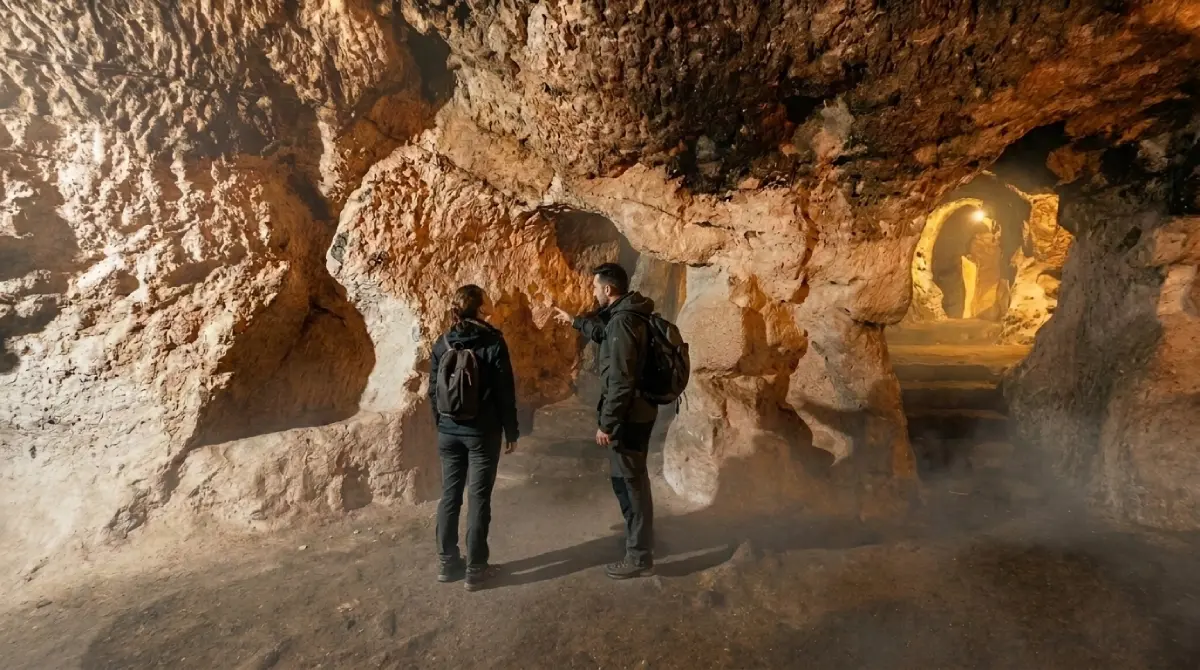
The next stage of the story descends beneath the soil. Official survey records estimate between 150 and 200 underground settlements scattered across Cappadocia, though only a fraction are excavated and accessible. The best known are Derinkuyu and Kaymaklı, where chambers carved into soft tuff served as cellars, stables, bakeries, and places of prayer.
Deep ventilation shafts channelled fresh air from above, occasionally doubling as wells. Heavy wheel-shaped stone doors could be rolled across connecting corridors from the inside to halt intruders. When entering, slow your pace and mind your footing: passages are narrow, low-ceilinged, and steep in sections. It is an impressive engineering feat, but requires comfort with close quarters.
Expansive Vistas Over Valleys and Volcanoes
4. Vistas from Uçhisar Castle and Neighbouring Ortahisar
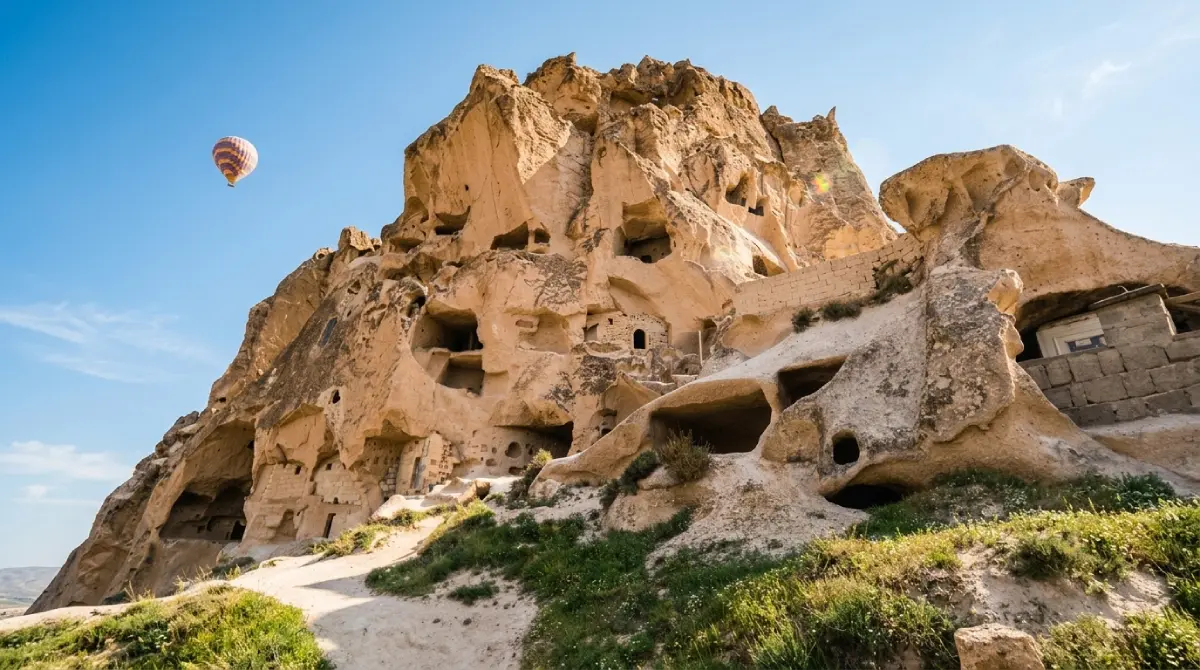
Leaving the underground tunnels behind, return to open air and take in Cappadocia from its highest vantage. The natural rock promontory of Uçhisar, honeycombed with chambers and tunnels across centuries, served historically as a watchtower and strategic redoubt, offering unobstructed panoramas over the surrounding terrain.
A stone staircase leads to the summit, making sturdy footwear helpful for the climb. On clear days, the view stretches across the valleys surrounding Göreme toward the snowy bulk of Mount Erciyes on the horizon. Nearby lies Ortahisar—a distinct rock citadel and village community with its own striking silhouette, well worth noting on your map.
Hiking Trails Among Fairy Chimneys and Natural Sculptures
5. The Valleys: Love, Monks (Paşabağ), and Imagination (Devrent)
Wandering through the valleys reveals how drastically the landscape shifts around every corner. Rather than trying to visit every spot in haste, pick one or two to explore at leisure:
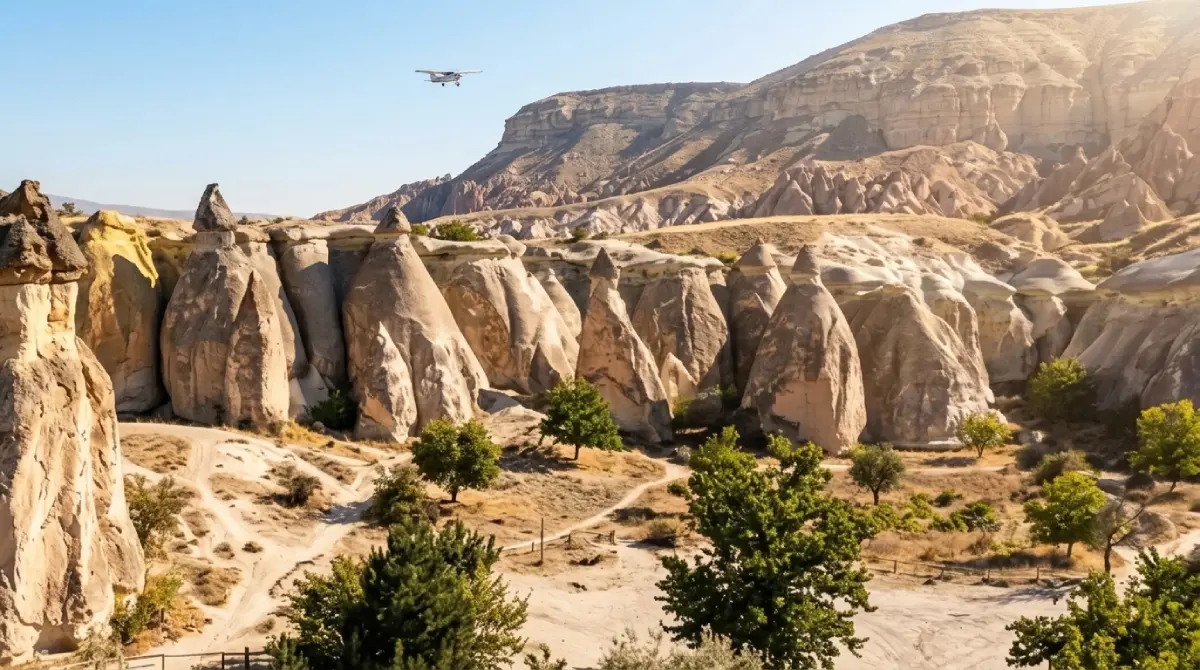
Monks Valley (Paşabağ): Celebrated for dramatic, multi-capped fairy chimneys where early Christian hermits once lived in seclusion inside carved niches.
Love Valley: Instantly recognizable by its soaring, slender stone pillars rising dramatically from the valley bed, best enjoyed on foot or from the upper rim.
Imagination Valley (Devrent): Instead of classic chimneys, this landscape features wind-worn animal shapes, including the famous natural camel formation.
Canyon & River: 14 km of the Melendiz Gorge
6. The Verdant Canyon of Ihlara & the Melendiz River
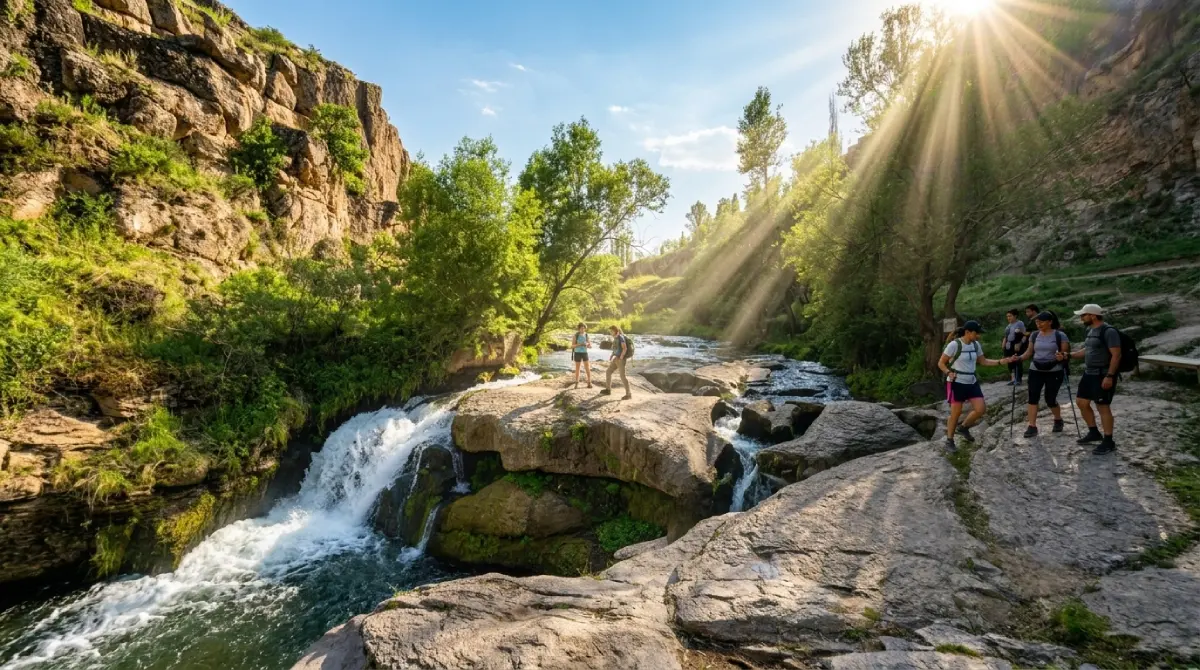
For a refreshing contrast to the arid volcanic plains, head south-west toward Ihlara Valley. This canyon extends for roughly 14 km, flanked by cliff walls that reach 100 to 120 metres in height, carved out by the rushing waters of the Melendiz River.
Along the riverbanks beneath poplar and willow trees lie dozens of early rock-cut chapels, including the Church Beneath the Trees (Ağaçaltı Kilise). Strolling along the water reveals a serene, sheltered side of Cappadocia. You do not need to walk the entire length: choose a shorter segment matching your schedule and note your entry and exit staircases beforehand.
Stay a Little Longer: Cave Hotels and the Potters of Avanos
Experiencing Cappadocia often includes spending a night in a traditional cave hotel. Across Göreme, Uçhisar, and Ürgüp, accommodations range from simple restored stone rooms to boutique properties with panoramic terraces overlooking the morning balloons. Look at photos of your specific room before booking and note that balloon views depend on seasonal flight paths. The next day, consider a short drive to Avanos along the Red River (Kızılırmak), where artisans still shape regional red clay on kick-wheels as their predecessors have for generations.
Sunrise (Balloons): One of the most accessible elevated viewpoints in Göreme is Aydın Kırağı, commonly known as Lovers Hill. Check if local entry rules or nominal fees apply, and arrive about 30 minutes before first light. Hotel rooftop terraces are often reserved exclusively for registered guests, so respect private properties.
Sunset: Head to the Red Valley (Kızılçukur), where iron-rich tuff layers glow with shades of copper, rust, and rose as the sun dips. Plan your return before dusk settles, as trails through the valley can be disorienting in the dark.
Two or Three Days in Cappadocia – An Unhurried Plan
After gathering your list of sights, the practical question becomes how to link them effectively. Local agencies frequently organize day trips into the "Red Tour" and "Green Tour." While these are commercial titles rather than rigid state routes, they offer a sound structure for self-guided travellers or custom itineraries:
1
Day 1: The Red Tour – The Heart of the Valleys
If conditions allow, begin at sunrise with a balloon flight or by watching the launches from Lovers Hill. Afterwards, visit the Göreme Open Air Museum, followed by Paşabağ, Devrent, and the pottery workshops of Avanos. Conclude the afternoon with a panorama from the base of Uçhisar Castle.
2
Day 2: The Green Tour – Underground Depths & Canyons
Dedicate the morning to Derinkuyu or Kaymaklı. Continue south toward Ihlara Valley for a relaxed walk along the Melendiz River, followed by a visit to the rock-hewn Selime Monastery and a viewpoint overlooking Pigeon Valley.
3
Day 3: Slower Pace, Hiking & Local Flavours
Keep your third day unhurried: take a quiet walk through Love or Rose Valley, wander the stone streets of Ürgüp or Mustafapaşa, and savour regional dishes, discovering what makes authentic Turkish cuisine so beloved. This is the moment to revisit your favourite viewpoint rather than racing to check off another sight.
How to Reach Cappadocia Without Wasting Travel Time
Because Cappadocia lies in the heart of Anatolia, planning transport before confirming accommodation makes all the difference:
Organized Tours from the Riviera (Antalya, Alanya, Side): A convenient solution if you are vacationing on the southern coast and prefer not to organize transport independently. Operators offer 2- or 3-day coach packages; check travel times, hotel details, guide languages, and included entrance tickets. The one-way drive from Antalya is around 500 to 550 km and typically takes most of a day with rest stops.
By Air: The nearest airports are Nevşehir Kapadokya (NAV) (approx. 40 km from Göreme) and Kayseri (ASR) (approx. 70 km). Connection options depend on the season. Shared airport shuttle vans should be reserved in advance to drop you directly at your hotel door.
By Rental Car: Having your own vehicle makes it straightforward to reach trailheads and quieter viewpoints independently. Roads between main towns are modern, though access lanes to trailheads and valleys can be unpaved or narrow. Renting a car in Kayseri, Nevşehir, or Antalya works well depending on your broader travel route.
Cappadocia in Practice – Essential Visitor Advice
Key logistical details to help you prepare smoothly for your journey:
Category / Parameter
Practical Insights
Best Base Locations
Göreme (central for valley trails and balloon views), Uçhisar (elevated, quiet, with panoramic cave suites), Ürgüp (bustling town life, dining, and local vineyards).
Museum Opening Hours
Check each site individually, as hours differ. Official museum records list hours such as 08:00–17:45 for Göreme, 08:00–18:00 for Derinkuyu, and 08:00–17:00 for Kaymaklı; ticket booths close earlier. Verify current schedules via the official Turkish museum portal before your visit.
Tickets & Museum Pass
Current standard adult rates for foreign visitors on the official portal are €20 for Göreme and €13 for Derinkuyu or Kaymaklı. The Museum Pass Cappadocia costs €65, remains valid for 3 days across more than 10 regional state sites, and excludes night events. Tariffs and coverage can change, so confirm active rates online beforehand.
Balloon Flight Bookings
Advance reservations are advisable, especially between May and October. In 2026, prices vary widely: expect around €150–€450 or more per person depending on date, basket size, and flight tier. Always review weather cancellation and refund terms before paying.
Footwear & Clothing
Pack supportive trainers or light hiking shoes with reliable tread; dry tuff dust can be slippery on slopes. Underground cities remain cool (around 12–14°C) year-round, making an extra light layer comfortable.
Before You Set Out
Map of Cappadocia – Planning Your Sightseeing Radius
Begin your planning around the central triangle of Göreme, Uçhisar, and Ürgüp. Derinkuyu and Kaymaklı lie further south, making them ideal to visit en route or as part of a dedicated day trip:
REKLAMA
Common Queries
Cappadocia – Questions Answered Before You Go
How was Cappadocia's extraordinary landscape formed?
Imagine gazing across terrain shaped over millions of years. Volcanic deposits compacted into soft tuff, which rain, wind, and freezing cycles gradually carved into undulating canyons and tall fairy chimneys.
How much does a balloon flight cost and how do launches work?
In 2026, flight rates vary depending on date, operator, basket capacity, and flight tier. As a benchmark, budget approximately €150–€450 or more per passenger. Launches take place at dawn only when weather conditions and civil aviation authorities allow. Always check rescheduling and refund rules before booking.
Which underground city should you choose: Derinkuyu or Kaymaklı?
Derinkuyu reaches roughly 85 metres deep, with visitors exploring a portion of its deep vertical shafts. Kaymaklı features a more horizontal layout across four excavated levels with ancient stables and cellars. If your time is limited, visiting one gives you a clear impression of subterranean life.
Is visiting the underground cities safe for travellers with claustrophobia?
Exploring underground is best taken slowly, but low ceilings, narrow tunnels, and steep stairs can feel restrictive. If you are uncomfortable in tight spaces or have limited mobility, review the route before entering and do not hesitate to stay on upper levels.
Is a single-day trip from the coast to Cappadocia worthwhile?
Generally, it is best to avoid a one-day excursion. The drive from Mediterranean resorts takes several hours each way, leaving barely any time to see the sights. Plan for at least two nights, and reserve an extra morning if you hope to experience the balloon flights.
I am an avid enthusiast of travel, tourism, and web development. I craft every guide with dedication and attention to detail based on personal travel experiences, enhancing selected visual materials and editorial content with modern digital tools and AI graphics. I make every effort to ensure all information, prices, and tips remain accurate and up to date. If you notice an error, inaccuracy, or recent changes on the ground – I would be grateful for your feedback:

 LANDSCAPE & UNESCO HERITAGE