When you are looking for a peaceful nature escape away from coastal resort crowds, Kurşunlu Nature Park is an exceptional choice. Nestled within a forested canyon, this sanctuary features an 18-metre waterfall, seven emerald pools, native terrapins, and a 17th-century watermill. It remains one of the finest outdoor day trips in the Antalya region.
Kurşunlu Waterfall – A Green Haven Just Outside Antalya
If you wish to trade the buzzing beach resorts and city traffic of Antalya for lush greenery and rushing water, Kurşunlu Waterfall Nature Park (Kurşunlu Şelalesi Tabiat Parkı) is an ideal destination. Situated in the Aksu district, roughly 22 km from central Antalya, the reserve spans a sheltered 2-kilometre canyon. While the 18-metre cascade is the centrepiece, the park also offers tranquil pools, walking trails, viewpoints, and shaded picnic areas.
The waterfall is fed by the Kalabatlı and Akçaköprü streams, which merge approximately 1 km north of the falls. Beyond the main 18-metre drop lies Nilüfer Lake (Water Lily Lake) and a sequence of seven interconnected smaller pools. The site welcomed visitors starting in 1986, before 394 hectares were officially designated as a Nature Park on May 21, 1991. In 2000, protected boundaries were expanded to 586.5 hectares. The primary visitor area, including the waterfall and picnic grounds, occupies around 33 hectares.
What to See in Kurşunlu Nature Park?
Fact: Main cascade is 18 metres high
1. The Main Waterfall – Kurşunlu's Iconic Attraction
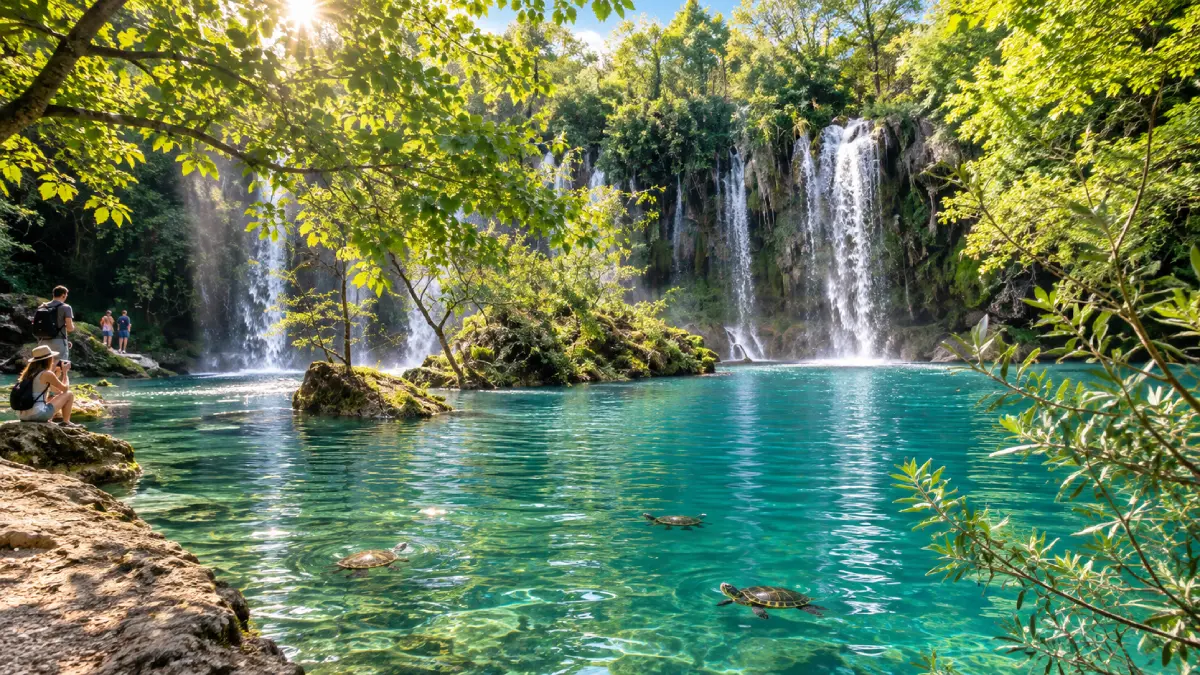
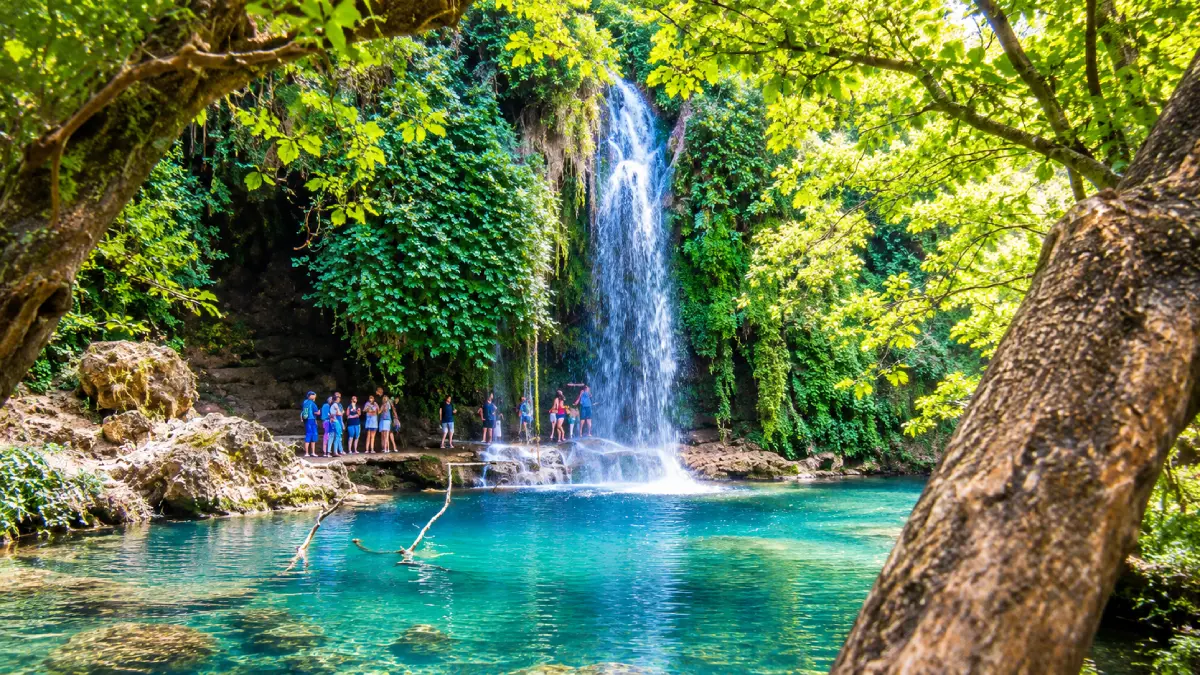
The 18-metre cascade is the primary reason most travellers visit Kurşunlu. Water pours over a mossy cliff ledge into a plunge pool below, where overhanging pine branches and ambient humidity create welcome shade. On clear sunny days, daylight filtering through the canopy makes for stunning photos.
Behind and alongside the cascade, natural rock hollows frame views of the falling water. Visitors must remain on marked paths – wet rocks are slippery, and the surrounding ecosystem is strictly protected.
Wildlife: Terrapins, fish, and bird species
2. The 7 Cascading Pools – Kurşunlu's Green Ecosystem
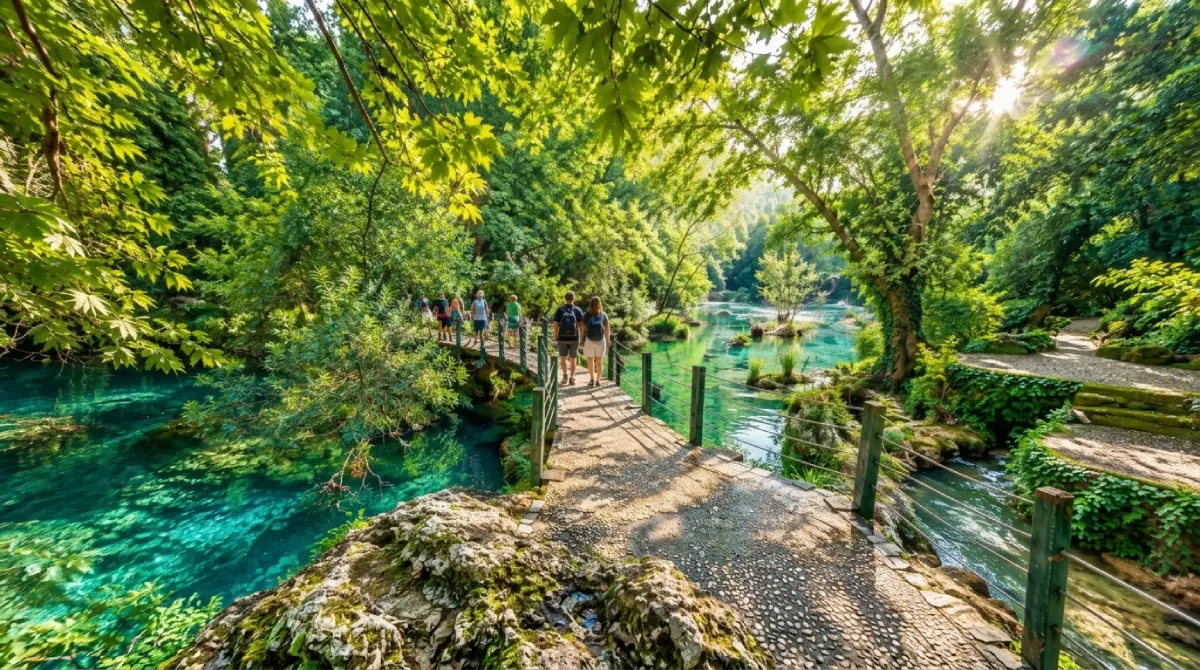
Below the primary cascade, the stream courses through seven small pools interconnected by miniature waterfalls. Depending on seasonal light and water flow, the water shifts between vivid emerald and turquoise hues, with foliage extending down to the trail.
It is a rewarding setting for wildlife watching. Fresh-water terrapins often bask on half-submerged logs, while numerous bird species inhabit the canopy. Official records from the General Directorate of Nature Conservation and National Parks (DKMP) document 3 fish species, 12 reptile species, 88 bird species, and 22 mammal species within the park boundaries.
Heritage: 17th-century watermill
3. The Historic Watermill – An Echo of Rural Heritage
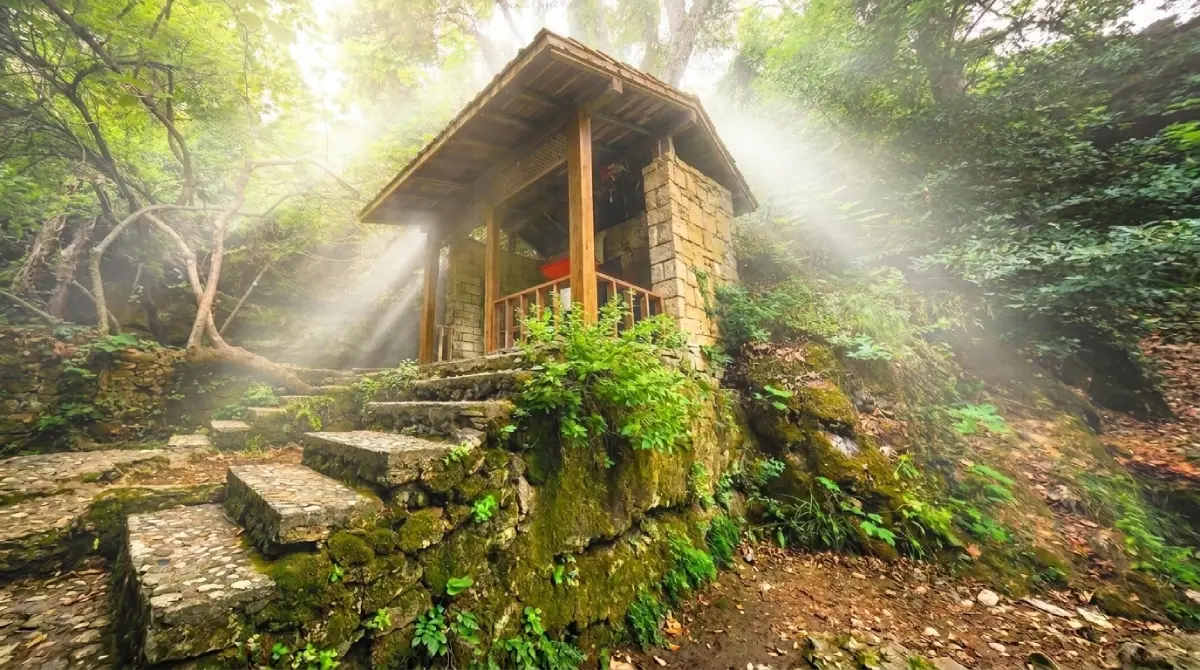
Along the main walking loop sits a preserved stone watermill (Tarihi Su Değirmeni). Environmental studies trace its origin to the 17th century, and historical records confirm it remained operational until around 1980. It provides an engaging historical dimension amidst the forest.
The preserved structure illustrates how local communities formerly harnessed stream power for grinding grain, adding cultural character to your walk.
Flora: Turkish pine, myrtle, and laurel
4. Forest Flora, Walkways & The Shaded Canyon
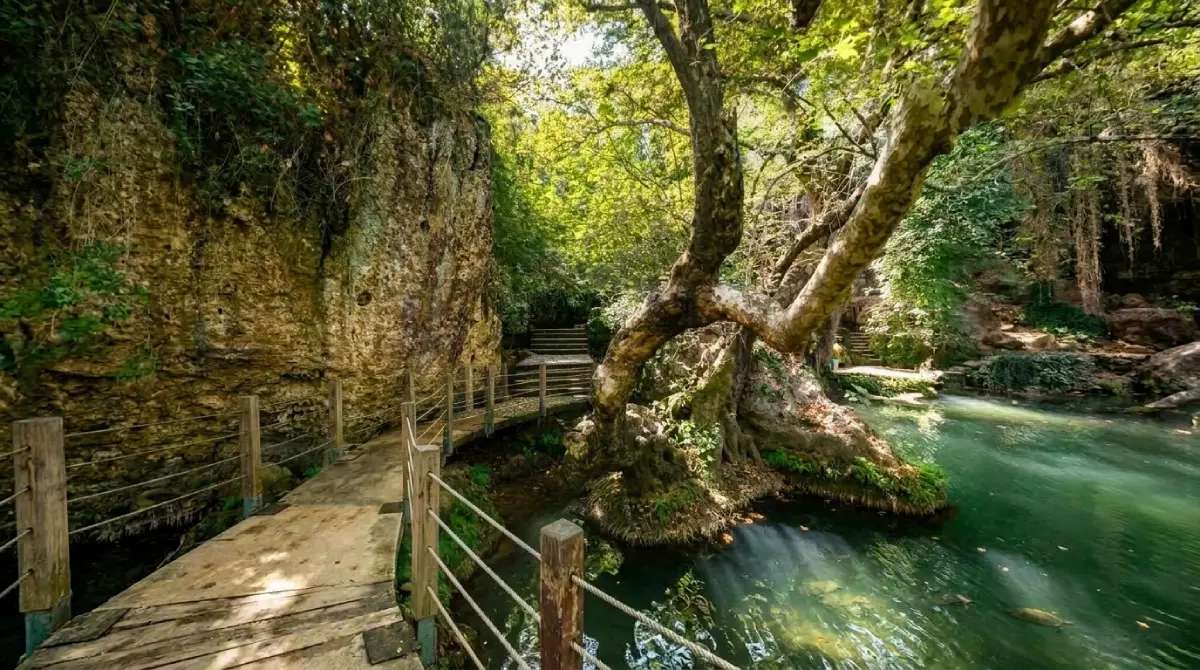
The canyon floor supports rich Mediterranean woodland. Turkish pine (Pinus brutia) dominates the upper canopy, accompanied by wild olive, sweet bay laurel, myrtle, fig trees, and regional undergrowth typical of coastal Antalya.
Near the riverbanks, water mint, reeds, and water lilies thrive. Well-maintained timber boardwalks, observation decks, and bridges allow visitors to experience the canyon without stepping into sensitive riverbeds.
Kurşunlu vs Düden and Manavgat: Which Waterfall Should You Choose?
Antalya features three famous waterfalls, each offering a distinct experience:
• Kurşunlu Waterfall: Forested, peaceful, and designed for nature walks. Ideal for those seeking shade, natural landscapes, and wildlife photography.
• Düden Waterfalls: A more urban profile, easily combined with central Antalya sightseeing. Lower Düden falls dramatically over 40-metre cliffs into the Mediterranean, while Upper Düden features a cave walk in a public park.
• Manavgat Waterfall: A wide, low river weir on the Manavgat River, surrounded by riverside cafes – a completely different setting from Kurşunlu's tranquil canyon.
The K.A.S. Excursion: Kurşunlu + Aspendos + Side
The acronym K.A.S. frequently appears in local travel agency brochures. It represents Kurşunlu, Aspendos, and Side. This is an agency tour title rather than an official state route; order of stops and duration depend on individual organizers:
1
Stop 1: Kurşunlu Waterfall
A shaded morning walk, photos near the 18-metre cascade, and watching for terrapins in the freshwater pools.
An afternoon visit to historical Side, taking in the harbour and the seafront Temple of Apollo at sunset.
Self-Guided Pairing: Combine Kurşunlu with Ancient Perge
If you rent a car, an excellent alternative to organized bus excursions is combining Kurşunlu with ancient Perge. Both sites lie within the Aksu district, making them effortless to connect:
Perge is among Pamphylia's premier archaeological sites, showcasing monumental Hellenistic towers, a Roman stadium, and a 300-metre colonnaded avenue with a central water channel. Touring Perge's open-air ruins in the morning before heading to the shaded canyon of Kurşunlu makes for a well-rounded day trip.
Practical Tip: Footwear and Gear for Kurşunlu
Wet rock steps and boardwalks can become slippery from mist and fallen needles. Wear comfortable walking shoes or sports sandals with good grip. In warmer months, pack drinking water, sunglasses, and sun cream, as parts of the park receive full sun.
How to Plan Your Walk: A Simple Step-by-Step Route
A simple walking plan helps you take in the main sights smoothly without constantly checking trail markers:
Park Entry & Upper Viewpoint: Head past the entrance gates along the pine avenue to the canyon edge for an initial overview of the cascade.
Descend to the Main Waterfall: Follow the steps down into the ravine to reach the viewing areas directly facing the 18-metre falls.
Loop Past the 7 Pools: Continue along the water's edge on timber boardwalks, looking for freshwater terrapins and water lilies.
The Historic Watermill: Visit the 17th-century mill along the lower trail to see historical milling masonry.
Picnic Grounds & Rest: Conclude your loop at the upper park terrace for refreshments or a rest under the pines.
How to Get to Kurşunlu Waterfall
Reaching Kurşunlu is straightforward by road. Official Aksu district documentation indicates that a roughly 7-kilometre turn-off leads from the Antalya–Isparta highway directly to the park gates:
By Car from Antalya: Follow the D400 east, turn north onto the Antalya–Isparta road, and follow brown tourist signs toward Kurşunlu. The final access road is approximately 7 km long. Local authorities estimate around 20 minutes from central Antalya, though journey times vary with traffic.
By Car from Side or Belek: Belek is approximately 25 minutes away, while Side takes roughly 50 minutes along the D400.
By Car from Alanya: Head west along the D400 toward Antalya before turning toward Kurşunlu; budget extra time for the 115-km drive.
By Public Transit: Municipal buses and minibuses serve the area from Antalya. Because line routes and numbers change seasonally, check the official Antalya Ulaşım portal before travelling.
Organized Tours: Widely available throughout 2026, often packaging Kurşunlu with Perge, Aspendos, and Side. Ensure you verify which entrance tickets are included.
Kurşunlu Waterfall – Practical Information 2026
Key visitor details to check before travelling. Practical figures verified October 2026; hours and tariffs remain subject to administrative changes.
Category / Parameter
Practical Details
Opening Hours
Open daily year-round. The official record in the DKMP registry lists hours as 08:30–17:30. Because seasonal timings may adjust, verify active hours with the park administration prior to departure.
Admission Fees
Entry is ticketed. In the official 2026 schedule, Kurşunlu is listed in the Akdeniz-1 group with a 1st category domestic rate of 95 TL. As admission regulations for foreign visitors may be governed by separate tariffs, verify the active rate at the ticket window upon arrival. On guided tours, check if entry is included.
Parking Facilities
A managed car park is situated directly outside the entrance gates. Official park records state a capacity of approximately 200 vehicles.
On-Site Amenities
Restrooms, cafes, beverage stalls, picnic benches, and walking trails are available. Official site plans also note observation points, footbridges, and the preserved watermill.
Visit Duration
Allow approximately 1.5 to 2 hours for a standard walk around the falls and pools. If planning photography or a picnic, budget 2 to 3 hours.
Accessibility
Accessibility is partial. The upper entrance and picnic zone are relatively level, but descending into the canyon requires stone steps and uneven paths, making standard strollers and wheelchairs difficult to use.
Geography & Location
Kurşunlu Nature Park on the Map of Turkey
Use this interactive map to locate Kurşunlu Nature Park and plan your driving route from the D400 highway and Aksu:
REKLAMA
Common Queries
Kurşunlu Waterfall – Questions & Answers
Where is Kurşunlu Waterfall Nature Park located?
Kurşunlu Şelalesi Tabiat Parkı is situated in the Aksu district, roughly 22 km from central Antalya. In light traffic, driving from the city centre takes about 20 minutes.
What time of year is best to visit the waterfall?
Spring and autumn offer the most comfortable walking temperatures and lush greenery. Aksu municipal authorities highlight the period from April to December as particularly suitable for visiting. In midsummer, arriving early in the morning avoids midday heat.
Can you swim in the pools below the waterfall?
No. Swimming and wading are strictly prohibited throughout the nature reserve to protect the aquatic habitat and ensure safety. Visitors enjoy the water from designated bridges and viewing decks.
How long does it take to tour Kurşunlu Park?
A standard loop around the waterfall, freshwater pools, and historic mill takes about 1.5 to 2 hours. If you plan to stop for photos, a picnic, or a cafe break, allow 2 to 3 hours.
When is the best time to visit to avoid crowds?
Arriving in the morning on weekdays (Monday to Friday) provides the quietest experience. On sunny weekends, the park is a favoured picnic destination for Antalya residents.
How much does admission cost in 2026?
Under the official 2026 tariff, Kurşunlu is placed in the Akdeniz-1 category with a 95 TL rate. Additional fee rules may apply to foreign visitors, so confirming the active price at the entrance counter is best.
What are the opening hours?
Official registry records list hours as 08:30–17:30. Because seasonal adjustments occur, verify opening times before travelling.
I am an avid enthusiast of travel, tourism, and web development. I craft every guide with dedication and attention to detail based on personal travel experiences, enhancing selected visual materials and editorial content with modern digital tools and AI graphics. I make every effort to ensure all information, prices, and tips remain accurate and up to date. If you notice an error, inaccuracy, or recent changes on the ground – I would be grateful for your feedback:

 ANTALYA NATURE