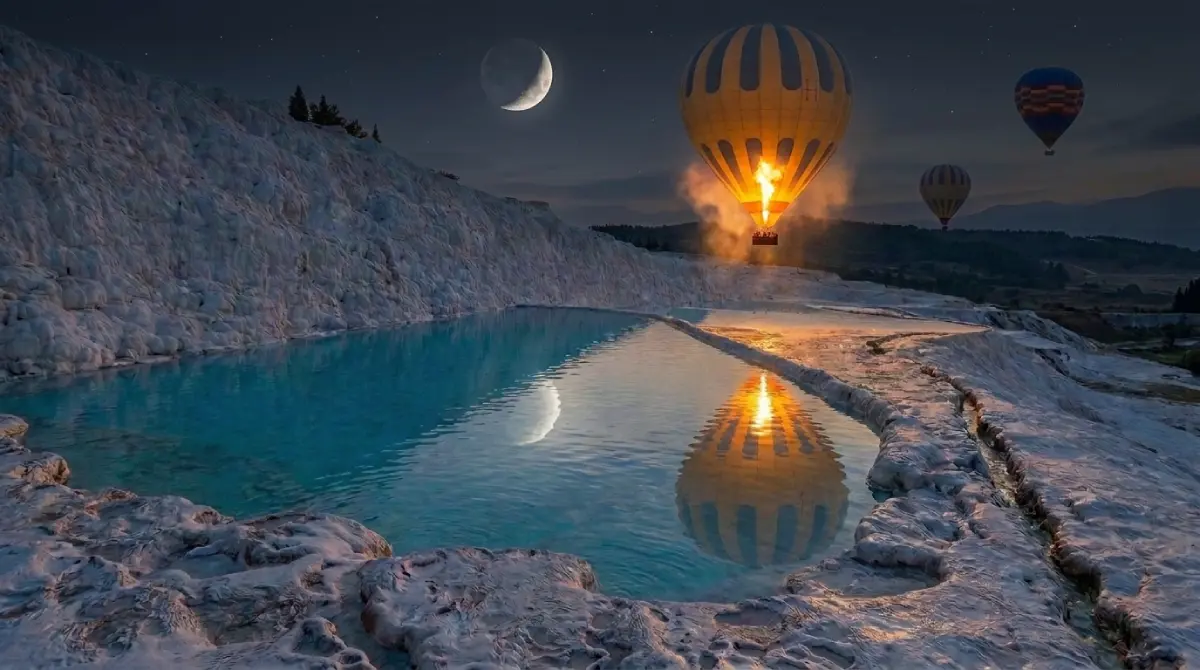
Cascading down the southern flank of Mount Çökelez above the fertile Menderes River valley, Pamukkale's white travertine terraces form one of the planet's most surreal geological landscapes. Yet Pamukkale encompasses far more than thermal mineral pools: directly above sits the sprawling Greco-Roman spa metropolis of Hierapolis, featuring a grand theatre, a vast necropolis, the mysterious Plutonium, and Cleopatra's Antique Pool with its submerged Roman marble columns.
Pamukkale & Hierapolis: Where Geothermal Energy Meets Imperial Rome
Viewed from across the valley, the gleaming cliffside of Pamukkale resembles a vast, terraced glacier or a snowy cotton field spread over the mountainside. The Turkish name Pamukkale translates literally to "Cotton Castle". This landscape is the product of continuous geothermal activity, as mineral-charged spring waters have issued from tectonic fault lines along the edge of the Menderes River basin for millennia.
The thermal spring water feeding Pamukkale emerges at approximately 35–36°C, carrying dissolved calcium bicarbonate and carbon dioxide. As the thermal water meets the ambient atmosphere, degassing causes carbon dioxide to escape. This chemical reaction triggers the precipitation of calcium carbonate, which initially deposits as a soft mineral gel and steadily crystallises into chalk-white travertine rimstone dams, cascading pools, and stalactites.
The Hillside Through the Ages – Pamukkale & Hierapolis History
c. 190 BC
Foundation of the Hierapolis Spa by the Kings of Pergamon
King Eumenes II of Pergamon establishes the thermal spa settlement of Hierapolis ("Holy City"). The therapeutic reputation of the thermal springs and mineral mud soon draws travellers from across Asia Minor seeking relief from skin conditions and chronic rheumatism.
129 BC – 3rd Century AD
Roman Golden Age & Imperial Thermal Baths
Ceded to Rome, Hierapolis transforms into one of the empire's pre-eminent thermal retreat centres. The grand theatre, thermal bath complexes, colonnaded thoroughfares, and the sacred Plutonium sanctuary over a tectonic fissure are developed during this era.
80 AD
Martyrdom of Apostle Philip
According to Christian tradition, Saint Philip, one of the twelve apostles, was martyred in Hierapolis. In the Byzantine era, an octagonal Martyrium was built upon the hill outside the municipal walls, establishing the city as a revered pilgrimage hub.
1354 AD
Late Earthquakes & Abandonment of Ancient Hierapolis
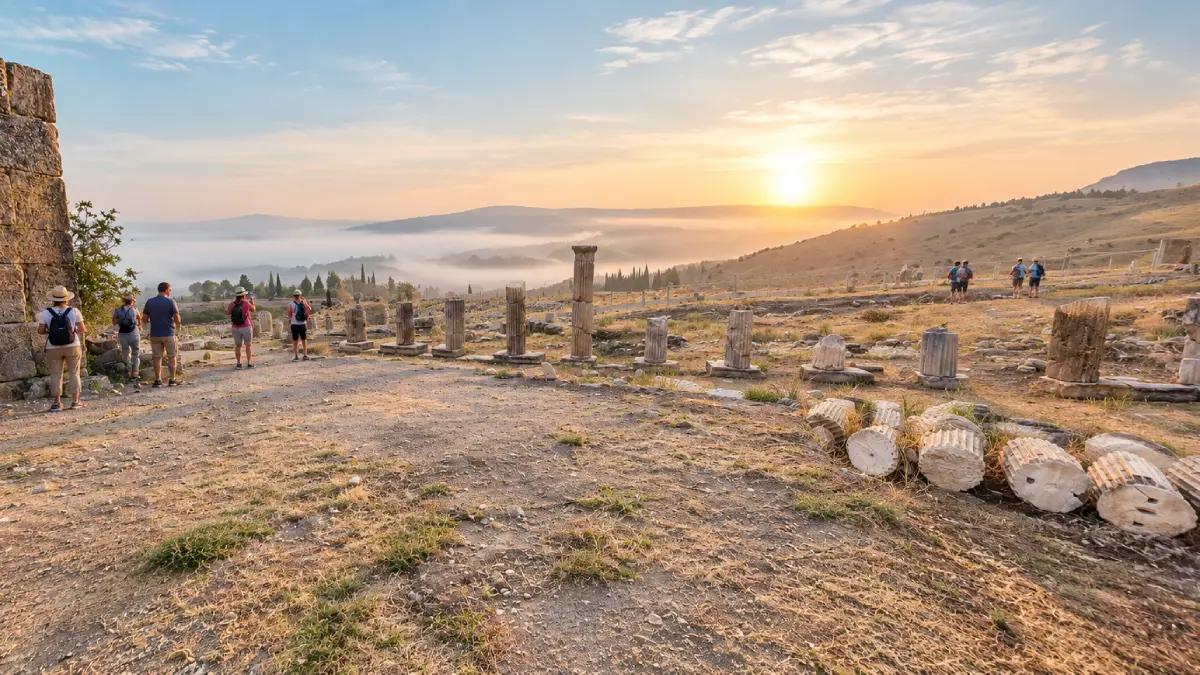
Successive major earthquakes during late antiquity and the medieval period severely damaged municipal aqueducts and monuments, prompting the gradual abandonment of the city. Earthquakes toppled colonnades into the thermal spring pool, creating the modern setting of Cleopatra's Pool.
1988
Inscribed as a UNESCO World Heritage Site
Pamukkale and Hierapolis are jointly inscribed on the UNESCO World Heritage list. Stringent conservation guidelines followed: commercial hotels atop the terraces were dismantled, vehicle access roads were removed, and designated walking paths were instituted to protect the mineral deposits.
What to See in Pamukkale? 6 Essential Sights
While brief coach excursions frequently rush visitors through the travertine boardwalks, taking time to explore reveals remarkable natural and historical monuments:
Conservation Rule: Barefoot Access Only
1. White Travertine Terraces – Cascading Geothermal Pools
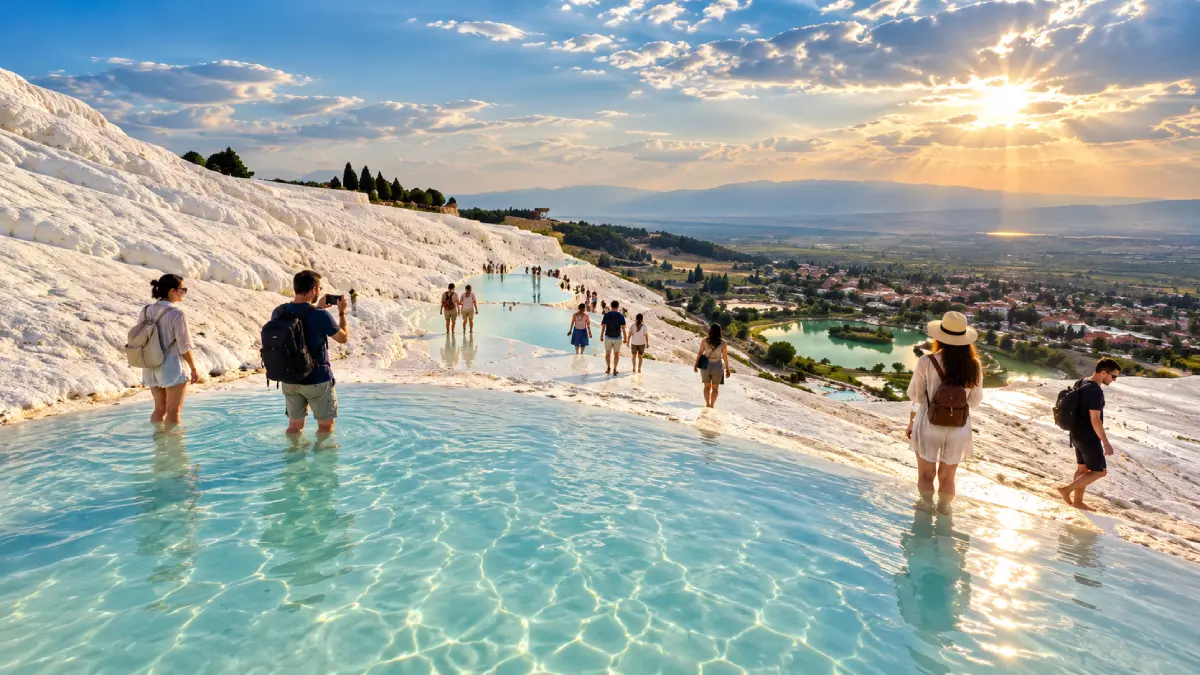
The main visitor footpath descending the hillside allows close exploration of the terraced basins filled with sky-blue, mineral-rich thermal water. The water flows at a comfortable 35°C, depositing fine white mineral sediment on the basin beds, which bathers traditionally apply to their skin.
Practical Advice: Visitors must remove all footwear (including flip-flops and socks) before stepping onto the white travertines. Bring a small backpack or bag to carry your shoes. While the calcified rock surface is mostly textured and grippy, areas with running water can be slippery – step deliberately and mind your footing.
Architecture: Capacity for ~12,000 Spectators
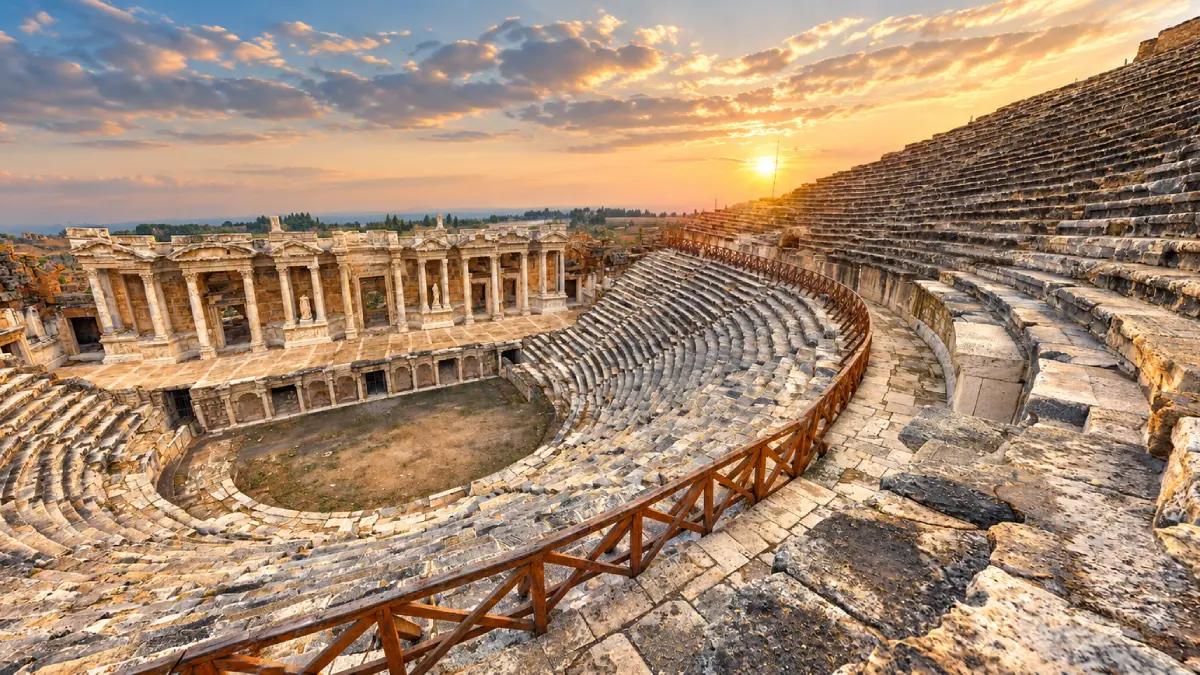
2. Roman Theatre of Hierapolis – Grand Hillside Arena
Initially established in the Hellenistic era and comprehensively rebuilt under Emperor Septimius Severus in the 3rd century AD, this theatre stands as one of the best-preserved classical performance venues in Asia Minor. Built directly into the rising hillside, its upper seating tiers command panoramic views across the valley and the white terrace rim.
Practical Advice: The theatre's highlight is its two-storey stage building (scaenae frons), retaining intricate mythological friezes depicting Apollo, Artemis, and Dionysus. The walk up from the travertine boardwalks takes roughly 15 minutes uphill; bring drinking water and sun protection.
Thermal Spa: Effervescent Water at 36°C
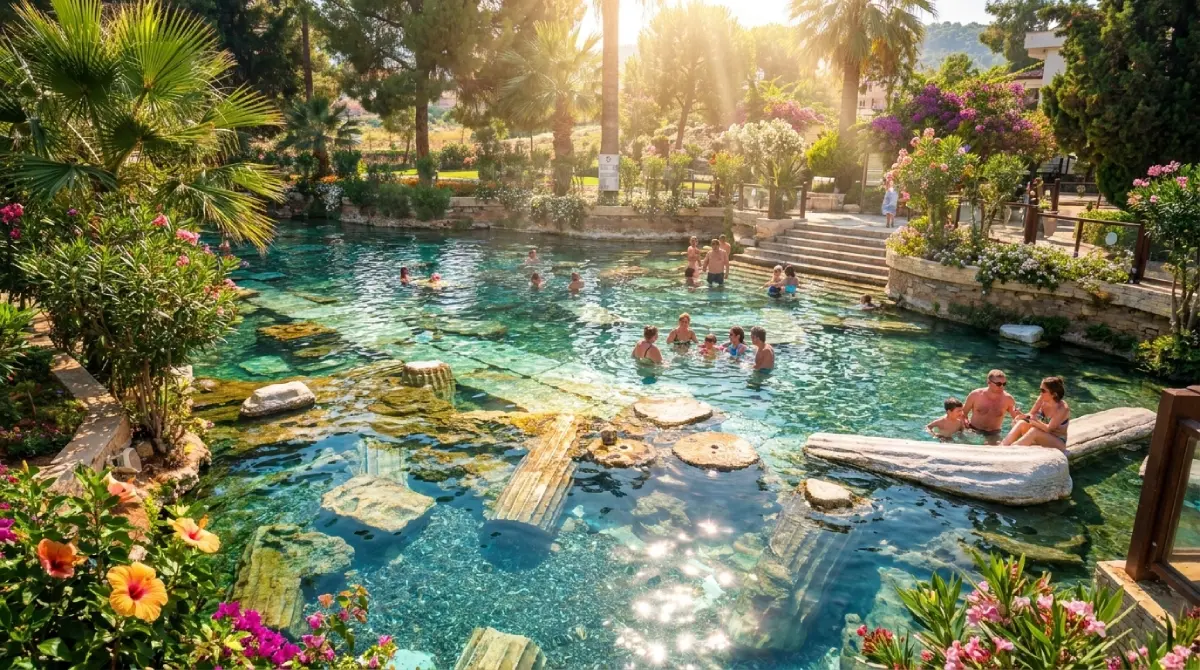
3. Cleopatra's Pool (Antique Pool) – Swimming Over Roman Columns
A unique geothermal spring bath where mineral water bubbles up continuously at a soothing 36°C. The water is naturally effervescent, creating a champagne-like sensation on the skin. Submerged across the basin bed lie authentic marble fluted columns and carved capitals from ancient Hierapolis, toppled into the pool by seismic shifts centuries ago.
Practical Advice: Strolling through the shaded garden cafes around the pool is free of charge. Swimming inside the pool requires an additional admission ticket purchased at the facility counter (reduced rates for children). Locker rooms and showers are provided on-site.
Antiquities: Over 1,200 Ancient Tombs
4. The Northern Necropolis, Frontinus Gate & Plutonium
The Northern Necropolis of Hierapolis ranks among the largest ancient burial grounds in Anatolia, extending for over two kilometres outside the city gates. Because sick pilgrims travelled from across the ancient world seeking thermal cures, many were buried here in elaborate stone sarcophagi, family vaults, and tumulus burial mounds.
Nearby sits the famous Plutonium (Gate to the Underworld) – a sanctuary erected over a geological fissure emitting concentrated carbon dioxide. In antiquity, priests demonstrated the underworld deity's presence by leading small animals inside, which instantly succumbed to the gases.
Nearby: Just 5 km from Pamukkale
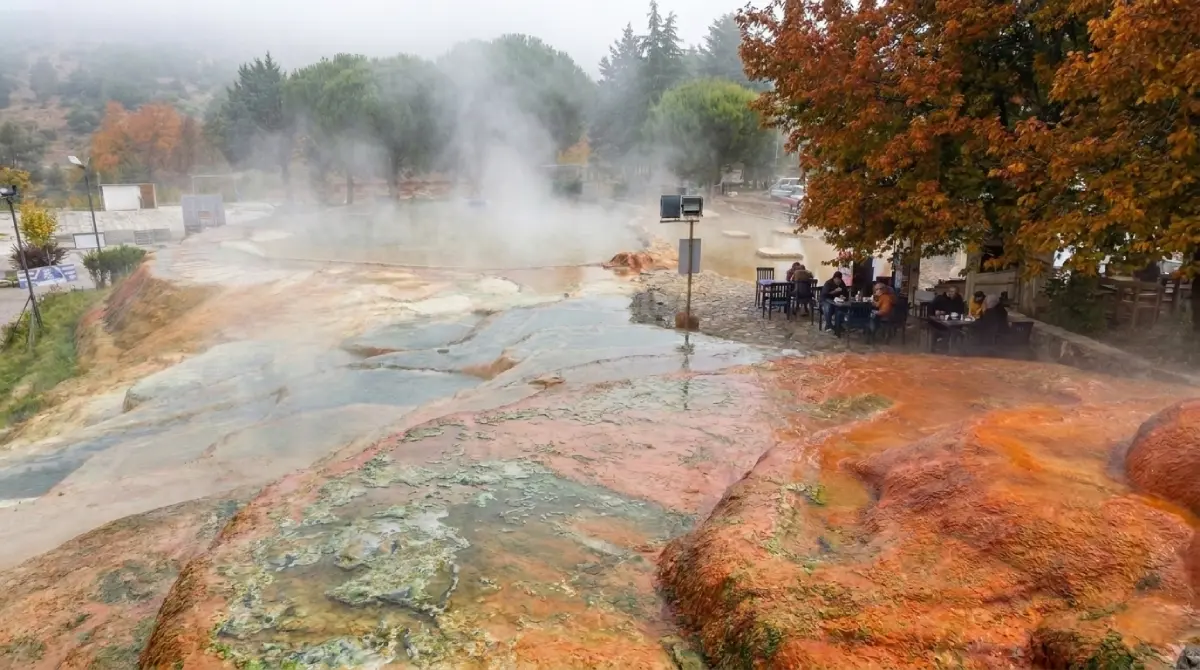
5. Karahayıt (Kırmızı Su) – The Red Thermal Springs
A short 5-kilometre drive north of the white travertines brings you to the thermal resort village of Karahayıt. Its mineral springs, known as Kırmızı Su (Red Water), emerge at a much hotter 58–60°C and are rich in iron, magnesium, and sulphur compounds.
Rather than chalk-white terraces, Karahayıt's mineral deposits exhibit striking rust-red, golden-yellow, and ochre hues. The town is popular for thermal wellness, and local hotels offer dedicated thermal baths fed directly by the mineral sources.
Aerial Perspective: Sunrise Flight
6. Hot Air Balloon Flights Over Pamukkale
In recent years, Pamukkale has emerged as Turkey's premier ballooning destination alongside Cappadocia. Early in the morning before sunrise, dozens of hot air balloons launch above the valley, ascending over the travertine slopes, Hierapolis ruins, and the surrounding agricultural plains.
Practical Advice: Balloon flights at Pamukkale are often more accessible and competitively priced than in Cappadocia. Flights are weather-dependent and require calm early-morning wind conditions, making it worthwhile to spend a night locally if a flight is on your itinerary.
REKLAMA
Photography Tip: Capturing the Golden Hour at Sunset
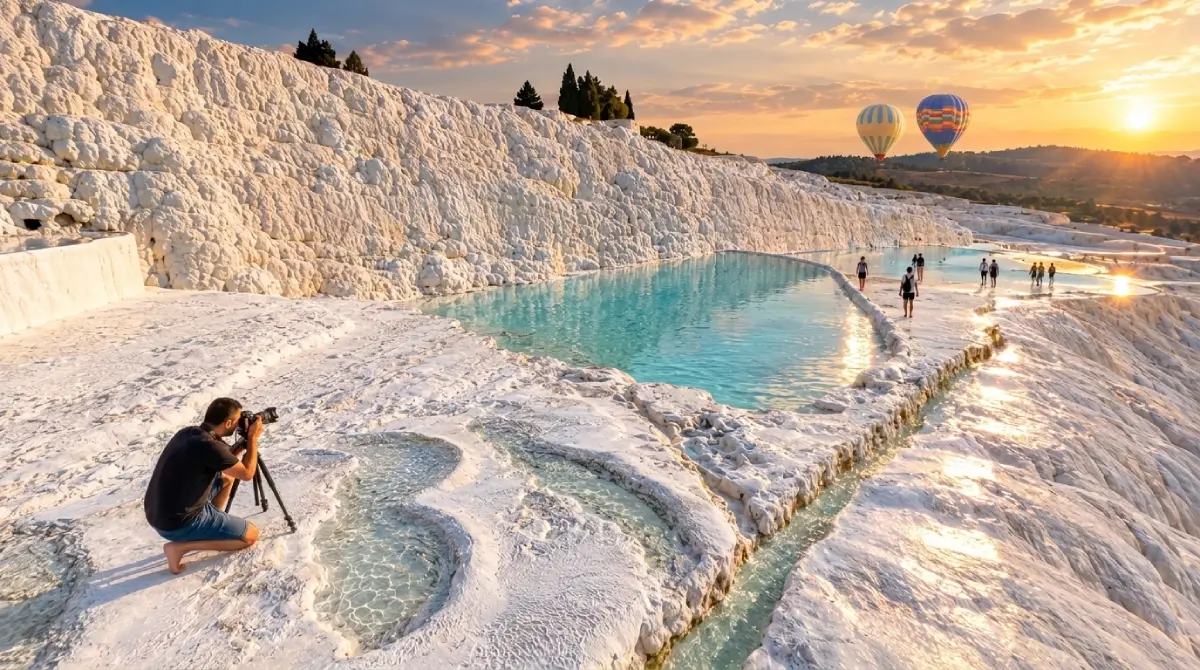
Golden hour magic in Pamukkale: the shallow terrace water mirrors soft shades of pink, gold, and violet (Photo: tucoo.pl)
During midday, the bright white calcium terraces reflect intense sunlight, making balanced exposure challenging. The late afternoon and sunset hours provide the finest lighting conditions. As the sun sinks toward the western horizon, the pools act like natural mirrors, reflecting rich pastel tones. Afternoon visitors also benefit from lighter crowds as tour buses begin heading back to coastal resorts.
How to Plan Your Visit to Pamukkale: Step-by-Step Practical Plan
The archaeological and natural complex covers a wide area on the hillside. Choosing your arrival gate sets the rhythm of your visit:
1
Choose the South Gate (or North Gate for Necropolis)
If arriving by rental car or taxi, the South Gate offers convenient access directly to the upper plateau near the theatre and Cleopatra's Pool. The North Gate is ideal if you wish to walk through the vast Roman necropolis. Entering via the town centre requires an uphill barefoot climb along the wet travertine path.
2
Remove Shoes Along the Dedicated Travertine Path
Walk barefoot along the designated travertine visitor trail. Stow your shoes safely in your bag and wade in the warm thermal pools. Ensure you remain within marked pathways, as certain fragile natural terraces undergo regulated regeneration cycles.
3
Unwind in the Gardens of Cleopatra's Pool
After visiting the terraces, put your shoes back on and head to the shaded palm gardens of Cleopatra's Antique Pool. It is a relaxing spot for refreshments, restrooms, and a dip among ancient ruins.
4
Hike to the Theatre & Explore the Archaeology Museum
Ascend the path to the Roman theatre for views across the valley, then stop by the Hierapolis Archaeology Museum housed inside the restored Roman bath complex to see carved sarcophagi and statues.
Getting to Pamukkale from the Riviera, Tickets & Practical Tips
Pamukkale is located inland in Denizli Province, making thoughtful transport planning worthwhile:
Organized Day Excursions: The most straightforward option from Mediterranean resorts (Antalya, Alanya, Side, Kemer). Full-day coach tours typically depart early in the morning and return by evening. Two-day tours combining Pamukkale with Lake Salda or Cappadocia are also available.
By Rental Car: Driving from Antalya via the D330/D585 route takes about 3 to 3.5 hours (240 km). From Side, the drive is roughly 300 km (about 4 hours), while from Alanya it takes around 4.5 to 5 hours (330 km). Roads are wide, modern, and clearly signposted.
By Public Transit: Frequent intercity coaches run from major Turkish cities to Denizli Central Bus Station (Otogar). From Denizli Otogar, local public buses (such as Route 230) and frequent minibuses (dolmuş) run directly to Pamukkale village in roughly 25 minutes. Verify current schedules via local transit authorities before departure.
Practical Travel Tip: What to Pack
The bright white limestone reflects sunlight strongly: UV-blocking sunglasses are indispensable. In addition, pack a lightweight tote or bag for your shoes, a small towel to dry your feet after wading, swimwear if you plan to swim in Cleopatra's Pool, and sufficient drinking water.
Pamukkale & Hierapolis – Practical Information Summary
Key visitor details for planning your trip:
Category / Parameter
Practical Details
Opening Hours
The site operates daily year-round from early morning until evening. Opening hours extend during peak summer months, with night illumination tours available during certain periods. Operating schedules and ticket booth cut-offs adjust seasonally; verify current hours on the official Turkish Ministry of Culture and Tourism portal before your trip.
Admission (Pamukkale + Hierapolis)
A single combined ticket grants access to the travertine terrace paths and the entire Hierapolis archaeological site (theatre, necropolis, and ruins). Standard rates for foreign visitors are set centrally (~€30); Turkish citizens use dedicated tariffs and MüzeKart.
Cleopatra's Pool Entry
Access to the surrounding garden and cafe area is free. Swimming in the thermal waters among ancient columns requires an extra admission fee purchased directly at the pool counter (discounts for children, free for infants). Pool hours correspond to general park opening times.
Footwear Regulations
Shoes, sandals, and socks are strictly prohibited along the white travertine walking trail. Footwear must be carried by hand or stowed in a bag.
Parking Facilities
Dedicated parking areas are available at the main entrances (South Gate and North Gate). Standard parking fees apply locally upon arrival.
Recommended Visit Time
Allow at least 3 to 4 hours to walk the travertine path comfortably, visit the Roman theatre, explore the necropolis, and relax by Cleopatra's Pool.
Geography & Orientation
Pamukkale & Hierapolis on the Map – Key Locations
Use this map to orient yourself between the travertine terraces, the Roman theatre, Cleopatra's Pool, and the access road from Denizli:
REKLAMA
Common Queries
Visiting Pamukkale – Frequently Asked Questions
When is the best time of year to visit Pamukkale?
Spring (April to May) and autumn (September to October) generally offer the most pleasant weather for walking, avoiding extreme summer heat. In midsummer, starting near morning opening times or arriving in the late afternoon helps avoid midday heat and peak tour bus crowds.
Can you swim in the travertine pools at Pamukkale?
Yes, visitors can wade and sit in designated artificial cascading pools along the main visitor trail. The older, natural rimstone formations are protected and fenced off to allow the white calcium deposits to regenerate undisturbed.
Is it worth paying extra to swim in Cleopatra's Pool?
If you enjoy thermal bathing, it is a truly memorable experience to swim in warm, bubbly 36°C mineral water above genuine submerged Roman columns. If you prefer not to swim, exploring the surrounding palm gardens and cafe area is free.
How far is Lake Salda from Pamukkale?
Lake Salda, often called the "Turkish Maldives" for its white magnesite shoreline and turquoise water, is about 95 km east of Pamukkale (roughly an hour and a half by car). Many regional operators offer combined day excursions covering both locations.
Is Pamukkale accessible for strollers and wheelchair users?
Accessibility is partial. The upper plateau (including wooden boardwalks along the cliff top, Cleopatra's Pool gardens, and main thoroughfares of Hierapolis) is relatively level and accessible. However, the barefoot route descending across the white travertines consists of uneven, wet rock and cannot accommodate wheeled devices. Electric shuttles operate across the upper plateau connecting key historical points.
I am an avid enthusiast of travel, tourism, and web development. I craft every guide with dedication and attention to detail based on personal travel experiences, enhancing selected visual materials and editorial content with modern digital tools and AI graphics. I make every effort to ensure all information, prices, and tips remain accurate and up to date. If you notice an error, inaccuracy, or recent changes on the ground – I would be grateful for your feedback:

 NATURAL WONDER & UNESCO