Regional Story & Practical Handbook
Aegean Coast of Turkey: Bodrum, Marmaris, Fethiye & the Best Beaches
Under the banner of "Aegean Turkey", travel guides and holiday brochures often group together destinations stretching from Izmir and Çeşme in the north, through Kuşadası, Didim, and the Bodrum Peninsula, all the way down to Marmaris and Fethiye. It is worth noting a geographical nuance: Fethiye actually sits on the Mediterranean section of Turkey's southwestern coast, yet holiday catalogues routinely pair it with the southern Aegean. What unites all these towns is a landscape of sheltered coves, forested hills, sailing traditions, and classical ruins. If you are also considering southern Turkey, compare this region with our Turkish Riviera guide and read Turkish Riviera vs Aegean Coast – which to choose?.
Key Resorts of the Aegean Coast: Choose Your Bay
Bodrum: History, White Houses & Marinas
1. Bodrum – Crusader Castle, Whitewashed Hills & Sailing Elegance
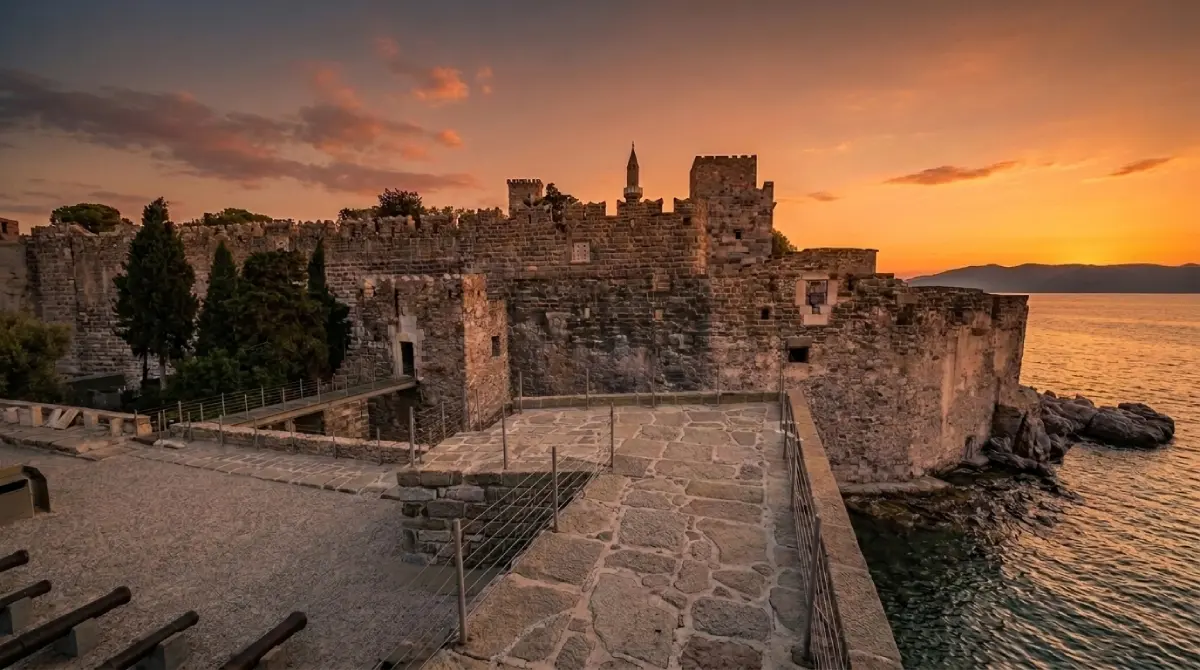
Bodrum grew atop ancient Halicarnassus, once home to the Mausoleum — one of the Seven Wonders of the Ancient World. Today, heritage blends effortlessly with marina life, waterfront dining, and low-rise white houses climbing the hills. Guarding the harbour is the medieval Castle of St. Peter, built by the Knights Hospitaller in the 15th and early 16th centuries. Inside its walls, the Museum of Underwater Archaeology displays ancient shipwreck artefacts from the eastern Mediterranean. Always check current opening hours before visiting.
The wider Bodrum Peninsula offers distinct moods. Gümbet attracts visitors looking for lively bars and water sports, Bitez and Ortakent offer calmer bays ideal for relaxed beach days, Turgutreis is famous for open sunset views across offshore islets, and Yalıkavak draws yachts and fine diners to its modern marina. In peak summer, popular spots get busy and prices vary significantly by bay.
Ölüdeniz: Blue Lagoon & Lycian Peaks
2. Fethiye & Ölüdeniz – The Blue Lagoon, Babadağ & Butterfly Valley
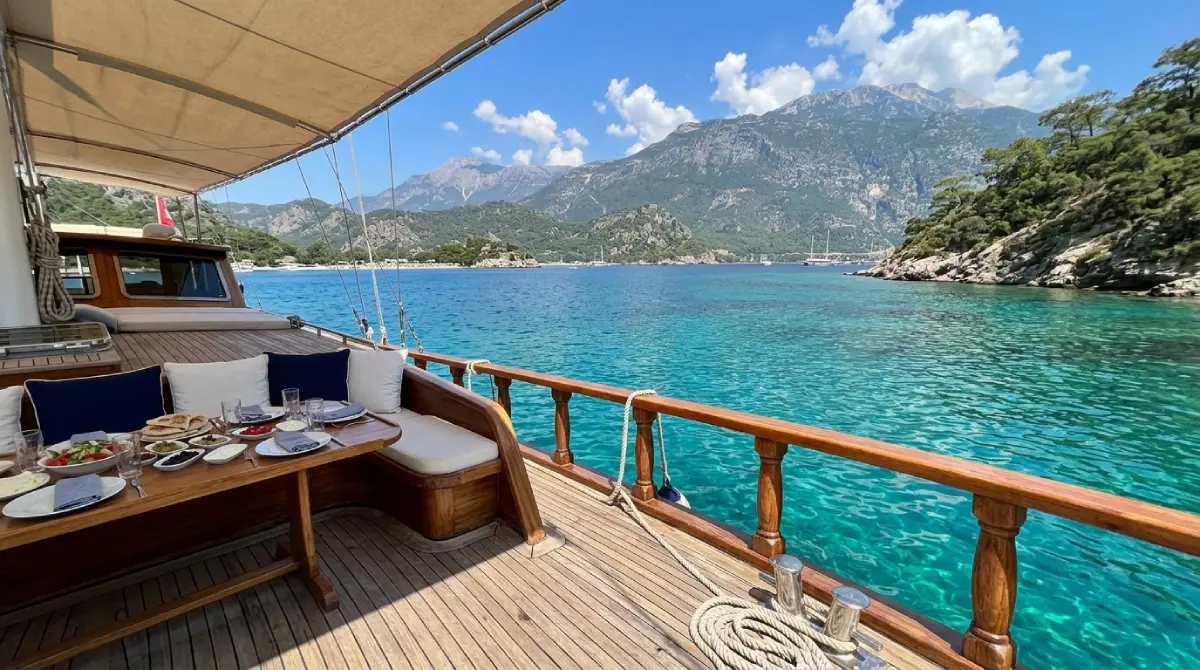
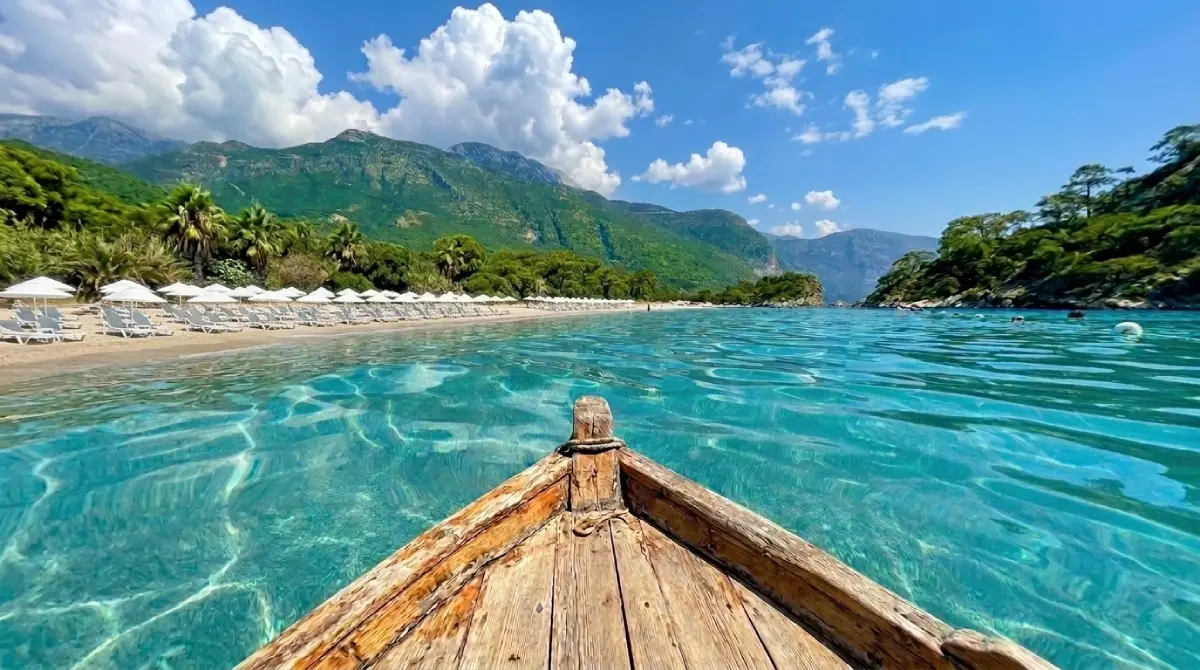
Situated on the Mediterranean stretch of southwestern Turkey, the Fethiye region delivers some of the country's most iconic coastal views. Its centrepiece is Ölüdeniz, where a sand-and-shingle spit separates the open sea from the calm, sheltered Blue Lagoon. Towering directly above the coast is Mount Babadağ, a world-renowned launch site for tandem paragliding. Flights depend on weather conditions and pilot assessment, so always verify safety rules, insurance coverage, and booking terms.
In the town of Fethiye itself, visitors can stroll along the harbour, visit the lively fish market, and look up at the Lycian rock-cut tombs including the Tomb of Amyntas. Long Çalış Beach is loved for its breezy promenade and sunsets, while hillside Hisarönü and Ovacık offer cooler mountain air. In season, excursion boats sail from Ölüdeniz to steep-walled Butterfly Valley (Kelebekler Vadisi), subject to sea conditions.
Marmaris: Sheltered Bay & Promenade
3. Marmaris & İçmeler – Holidays Framed by Pine Mountains
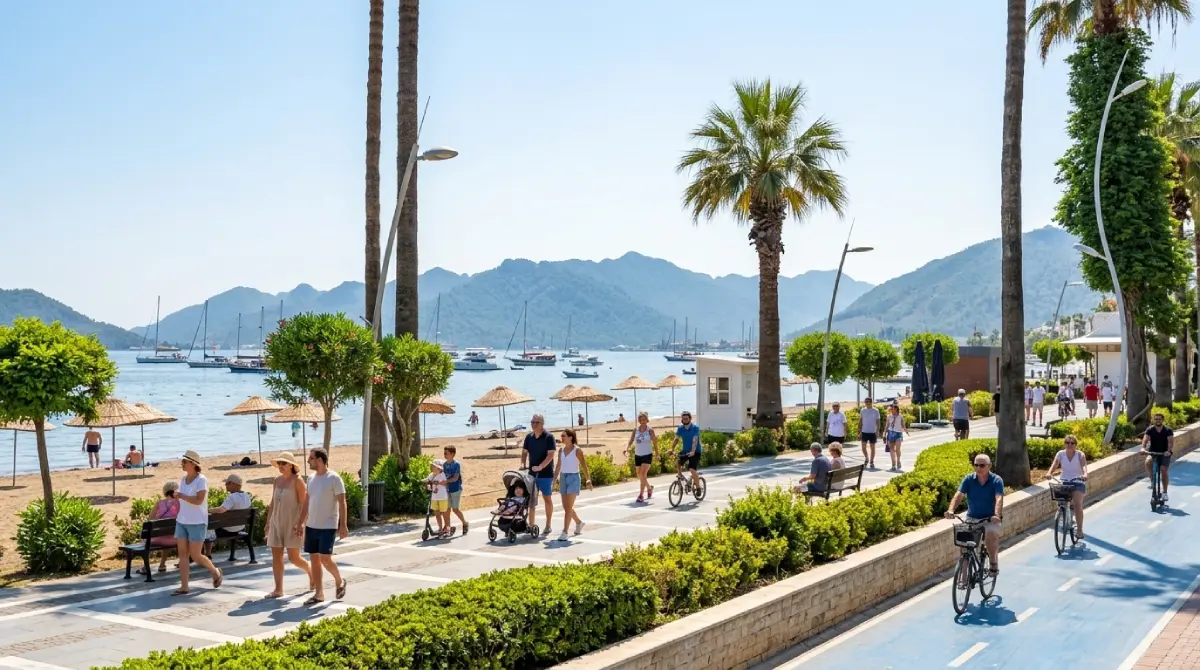
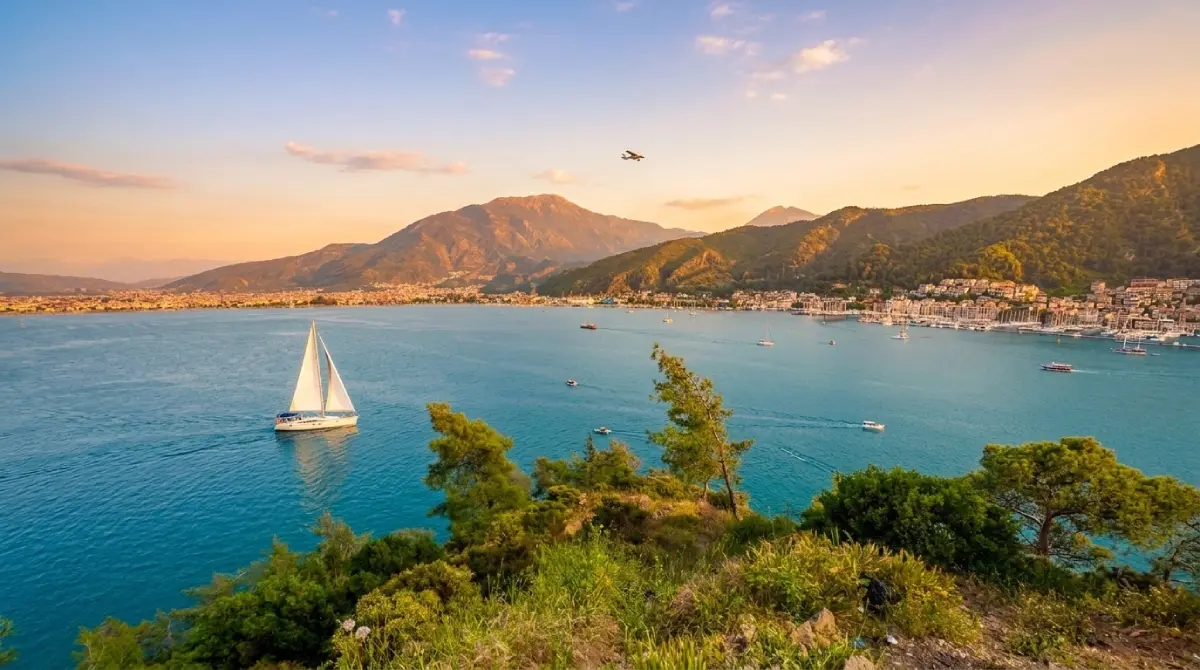
Marmaris curves around a deep bay encircled by pine-clad hills. On calm days, the water looks almost like a mountain lake. A flat, palm-lined promenade runs for several kilometres along the shore, lined with cafes, restaurants, and marinas, leading toward the historic castle quarter. It is a great base for travellers who enjoy combining beach time with lively evening walks.
While central Marmaris has an energetic urban feel with a bazaar and nightlife district, neighbouring İçmeler offers a quieter setting with a sandy-shingle bay and resort hotels. For an even slower pace, the cove village of Turunç sits just over the mountain pass and can be reached by road or seasonal water taxi.
Kuşadası & Didim: Beaches and Antiquity
4. Kuşadası & Didim (Altınkum) – The Northern Gateway to Ancient Ionia
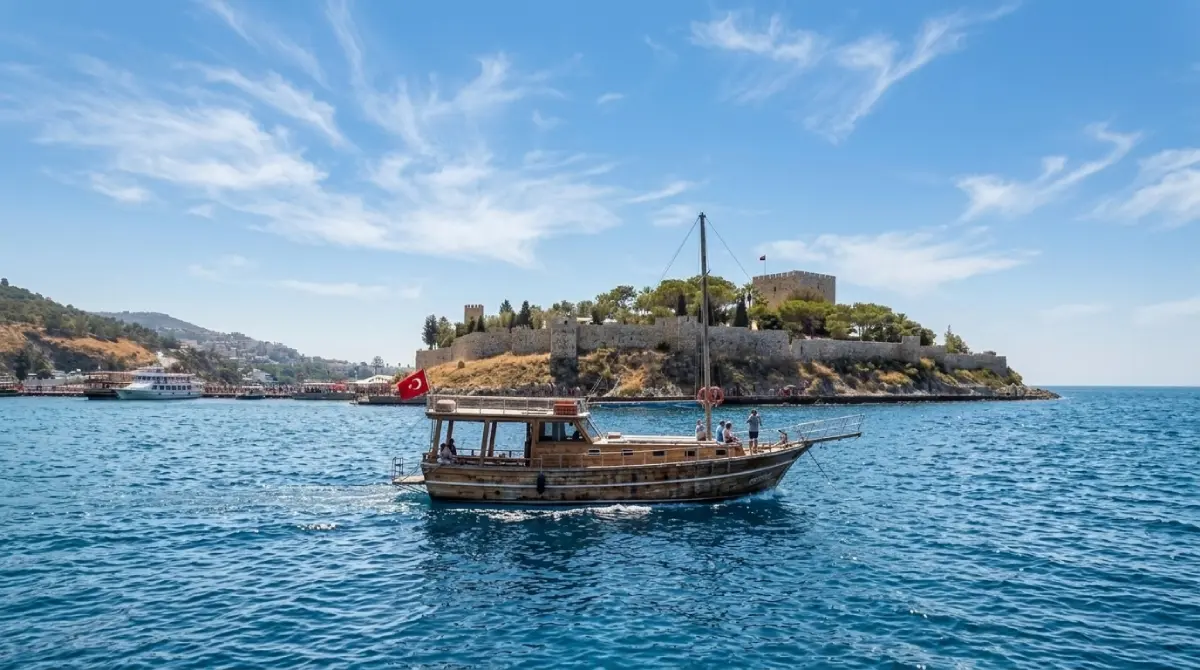
The northern section of the holiday coast is ideal if you want to pair beach relaxation with classical sightseeing. Kuşadası is a bustling port town with a seafront promenade and regular cruise ship calls. Its landmark is Pigeon Island (Güvercinada), linked to the mainland by a causeway. Popular swimming spots include Ladies Beach (Kadınlar Denizi) and expansive Long Beach, where many family all-inclusive hotels are located.
Further south lies Didim, best known for the sandy shoreline of Altınkum ("Golden Sand"). It is a popular choice for families, though parents should always keep an eye on waves and local swimming conditions. Just a short drive inland stand the colossal columns of the Temple of Apollo at Didyma, one of antiquity's most important oracle sanctuaries.
Sarıgerme & Alaçatı: Golden Sand or Wind Sports
5. Sarıgerme, Çeşme & Alaçatı – Quiet Beaches and a Surfers' Mecca
Looking for a wide sandy beach and a short transfer from the airport? Located near Dalaman, Sarıgerme offers a long ribbon of golden sand backed by pine woods and spacious resort hotels. It suits travellers focused primarily on peaceful seaside relaxation; exact transfer times depend on your hotel and transport arrangement.
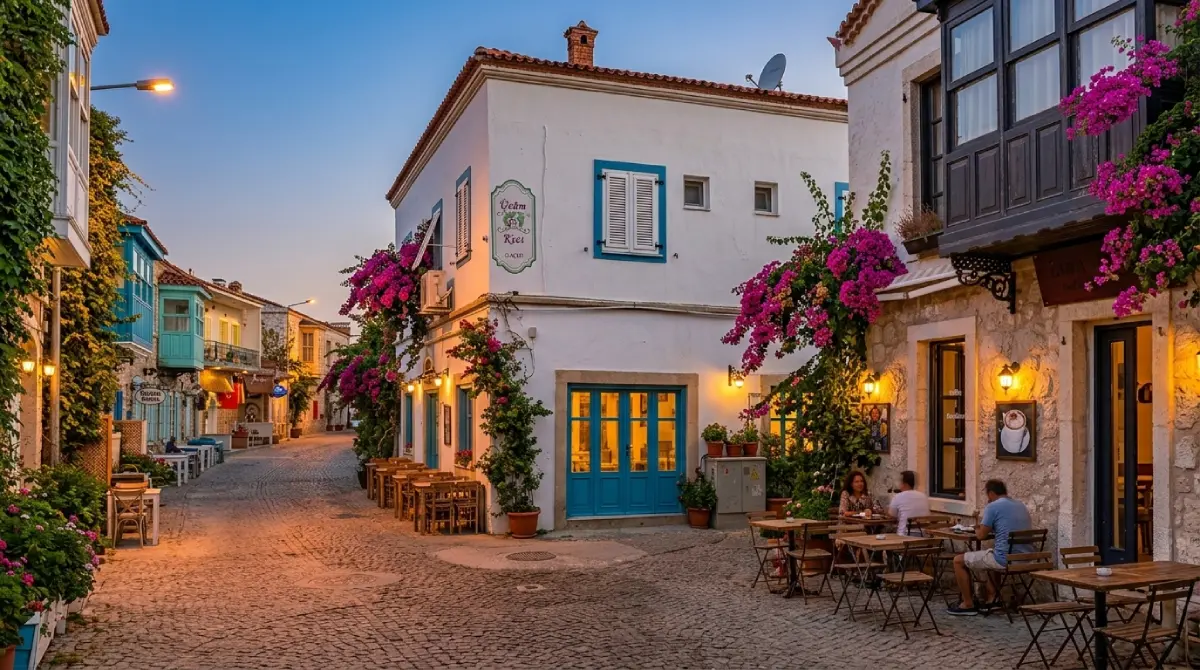
At the northern end of the region, west of Izmir, lie the Çeşme Peninsula and the charming town of Alaçatı. Famous for stone architecture, restored windmills, boutique hotels, and narrow cobbled lanes filled with cafes, Alaçatı also sits beside shallow, breezy bays that rank among Europe's best spots for windsurfing and kitesurfing. Because summer weekends get busy, mornings and late afternoons are the most pleasant times to explore the streets.
Airports on the Aegean Coast: How to Choose Your Arrival Port
The Aegean Coast covers a vast area, and driving between resorts along winding coastal roads can take longer than a map suggests. Three international airports serve different parts of the region: Milas-Bodrum (BJV), Dalaman (DLM), and Izmir Adnan Menderes (ADB). Official airport details can be checked on the Turkish State Airports Authority (DHMİ) website. Always compare flight prices alongside transfer times to your hotel. The driving times below are approximate and vary with traffic.
Serves the entire Bodrum Peninsula as well as the southern part of Aydın Province (including Didim). Very convenient for the central section of the coast.
- Torba & Güvercinlik: approx. 25–30 min transfer
- Bodrum Centre & Gümbet: approx. 35–45 min transfer
- Bitez & Ortakent: approx. 45–55 min; Yalıkavak: depends on traffic
- Turgutreis: approx. 50–65 min transfer
- Didim (Altınkum): approx. 60–75 min transfer
The primary gateway for southwestern Turkey. If you are booking Fethiye, Ölüdeniz, Dalyan, or Marmaris, look for flights into Dalaman.
- Sarıgerme: approx. 20–25 min transfer
- Dalyan: approx. 30–40 min transfer
- Fethiye & Çalış: approx. 45–55 min transfer
- Ölüdeniz & Hisarönü: approx. 60–70 min transfer
- Marmaris & İçmeler: approx. 75–95 min transfer
Third Regional Airport (North)
Izmir Adnan Menderes Airport (CODE: ADB)
Best For Which Resorts?
Kuşadası, Selçuk (Ephesus), Çeşme, Alaçatı, Özdere
Approximate Transfer Time
Kuşadası: approx. 55–70 min | Çeşme / Alaçatı: approx. 50–60 min
Getting Around the Aegean Coast: Dolmuş, Boat Trips & Greek Ferries
Because of the peninsula-and-bay geography, coastal boats and water taxis play an important role alongside road transport. Within each resort area, local shared minibuses (dolmuş) run regularly between hotel zones, beaches, town centres, and marinas.
Travel Essentials: Ferries to Greek Islands (Passport & Border Control)
Taking a day-trip ferry from Bodrum to Kos, from Marmaris to Rhodes, or from Kuşadası to Samos is a memorable way to diversify your holiday. Keep in mind that routes are seasonal and schedules vary by operator. Travelling between Turkey (outside the EU/Schengen Area) and Greece involves international maritime border control. Before booking a ferry ticket, check the operator's document requirements (a valid physical passport or eligible national ID card is required; digital ID apps are not accepted at international borders), visa rules for your nationality, port taxes, and check-in times. Arrive at the port terminal well in advance. Find more practical advice in our Turkey Travel Essentials guide.
What to See on the Aegean Coast: Ephesus, Dalyan, Pamukkale & Saklıkent
The Aegean Coast and southwestern Turkey are packed with classical ruins and natural wonders. When planning excursions, pay close attention to your starting resort — distances between the north (Kuşadası) and the south (Fethiye) are substantial:
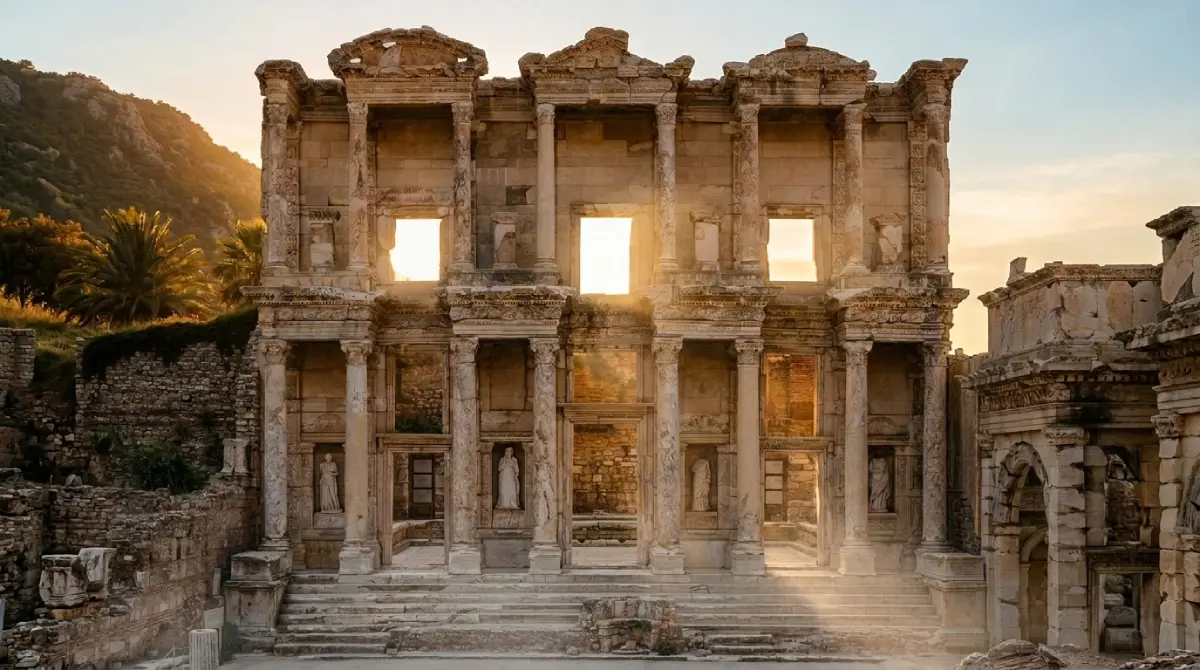
- Ancient Ephesus & House of the Virgin Mary: Listed as a UNESCO World Heritage Site, Ephesus lets you walk the marble streets of one of antiquity's greatest cities. Highlights include the Library of Celsus, Curetes Way, and the vast Great Theatre. Kuşadası sits only about 19 km from the site (roughly a 25–40 minute drive), whereas travelling from Didim or Bodrum requires significantly more time on the road.
- Dalyan River, Kaunos Tombs & İztuzu Beach: A riverboat cruise winds through reed beds beneath the rock-carved tombs of ancient Kaunos toward İztuzu Beach, a protected nesting ground for Caretta caretta loggerhead sea turtles. Visitors must follow local conservation rules, especially during the nesting season. It is easiest to reach from Sarıgerme, Marmaris, or Fethiye.
- Pamukkale Travertines & Hierapolis: The white calcium terraces of Pamukkale and the ancient spa city of Hierapolis form one of Turkey's most iconic landscapes. From most Aegean resorts this is a full-day excursion; check driving times from your specific town and note that access to certain travertine sections and pools is regulated.
- Saklıkent Gorge & Kayaköy Ghost Village: Located about 50 km from Fethiye, Saklıkent Gorge stretches roughly 18 km with rock walls rising up to 300 metres. Visitors explore designated sections via wooden walkways and shallow river channels depending on water levels and safety conditions. Because the water is icy cold and stones are slippery, water shoes with good grip are highly recommended. Trips are often paired with the abandoned stone village of Kayaköy. Check full excursion details in our guide to day tours and excursions in Turkey.

 REPORTAGE & REGION